
Unlock Your Child’s
Full Growth Potential
Advanced AI growth
plate evaluation

FDA approved
growth hormone treatment

Personalized
treatment plan
Direct, On-Demand Access
to Your Care Team
Starting Treatment
Starting Treatment
4.5 CM in 6 Months
After Treatment
Starting Treatment
Starting Treatment
8.5 CM in 12 Months
After Treatment
Starting Treatment
Starting Treatment
10 CM in 12 Months
After Treatment
Starting Treatment
Starting Treatment
15 CM in 18 Months
After Treatment
Grew 4.6 inches in 12 months
Grew 6.7 inches in 18 months
Grew 6.54 inches in 18 months
Grew 7.2 inches in 18 months



Physician & Founder
Dr. Choi founded I Grow Clinic in 2021 to provide specialized growth care for children with idiopathic short stature. She’s passionate about helping each child reach their full potential through safe, science-based treatments and compassionate care.
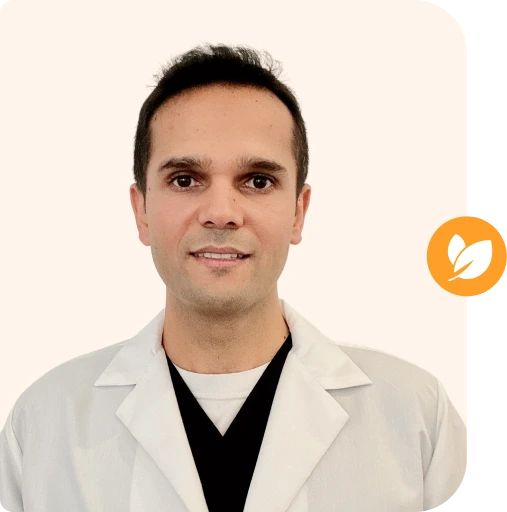

Physician
Dr. Khawar is a board-certified rheumatologist and internist with over 20 years of diverse clinical experience. Drawing on his deep understanding of hormonal, musculoskeletal, and metabolic health, Dr. Khawar brings a unique perspective to growth hormone treatment for children. As an Assistant Professor of Medicine at both Loma Linda University and UC Riverside, he is dedicated to evidence-based, compassionate care-helping each child reach their full growth potential in a safe and supportive environment.
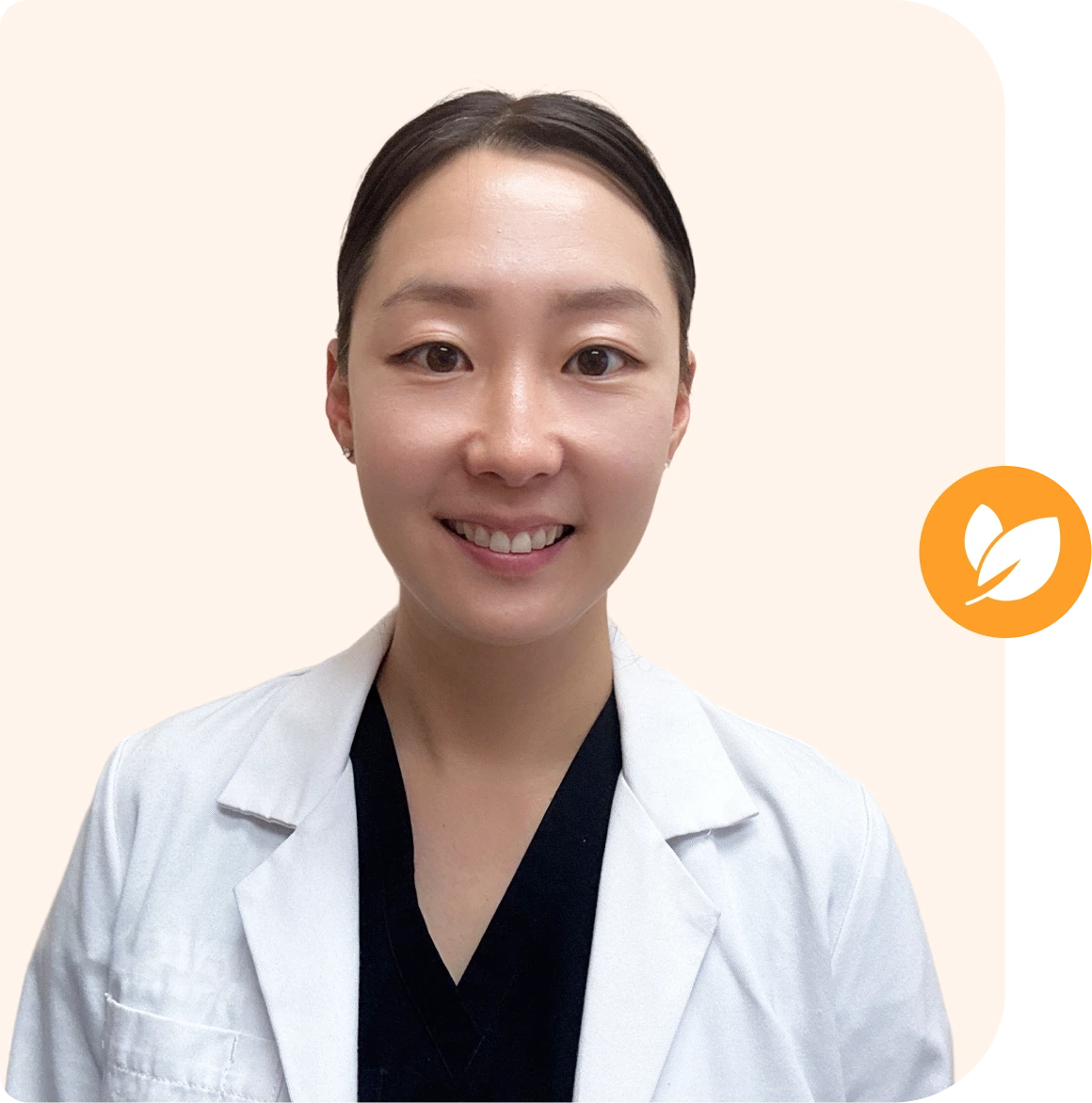
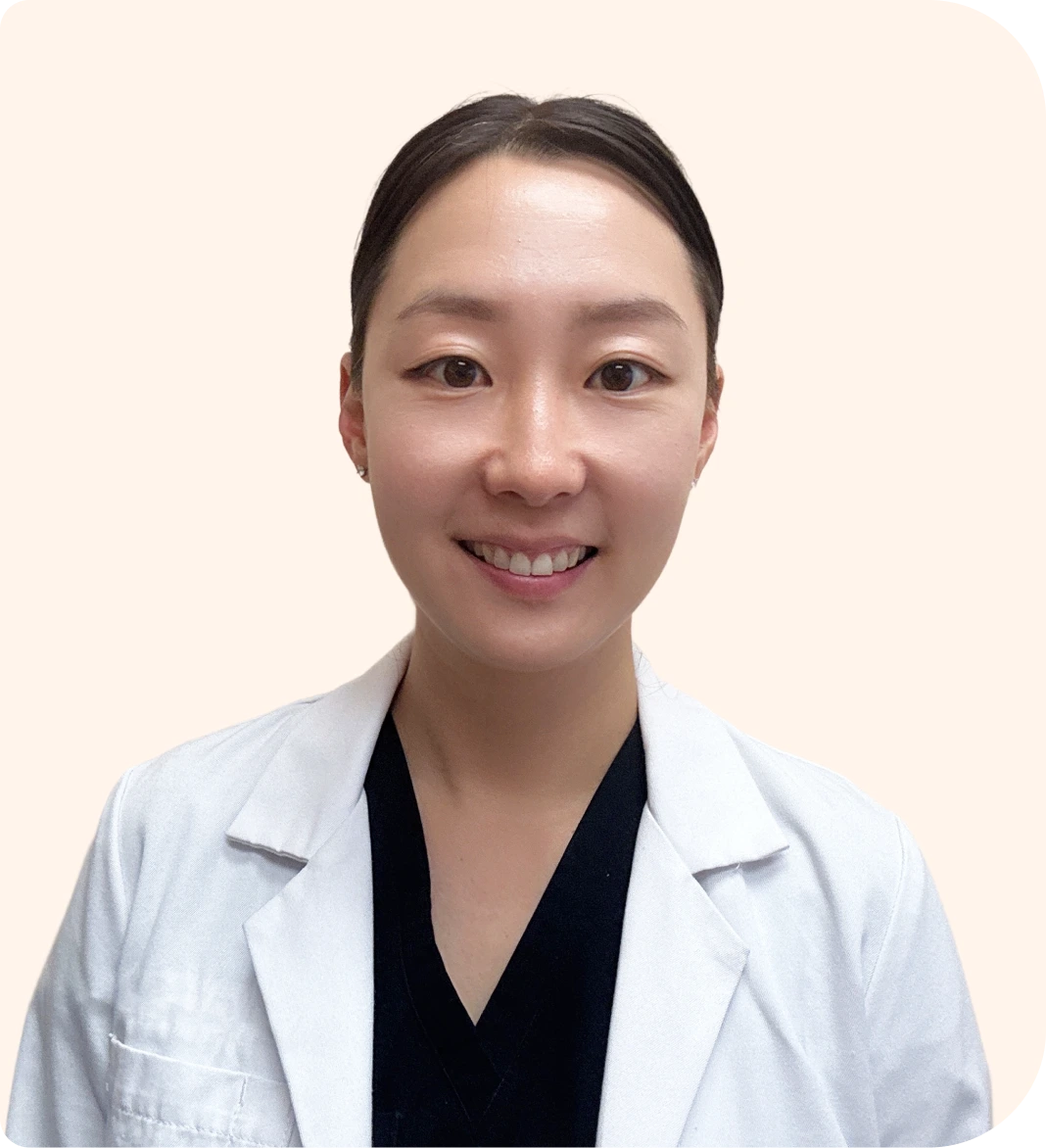
Nurse Practitioner
Nurse Practitioner Sunjo brings extensive clinical experience and deep expertise in patient-centered care, clinical assessment, and wellness-focused treatment. She is dedicated to enhancing patients’ health, vitality, and overall quality of life, consistently applying her knowledge and skills with care. In particular, she is committed to creating healthier and more positive outcomes through personalized approaches in the rapidly evolving field of growth hormone therapy.


Nurse Practitioner
With a steady and experienced hand, Jenny guides families through the journey of growth hormone care. She excels at making complex information clear for parents, while her reassuring approach puts children at ease, making every visit a positive experience.

Physician & Founder
Physician
Nurse Practitioner
Ina Poong
Office Manager
Esther Ahn
Office Manager
Minnie Lee, RN BSN
Registered Nurse
Eliana Kim
Front Desk Staff
Kim
Front Desk Staff
Emily Chiang
Front Desk Staff
Karyn How
Front Desk Staff
Yeeun Jun
Front Desk Staff
Ina Poong
Office manager
Esther Ahn
Office manager
Hailey Nguyen
Front Desk Staff
Eliana Kim
Front Desk Staff
Kim
Front Desk Staff
Nadia De La Riva
Front Desk Staff
Emily Chiang
Front Desk Staff
Karyn How
Front Desk Staff
Jane Palahang
Front Desk Staff


At I Grow Clinic, we help every CA child reach their
full growth potential through personalized care
Recombinant human growth hormone (rhGH) has been FDA-approved since 1985 after extensive research confirmed its safety and benefits. For decades, growth hormone therapy has safely helped children reach their full growth potential. Studies and leading endocrine societies confirm no long-term side effects when treatment is properly prescribed and monitored.
Before treatment, each child receives a full medical evaluation to ensure safety and suitability.
Our evaluation includes:
Laboratory testing to review hormone and metabolic health
Growth-plate X-ray assessment to confirm bone maturity and suitability for treatment
Throughout treatment, our physicians provide:
Individualized treatment plans with carefully monitored dosing
Regular growth assessments to track progress
Follow-up care, which includes:
Regular blood tests to track hormone levels and response
X-rays to assess bone growth and maturity
Telehealth or in-person visits to review and adjust treatment
Every step of your child’s care at I Grow Clinic is guided by medical expertise, evidence-based practice, and
compassionate care, helping each child in California grow safely, confidently, and to their fullest potential.

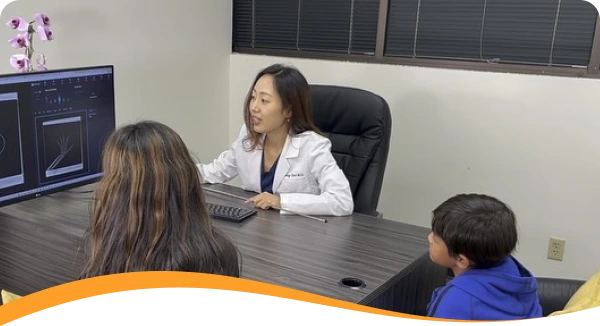
Using advanced AI software, we compare your child’s bone age with their chronological age to estimate their remaining growth potential and predict their final height.

Our Provider will review the results with you, explain any differences between bone age and actual age, and discuss whether additional steps are recommended.

RESULTS THAT SPEAK FOR THEMSELVES
in 9 months
in 12 months
Over 2000 Satisfied Families
Completely satisfied

Highly recommended
Love Dr. Choi! She is so patient and answers all our questions. We have witnessed a height increase by 5.1cm in our child in the past 6 months and are so excited for continued growth. Highly recommend Dr. Choi!
Thrilled with the results
Beyond satisfied
Happy With the Improvement
Stephanie L.
Very pleased with the progress
I highly recommend I Grow Clinic if you are concerned about your child’s height. I have a daughter who was not short at all, but still attended an oriental clinic regularly for multiple reasons. One day, they tested her growth plate and told me her bone growth was not enough for her age. This could result in her being shorter than average later. ... I started searching for what this meant, and I found out that the age of bone was the key for growth and height. However, they didn’t tell me about the age. I googled and came across I Grow Clinic. Luckily, they provided the age of the bone growth and detailed treatments. My daughter received a growth treatment at I Grow Clinic with Dr. Sung. My whole family is satisfied with the result. She is 18 cm taller than her first visit during 21 months. Thank you Dr. Sung and I Grow Clinic staff.
Read more Completely satisfied
Dr Choi is very detail-oriented. She monitors lab values to make sure the treatment is safe. The clinic is pediatric friendly. The staff is very nice. My child is growing and the treatment is effective. We are completely satisfied with I Grow Clinic.
Highly recommended
Thrilled with the results
Beyond satisfied
My son has been having growth hormone treatment for 18 months, and his height has increased by 8.47 inches. His height percentile among children of the same age has improved from 58% to 93.7%. My son and I are very satisfied with the results and plan to continue this treatment for as long as possible. We are so thankful to Igrow Clinic.
Happy With the Improvement
Stephanie L.
Very pleased with the progress
I highly recommend I Grow Clinic if you are concerned about your child’s height. I have a daughter who was not short at all, but still attended an oriental clinic regularly for multiple reasons. One day, they tested her growth plate and told me her bone growth was not enough for her age. This could result in her being shorter than average later. ... I started searching for what this meant, and I found out that the age of bone was the key for growth and height. However, they didn’t tell me about the age. I googled and came across I Grow Clinic. Luckily, they provided the age of the bone growth and detailed treatments. My daughter received a growth treatment at I Grow Clinic with Dr. Sung. My whole family is satisfied with the result. She is 18 cm taller than her first visit during 21 months. Thank you Dr. Sung and I Grow Clinic staff.
Read more 
In-Person Visits at our
Fullerton clinic

Virtual Appointments
Specially for CA residents for convenient, at-home evaluations
and follow-ups
The medication is self‑injected six times a week at nighttime, under the skin with a very thin needle. Families receive detailed education, video training, and in‑home nurse support when treatment begins.
The growth hormone treatment is known to be quite safe. Serious side effects are very rare in children without underlying diseases. Temporary pain and itching at the injection site may occur. During the initial stages of treatment, temporary flu-like symptoms, hypothyroidism, swelling, and headaches can also occur, although these are still rare. The dosage of medication may be adjusted with close monitoring to manage these side effects.
SCFE (Slipped Capital Femoral Epiphysis) is very rare but can occur in boys with severe obesity (BMI ≥ 29), particularly during periods of rapid growth. Additionally, if children already have scoliosis, the curvature may worsen during their rapid growth. Therefore, it is crucial to maintain an appropriate growth rate, avoid excessive weight gain, and closely follow up with the prescribing physician throughout growth hormone treatment.
Human growth hormone treatment is contraindicated in patients with active cancer, diabetes, thyroid disease, or sleep apnea due to morbid obesity.
Sleep, nutrition, and exercise all play important roles. Children benefit from 9–10 hours of sleep, balanced meals rich in protein and calcium, and daily physical activity such as running or jumping.
Costs depend on dosage, which is determined by weight, age, and growth plate status. Younger children often require lower doses. Health insurance typically does not cover hGH treatment when there are no medical diseases significantly affecting a child’s growth. The exact cost is determined after the initial consultation, based on your child’s growth plate exam and individualized treatment plan.
Eligibility is determined after the initial consultation. In insurance-covered cases, a diagnosed medical condition is usually required for approval. However, in self-pay cases, treatment is not limited to children with a medical disease. The key factor is whether the growth plates in the arms and legs remain open, showing sufficient growth potential. Through X-ray evaluation and consultation, our medical specialists determine who is most likely to respond effectively to growth hormone therapy.
Duration varies by child and depends on factors such as growth plate status, age, and stage of puberty. Progress is reviewed every six months to determine whether to continue treatment.
A monthly online check-in is required to review your child’s height and weight. Measurements should be taken accurately at home and reported to the clinic. Blood tests are performed every six months for ongoing monitoring, and hand X-rays to assess bone age are done every 6 to 12 months, depending on growth plate status.
Yes we can treat your child with our telehealth services in CA for adolescent growth treatments. Please contact us for details specific to your location.
Every child responds differently. Some show rapid improvement in growth velocity, while others progress more gradually. Our role is to monitor carefully and provide realistic guidance without promising specific outcomes.
Let’s Support Your
Child’s Growth Together
We’re here to support your child’s growth journey every step of the way.
California, the “Golden State,” stands as a land of remarkable contrasts and superlatives. From the fog-shrouded shores of the Pacific to the sun-baked deserts of the Mojave, from the towering redwoods of the north to the sprawling suburbs of the south, California’s 482 incorporated municipalities tell the story of a state that has consistently shaped American culture, economy, and identity. Understanding this municipal landscape provides essential insight into one of the world’s most influential regions—an area that, if it were an independent country, would rank as the fourth-largest economy on Earth.
California is divided into 58 counties and contains 482 incorporated municipalities. These are classified uniformly as cities—unlike some states, California makes no legal distinction between “cities” and “towns,” though some communities historically refer to themselves as towns.
The state’s municipal landscape is remarkably diverse in scale:
| Category | Municipality | Notable Characteristics |
|---|---|---|
| Most populous | Los Angeles | Approximately 3.8 million residents; the nation’s second-largest city |
| Smallest population | Vernon | An industrial city with fewer than 100 year-round residents |
| Largest by area | Los Angeles | Spans over 468 square miles |
| Smallest by area | Amador City | Just 0.3 square miles in the Sierra Nevada foothills |
The state’s population distribution is heavily urbanized. As of 2014, California was home to approximately 38.8 million residents, making it the most populous state in the nation by a substantial margin. By 2024, estimates placed the population near 40 million, representing more than one in every nine Americans. Of these residents, the vast majority live within incorporated cities, with only a small percentage residing in unincorporated county areas.
Long before European contact, California was one of the most culturally and linguistically diverse areas in pre-Columbian North America. Indigenous peoples inhabited every region of the state, from the coastal villages of the Chumash to the mountain communities of the Miwok.
European exploration began in the 16th century, with Spanish explorers charting the coast. The name “California” first appeared on a 1562 map created by Spanish cartographer Diego Gutiérrez, though its origins trace to a Spanish romance novel describing a mythical island of Amazonian women. Spanish colonization formally began in 1769 with the establishment of a series of missions along the coast. The first permanent European settlement was San Diego, founded in 1769 with the establishment of Mission San Diego de Alcalá. Over the following decades, Spanish authorities founded San Francisco (1776), San Jose (1777), and Los Angeles (1781), among others.
Following Mexico’s successful war for independence from Spain, California became a Mexican territory in 1821. The Mexican period saw the secularization of the mission system and the establishment of vast ranchos. However, this era proved brief. The Mexican-American War (1846-1848) resulted in Mexico ceding Alta California to the United States under the Treaty of Guadalupe Hidalgo in 1848.
Days before the treaty was signed, gold was discovered at Sutter’s Mill in Coloma, triggering the California Gold Rush of 1848. The event transformed California from a remote outpost into a global magnet for fortune-seekers. The non-Indigenous population exploded from approximately 14,000 in 1848 to over 100,000 by 1850. Cities emerged overnight: Sacramento became the gateway to the gold fields, Stockton grew as a supply hub, and San Francisco evolved from a sleepy village of 1,000 to a bustling port city of 25,000 in just two years.
California was admitted to the Union as the 31st state on September 9, 1850, as part of the Compromise of 1850. Remarkably, it never existed as a territory—it moved directly from Mexican control to statehood. The first State Capitol was located in San Jose in 1850-1851 before the capital moved to Vallejo, then Benicia, and finally to Sacramento, where it remains today.
California’s extraordinary geographic diversity profoundly shapes its cities and towns. The state spans 163,696 square miles, making it the third-largest state by area after Alaska and Texas.
Most major cities cling to the cool, pleasant seacoast along the Pacific Ocean. Los Angeles, San Diego, San Francisco, Long Beach, and Santa Barbara all owe their existence to maritime commerce, coastal climate, and the appeal of oceanfront living. The coastline stretches 2,030 kilometers (approximately 1,260 miles), providing abundant natural harbors and beachfront communities.
The Central Valley, a vast north-south trough between the coastal mountains and the Sierra Nevada, covers about one-sixth of the state’s area and serves as California’s agricultural heartland. Cities here include the state capital Sacramento, Fresno (the state’s fifth-largest city), Bakersfield, Stockton, and Modesto. These communities grew initially as agricultural service centers and later diversified into processing, manufacturing, and logistics.
The Sierra Nevada range, home to the highest point in the contiguous United States—Mount Whitney at 14,505 feet—forms the state’s eastern backbone. Communities like South Lake Tahoe, Mammoth Lakes, and Truckee cater to tourism, recreation, and, historically, mining. The gold rush towns of the Sierra foothills—Placerville, Auburn, Sonora, and Columbia—preserve the architecture and spirit of the 1850s boom.
Southeastern California encompasses the Mojave and Colorado Deserts, including Death Valley, the lowest point in North America at 282 feet below sea level. Desert cities like Palm Springs, Indio, Barstow, and Needles developed around mineral extraction, railroad stops, and increasingly, resort tourism.
The San Francisco Bay Area represents a unique urban constellation. San Francisco, Oakland, San Jose, and dozens of other incorporated cities form a continuous metropolitan region that rivals any in the world for economic and cultural influence. San Jose, the largest city in Northern California and the third-largest in the state, anchors the southern end of the bay and serves as the unofficial capital of Silicon Valley.
The largest city in California and second-largest in the United States, Los Angeles (often abbreviated as L.A.) was founded in 1781 by Spanish governor Felipe de Neve. Its growth from a small pueblo to a global metropolis is one of the most dramatic urban transformations in history. The city anchors a metropolitan region of over 13 million people and serves as the global center of the entertainment industry through Hollywood. The Port of Los Angeles is the busiest port in the United States, handling approximately 40% of all imported goods entering the country.
California’s second-largest city, San Diego, holds the distinction of being the site of the first European settlement in California. Mission San Diego de Alcalá, founded in 1769 by Father Junípero Serra, marked the beginning of Spanish colonization. Today, San Diego is a major military and biotechnology hub, with a significant naval presence and a thriving tourism economy centered on its renowned zoo and coastal attractions.
The third-largest city in California, San Jose, lies at the heart of Silicon Valley. Unlike coastal cities with deep historical roots, San Jose transformed from a quiet agricultural community into a global technology center during the late 20th century. It serves as headquarters for countless technology companies and consistently ranks among the wealthiest cities in the nation.
Perhaps California’s most iconic city, San Francisco grew from a small mission and presidio established in 1776 into the bustling center of the Gold Rush and later the counterculture movements of the 1960s. Its physical setting—on a peninsula at the Golden Gate—creates one of the most distinctive urban landscapes in the world. The city’s financial district, known as the “Wall Street of the West,” and its concentration of technology companies make it an economic powerhouse despite its modest geographic size.
California’s state capital since 1854, Sacramento sits at the confluence of the Sacramento and American Rivers. The city’s location made it a natural hub during the Gold Rush, and its waterfront historic district preserves much of that era’s architecture. As the seat of state government, Sacramento is home to the California State Capitol, numerous state agencies, and a growing metropolitan population.
The largest city in the Central Valley, Fresno serves as the economic and cultural hub for the region’s massive agricultural industry. Located in the heart of one of the most productive agricultural areas on Earth, Fresno is surrounded by fields producing grapes, almonds, cotton, and countless other crops. The city has evolved into a diverse urban center with significant immigrant populations from Mexico, Central America, and Southeast Asia.
California’s 58 counties vary dramatically in character and municipal composition. The most populous county, Los Angeles County, contains 88 incorporated cities, ranging from the sprawling metropolis of Los Angeles to small communities like La Cañada Flintridge and La Habra Heights. The county alone accounts for over one-quarter of California’s total population.
Orange County, just south of Los Angeles, contains 34 incorporated cities. Communities such as Santa Ana (the county seat), Anaheim (home of Disneyland), Irvine (a planned city and technology hub), and Huntington Beach (known as “Surf City”) represent the region’s diverse character.
In contrast, sparsely populated northern counties like Alpine, Sierra, and Modoc contain just one or two incorporated cities each, with vast unincorporated territory.
The most recent incorporation in California was Jurupa Valley in Riverside County, which became a city on July 1, 2011.
California’s economy is the largest of any U.S. state, with a gross state product reaching $4.172 trillion in Q4 2024. If California were an independent country, it would rank as the fourth-largest economy in the world, behind the United States, China, and Germany, and ahead of Japan. This economic power manifests in distinct ways across the state’s cities:
Despite its reputation for technology and entertainment, California is the leading agricultural state in the nation, producing over one-third of the country’s vegetables and two-thirds of its fruits and nuts. Agricultural communities throughout the Central Valley—from Redding in the north to Bakersfield in the south—form the backbone of this industry. The state produces nearly all of the nation’s almonds, walnuts, artichokes, and table grapes, along with significant dairy, wine, and cotton production.
The Silicon Valley region, centered on San Jose and extending through Palo Alto, Mountain View, Sunnyvale, and Cupertino, represents the global epicenter of technology innovation. Home to Apple, Google, Meta, and countless startups, the region has created enormous wealth and transformed the Bay Area into one of the most expensive housing markets in the world.
The entertainment industry is concentrated in Hollywood (a district of Los Angeles) and surrounding communities including Burbank, Glendale, and Universal City. The film and television industry has shaped Los Angeles’s physical and cultural landscape for over a century, drawing aspiring performers, writers, and technicians from around the world.
Communities in Southern California, particularly Long Beach, Palmdale, and Lancaster, have long histories in aerospace manufacturing. While the industry has contracted since the Cold War era, it remains a significant employer, alongside defense installations in San Diego and elsewhere.
The ports of Los Angeles and Long Beach together form the busiest port complex in the Western Hemisphere, handling approximately 40% of all containerized imports entering the United States. This trade flows through distribution centers in the Inland Empire (San Bernardino and Riverside counties), where cities like Ontario, Fontana, and Moreno Valley have become logistics hubs with vast warehouse complexes.
California cities operate under one of two forms of government: general law cities or charter cities. Charter cities, which include Los Angeles, San Francisco, and San Jose, adopt their own constitutions that provide greater local control over municipal affairs. General law cities operate under state statutes and represent the majority of incorporated communities.
California has only one consolidated city-county: San Francisco. The city and county governments merged in 1856, making San Francisco a unique entity that functions simultaneously as a city and a county.
Thousands of unincorporated communities exist across California, particularly in rural and mountainous areas. Some, like East Los Angeles and North Highlands, have populations larger than many incorporated cities but have chosen to remain unincorporated or have failed in attempts to incorporate.
California is one of the most diverse states in the nation, a fact reflected in its cities. According to 2014 data, the population composition was:
| Group | Percentage of Population |
|---|---|
| Non-Hispanic White | 39% |
| Hispanic/Latino (any race) | 38.4% |
| Asian | 14.1% |
| Black/African American | 6.6% |
The state is home to approximately 1.3 million people of Chinese descent, representing 3.4% of the total population. Cities like Monterey Park in Los Angeles County became the first suburban Chinatowns, while Fremont, Cupertino, and Irvine have substantial Asian American populations. Communities throughout the Central Valley have large Mexican American populations, with some cities like Coachella and Calexico exceeding 95% Hispanic/Latino residents.
This diversity has profoundly shaped California’s cities, influencing everything from culinary scenes to political dynamics to architectural styles.
California’s municipal governments exercise significant authority over land use, policing, parks, and local services. This local control has produced distinct community identities but has also contributed to challenges including fragmented planning, housing shortages, and uneven service provision.
The California Department of Finance maintains the official population estimates for all cities and counties, required by state law for revenue distribution and planning purposes. These estimates, updated annually, determine how billions of dollars in state and federal funding are allocated to municipalities across the state.
California’s 482 incorporated municipalities form a mosaic that reflects the state’s extraordinary history, geography, and diversity. From the colonial-era pueblos of San Diego and Los Angeles to the Gold Rush towns of the Sierra, from the industrial ports of Long Beach to the technology campuses of Silicon Valley, from the agricultural centers of the Central Valley to the resort communities of Palm Springs and Lake Tahoe—each city contributes a distinct chapter to the California story.
As the most populous state in the nation and an economic force rivaling entire countries, California’s cities will continue to evolve, facing challenges of housing affordability, climate change, and economic transformation. Yet the pattern established over nearly 250 years of settlement—of communities adapting to California’s remarkable landscape and seizing opportunities as they arise—suggests that the Golden State’s municipalities will remain at the forefront of American urban life for generations to come.
For those seeking detailed data on California’s incorporated cities, the California State Department of Finance publishes comprehensive population estimates through its E-1 and E-4 reports, while the California Open Data Portal maintains current and historical city boundary datasets. These official resources provide the authoritative foundation for understanding California’s dynamic municipal landscape.
California, with its world-renowned medical institutions and progressive approach to healthcare, offers families exceptional options for addressing childhood growth disorders. From IGROW Clinic in Fullerton CA specialized wellness clinic serving families in San Diego, Beverly Hills, and Newport Beach, the Golden State provides access to cutting-edge, non-invasive treatments that work with the body’s natural systems. Understanding these options—the benefits, the reasons to pursue them, what treatment involves, and the associated costs—can empower parents to make informed decisions for their children’s growth journey.
Growth disorders affect children in different ways, but they all share one common feature: they interfere with the body’s natural ability to produce or utilize growth hormone effectively. These conditions are diagnosed and managed by pediatric endocrinologists—specialists who focus on hormones and their effects on growth and development.
In California, families have access to leading medical institutions and specialists. These research initiatives ensure that California families have access to the latest advances in growth treatment.
Sermorelin is a synthetic analog of growth hormone-releasing hormone (GHRH), consisting of the first 29 amino acids of the naturally occurring 44-amino-acid GHRH molecule—the biologically active portion responsible for stimulating growth hormone production . This peptide therapy has one of the longest clinical track records of any growth hormone treatment and was originally FDA-approved for diagnosing and treating growth hormone deficiency in children .
Unlike direct growth hormone injections, Sermorelin works by signaling the pituitary gland to produce and release growth hormone through the body’s natural regulatory pathways . This means growth hormone levels rise in a physiological, pulsatile pattern—not the flat, constant elevation that comes with synthetic HGH injections. This approach preserves the body’s natural feedback loops, allowing regulatory mechanisms to prevent overproduction when hormone levels reach appropriate thresholds .
For children diagnosed with growth hormone deficiency, Sermorelin therapy offers multiple advantages:
Increased height velocity: Stimulates growth plates to promote linear growth
Improved muscle development and strength: Supports anabolic growth and recovery
Better fat metabolism: Leads to healthier body composition
Enhanced energy levels, focus, and overall well-being: Supports cognitive and physical development
Natural regulatory mechanism: Works within the body’s feedback systems, reducing risk of hormone excess
Sermorelin is often described as a more “natural” approach to growth support. By encouraging the body to produce its own growth hormone rather than introducing synthetic hormones from outside, it maintains natural pulsatility and works within the body’s built-in safety mechanisms . This makes it an excellent option for families who prefer a conservative approach to hormone optimization.
Pediatric specialists may consider Sermorelin therapy when children show:
A slow growth rate: Less than 2 inches of growth per year after age 3
Height significantly below average for age and gender
Delayed puberty
Excess body fat, particularly around the waist and face
Fatigue, weak muscle tone, or low energy levels
Delayed tooth development
Ipamorelin is a selective growth hormone-releasing peptide (GHRP) that works by mimicking ghrelin, the “hunger hormone,” and binding to growth hormone secretagogue receptors . This action triggers natural release of growth hormone from the pituitary gland without significantly impacting cortisol, prolactin, or other hormones—making it an ideal option for longer-term use .
While both Sermorelin and Ipamorelin stimulate natural growth hormone production, they work through different mechanisms. Ipamorelin is often combined with Sermorelin for synergistic effects, as the two peptides work through complementary pathways to optimize growth hormone release . At clinics throughout California, from Beverly Hills to San Diego, medical providers design personalized protocols that may include one or both peptides based on individual patient needs .
Clinical benefits of Ipamorelin may include:
Increased lean muscle mass through anabolic growth support
Fat loss and metabolism support via improved insulin sensitivity
Deeper, more restorative sleep due to growth hormone’s role in circadian rhythm regulation
Enhanced recovery from physical activity
Strengthened immune function and cellular repair
For children with achondroplasia—the most common form of dwarfism—a revolutionary non-invasive treatment is now available. Voxzogo (vosoritide) is a prescription medicine approved by the FDA to increase linear growth in children with achondroplasia who still have open growth plates (epiphyses) .
Voxzogo is a C-type natriuretic peptide (CNP) analog that promotes endochondral bone formation—the process of bone growth that is impaired in children with achondroplasia. By addressing the underlying mechanism of the condition, it helps children achieve greater growth velocity while maintaining normal body proportions .
The effectiveness of Voxzogo has been demonstrated in clinical studies showing improvement in annualized growth velocity. Important safety considerations include:
Patients should eat a meal and drink 8-10 ounces of fluid within one hour before each dose to reduce the risk of temporary blood pressure decrease
Common side effects may include injection site reactions (redness, itching, swelling, bruising), vomiting, joint pain, and stomach ache
The dose is based on body weight and adjusted during regular check-ups
BioMarin, the manufacturer of Voxzogo, provides comprehensive support through BioMarin RareConnections, offering families:
One-to-one product education and injection training
Help navigating the insurance process
Support identifying financial assistance options, including co-pay assistance for eligible commercially insured patients
For children diagnosed with growth hormone deficiency (GHD) or other FDA-approved conditions—including Turner syndrome, Prader-Willi syndrome, chronic kidney disease affecting growth, and idiopathic short stature—recombinant human growth hormone (rhGH) therapy remains the standard of care .
HGH therapy involves administering bioidentical growth hormone through small, daily subcutaneous injections. These injections provide the hormone that the child’s body cannot produce adequately on its own. Treatment typically continues for several years, with regular monitoring to ensure safe and effective progress .
For children with confirmed deficiencies, growth hormone therapy can be transformative:
Catch-up growth: Children can achieve height closer to their genetic potential
Improved muscle development and strength: Supports overall physical development
Better metabolism: Helps maintain healthy body composition
Enhanced quality of life: Addresses psychosocial concerns related to short stature
The FDA has approved HGH for pediatric use in specific conditions including:
Growth Hormone Deficiency (GHD)
Turner Syndrome
Prader-Willi Syndrome
Chronic kidney disease affecting growth
Idiopathic short stature (severe shortness with no known cause)
The journey begins with consultation with a pediatric endocrinologist or hormone specialist. At California clinics like Tulsi Wellness Club in San Diego, AH-Clinics in San Diego, and practices throughout Los Angeles, Orange County, and the Bay Area, comprehensive evaluation typically includes:
Detailed medical history review
Physical examination
Growth assessments and growth velocity tracking over 6-12 months
Bone age X-rays to assess remaining growth potential and confirm open growth plates
Laboratory testing including IGF-1 levels and growth hormone stimulation tests
Genetic testing for suspected syndromes
Once a diagnosis is confirmed and treatment is recommended, families receive comprehensive training on administration:
For Sermorelin and Ipamorelin:
Administered via subcutaneous injection, typically before bedtime to optimize the natural nighttime growth hormone surge
Patients learn proper injection technique, reconstitution, storage, and scheduling
Most patients notice sleep improvements within 1-2 weeks, with broader benefits developing over 4-12 weeks
For Traditional HGH Therapy:
Daily subcutaneous injections using auto-injector pens
Training provided by specialty pharmacies or clinic staff
Ongoing dose adjustments based on weight changes and growth response
For Voxzogo:
Daily subcutaneous injection administered by a caregiver after proper training
Must be given at approximately the same time each day
If a dose is missed, it can be given within 12 hours; after 12 hours, skip the missed dose
Treatment success depends on consistent follow-up:
Regular pediatric endocrinologist visits every 3-4 months to monitor growth velocity
Periodic bone age assessments to track skeletal maturation
IGF-1 monitoring to ensure therapeutic levels
Adherence tracking through clinic follow-up and pharmacy records
Growth treatments represent significant investments, but California families have multiple pathways to access affordable care.
| Treatment Type | Cost Considerations | Insurance Coverage |
|---|---|---|
| Sermorelin | Varies by protocol; typically $500+ monthly at Newport Beach practices | Often covered for diagnosed GHD in children; may require prior authorization |
| Growth Hormone Therapy | $10,000–$60,000 annually depending on dosage | Widely covered with prior authorization for FDA-approved indications |
| Voxzogo | Manufacturer provides co-pay assistance for eligible commercially insured patients | Prior authorization required; BioMarin RareConnections helps navigate coverage |
California families have several pathways to coverage:
Employer-sponsored insurance: Many California employers offer plans covering growth treatments when medical necessity is established
Covered California (ACA Marketplace): Plans available through the state’s health insurance marketplace
Medi-Cal: California’s Medicaid program provides coverage for eligible children; prior authorization required for growth treatments
Healthy Families/CHIP: Coverage for children in eligible families
Several programs help California families manage costs:
BioMarin RareConnections: Provides insurance navigation, co-pay assistance (for eligible commercially insured patients), and injection training for Voxzogo
Patient Advocate Foundation: Co-pay relief and case management services
NeedyMeds: Drug discount information and manufacturer assistance program database
UCSF Clinical Trials: Opportunity to participate in research studies with no-cost treatment for eligible participants
California offers unique advantages for families pursuing growth treatments:
Many California practices offer personalized, concierge-style care. Clinics like Beverly Hills Concierge Doctor provide white-glove service with treatments delivered in home, office, or private locations . AH-Clinics in San Diego emphasizes comprehensive lab work and custom protocol design for each patient .
California providers often emphasize approaches that work with the body’s natural systems. Sermorelin and Ipamorelin therapies preserve natural pulsatility and feedback mechanisms, appealing to health-conscious families seeking conservative hormone optimization .
IGrow Clinic’s growth hormone deficiency treatments ensure that California families have access to the latest advances in pediatric growth care .
Choosing growth treatment requires careful consideration of medical necessity, timing, and family resources. The window for treatment is limited—Sermorelin, growth hormone therapy, and Voxzogo are only effective while growth plates remain open, typically until bone age 14-16 in girls and 16-18 in boys .
Has my child been evaluated by a pediatric endocrinologist or hormone specialist?
What is my child’s bone age and remaining growth potential?
Is there a confirmed diagnosis meeting FDA approval criteria?
What is my insurance coverage, and what prior authorization is required?
What manufacturer assistance programs are available for my child’s specific medication?
What training and ongoing support will our family receive?
For parents concerned about their child’s growth, the first step is consulting a specialist. California families can reach out to:
IGrow Clinic in Fullerton CA Phone 909-323-1794
Non-invasive growth treatments offer California families safe, effective options for addressing childhood growth disorders. From Sermorelin and Ipamorelin—which work with the body’s natural systems to stimulate growth hormone production—to traditional growth hormone therapy for diagnosed deficiencies, to Voxzogo for achondroplasia, these treatments provide pathways to healthy development without invasive procedures.
California’s network of world-class medical institutions, specialized wellness clinics, and progressive approach to healthcare makes the state an ideal place to pursue growth treatment. With comprehensive insurance options, manufacturer assistance programs, and strong clinical research infrastructure, families have the resources they need to access care.
For parents watching their child grow, peace of mind comes from knowing that safe, effective, non-invasive treatments are available. With early diagnosis, appropriate treatment, and ongoing support, children with growth disorders can achieve their full growth potential—naturally and confidently—under the California sun.
