
What if we miss the growth window?
Is the doctor going to say ‘wait and see’ again?
What if waiting means it’s too late?
If you’ve ever asked yourself these questions, I understand where they come from.
I’ve been there — not as a parent, but as a child who once wondered if I’d ever catch up.
The Child I Once Was
I still remember the moment I realized I might never catch up.
I was eleven — old enough to notice the height differences that once didn’t matter.
Friends around me were shooting up, while I stayed the same. That was when the quiet worry began: Maybe I just wasn’t going to grow.
I didn’t really know what to do, but I decided to try something — anything. So I started drinking as much milk as I could throughout the day, even though I’d always hated milk. It felt like the only thing I could control. But of course, nothing changed. My height barely moved, and slowly, that small hope turned into disappointment.
I remember feeling frustrated — maybe even a little resentful, though I couldn’t say exactly toward whom.
It wasn’t anger so much as a sense of unfairness, like I had missed something important without ever knowing how or why.
I did grow past that stage — not in centimeters, but in perspective.
As I got older, I learned to accept my height for what it was, and to recognize that there were many other ways to stand out. But even now, as an adult, I still remember that eleven year old girl — small, helpless, and disappointed. And that memory reminds me how lonely it can feel when there are no answers — and how different things might have felt if someone had guided me before it was too late, before that window quietly closed.
And in many ways, that small, uncertain girl led me here: to a place where I could help other children understand their own growth before that same window slowly closed.
Why I Chose to Build a Clinic That Feels Different
I began to notice the same unspoken worry I once carried — in the faces of parents sitting across from me. Many of them had already heard reassuring words from other doctors: “Your child is fine. There’s nothing to worry about.”
And yet, they still wondered. They noticed what others didn’t — the smaller shoes, the slower change, the subtle comparisons that never quite go away. Many parents told me they had been hesitant to bring it up again, after being told before that there was nothing wrong. They didn’t want to seem overanxious, or like they were searching for a problem that didn’t exist.
I understood them completely. It wasn’t about impatience or vanity — it was about love and the wish to understand before it was too late.
That’s why I wanted to create something different.
A place where families could ask questions without fear of being dismissed.
A place where science and empathy stand side by side, where every concern is treated with patience and respect.
In many countries, growth hormone therapy for idiopathic short stature is discussed openly and responsibly. Here in the United States, however, the topic still feels uncomfortable for many – almost like something people aren’t supposed to bring up. Parents who simply want clarity are often told not to worry or are made to feel like they’re overreacting. But what I see behind those questions isn’t ambition or anxiety — it’s care, and the hope that their child will have every chance to grow with confidence.
That belief became the heart of our clinic: to offer thoughtful, evidence-based guidance to families who value both scientific integrity and genuine understanding.
Because medicine begins with listening — and with truly seeing the family in front of you.
Our Core Belief: Medicine Should Empower, Not Intimidate
From the start, I wanted our clinic to stand for something simple: medicine should never make families feel small, uncertain or judged for caring.
Every family deserves clarity, honesty, and respect.
When information is explained clearly and used responsibly, it gives families the confidence to make choices they can trust. And that empathy — listening without assumption, guiding without pressure — is what turns medical care into human care.
Growth hormone therapy for healthy but shorter children isn’t about perfection. It’s about potential — helping each child reach the height their body was meant to achieve, safely and thoughtfully. That’s why we take time to test carefully, discuss openly, and decide together. Parents are never rushed, and children are never treated as numbers on a chart.
“For the first time, I felt like someone truly listened — not just measured.” — Parent of a 10-year-old boy
Our philosophy is simple:
Medicine should empower, not intimidate. Because growth isn’t just about centimeters — it’s about confidence, understanding, and trust.
Understanding the Misconceptions
Whenever I meet parents for the first time, I can almost predict the questions that will come.
They’re thoughtful, honest questions — and they deserve clear, science-based answers.
Let’s talk through a few of the most common ones I hear in my clinic.
Does growth hormone therapy really work? How much do children actually grow?
“Our son grew 8.38 inches in two years, but the biggest change was in his confidence.”
— Mother of an 11-year-old boy
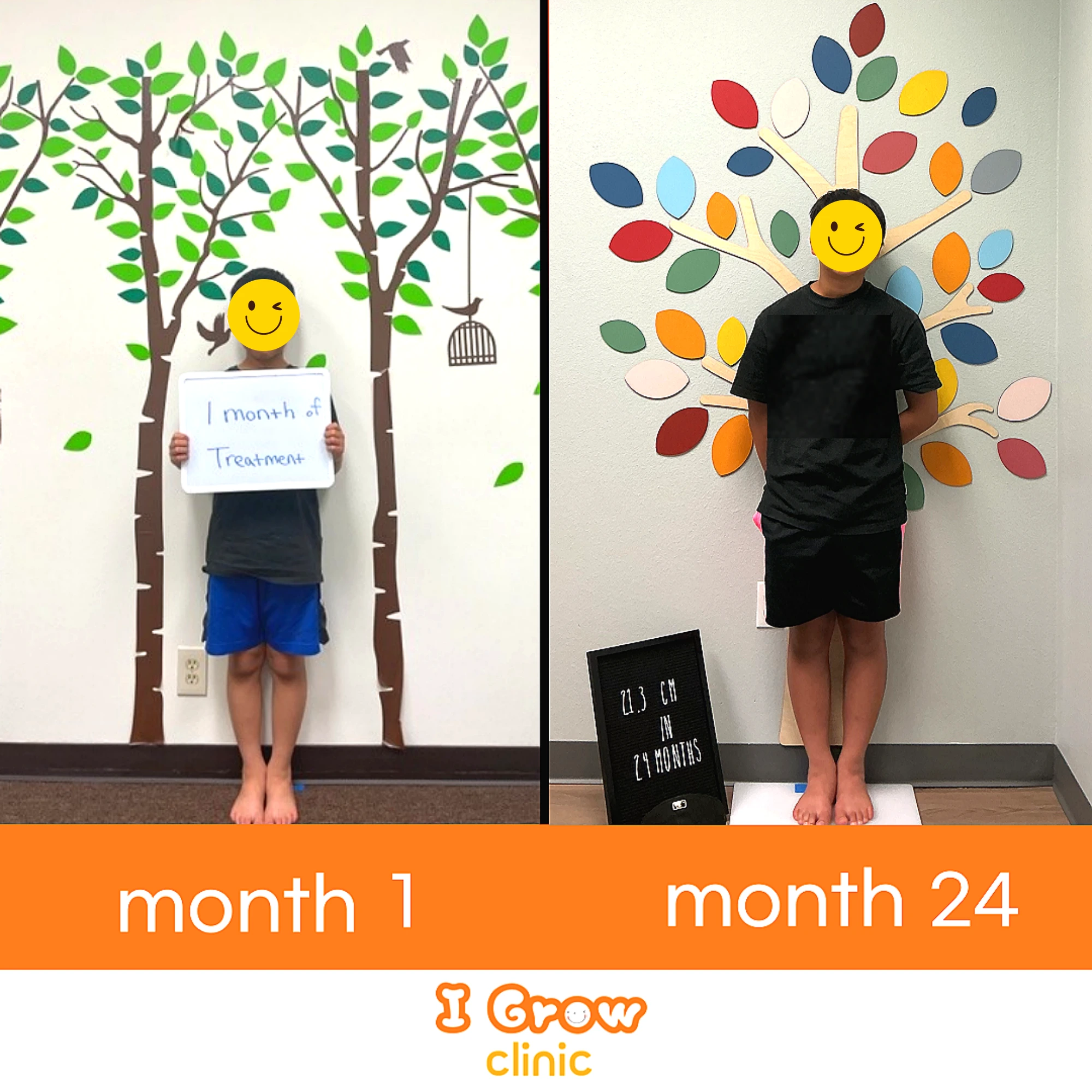
Yes — when used appropriately, growth hormone therapy can make a meaningful difference in a child’s height. Typically, children before puberty grow about 1.6 to 2.4 inches (4–6 cm) per year without treatment. With growth hormone therapy, that rate often increases to 3 to 4 inches (7.5–10 cm) per year on average.
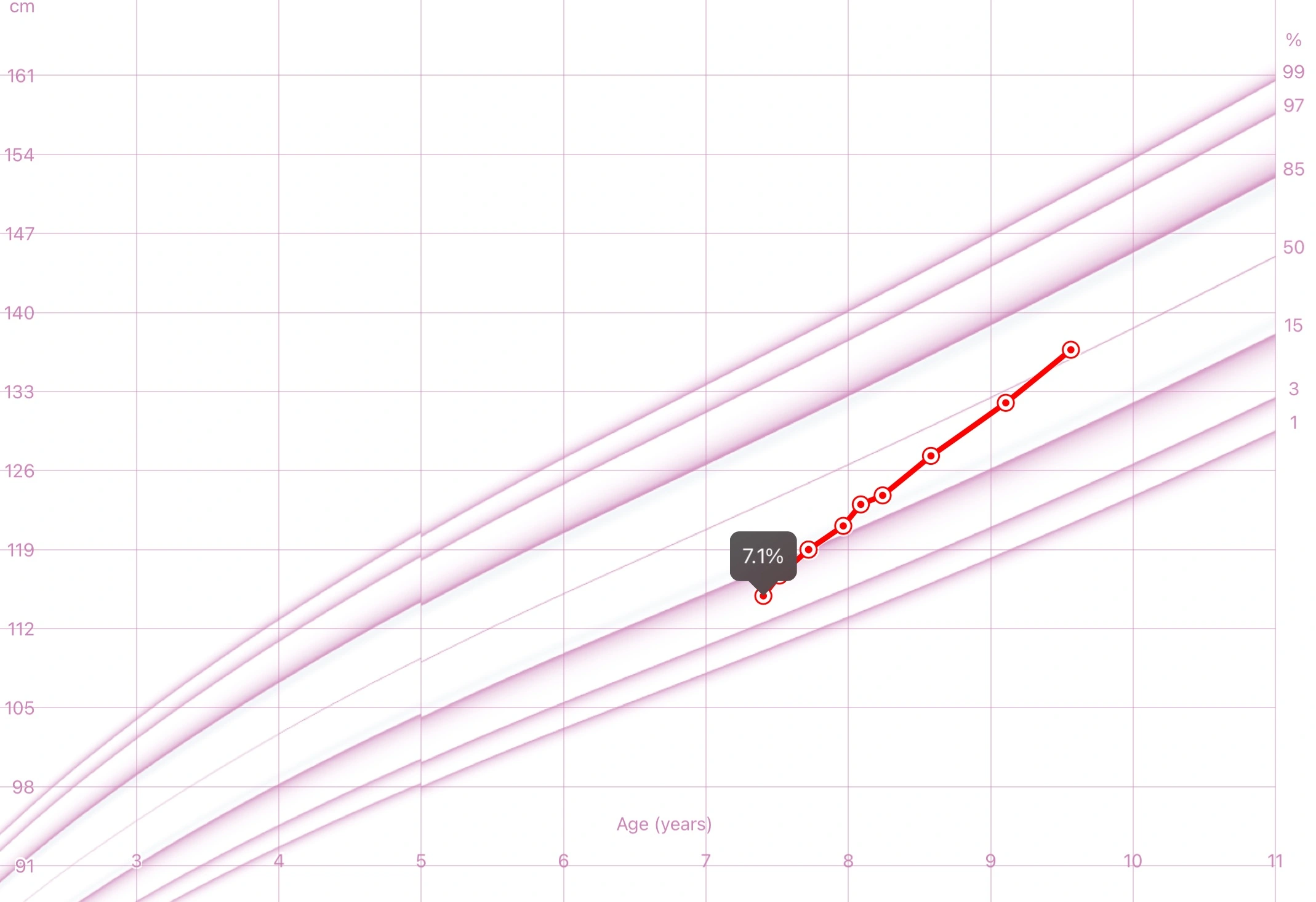
During puberty, most children naturally grow about 3 to 4 inches (7.5–10 cm) per year and with GH therapy, that can rise to around 4 to 5 inches (10–12.5 cm).
The greatest long-term benefit is usually seen in children who start treatment before puberty. On average, after one year of therapy, their predicted adult height increases by about 0.8 to 1 inch (2–2.5 cm).
For children already in puberty, the improvement in predicted adult height happens more slowly — roughly 40–50% less change per year — even though their actual yearly growth in inches is often greater than that of pre-pubertal children. This happens because puberty hormones speed up bone maturation, shortening the remaining window for growth.
Each child’s response is unique, and that’s why we monitor progress carefully through growth charts, bone-age X-rays, and regular checkups.
The goal is never just to grow faster — it’s to help every child reach the height their body is truly capable of, safely and confidently.
Is growth hormone therapy safe?
Yes — when it’s prescribed and carefully monitored by an experienced physician.Growth hormone (GH) has been used on millions of children for over 40 years and, when used at appropriate doses, is considered very safe. Each child’s dosage is thoughtfully adjusted based on growth rate, bone age, and blood levels to keep treatment within the body’s natural range.
“My child has grown steadily with no side effects — everything has felt natural, safe, and closely monitored throughout treatment” — Parent of a 10-year-old girl
Does GH therapy cause early puberty?
No.
This is one of the most common misconceptions about growth hormone therapy.
Parents often begin exploring treatment right around the time their child is nearing puberty, so it can seem as though the therapy and puberty are connected. In reality, puberty begins when the body’s sex hormones naturally rise — and those hormones, in turn, stimulate the body’s own growth hormone to create the typical pubertal growth spurt
But the reverse is not true. Receiving growth hormone injections does not stimulate or accelerate the release of sex hormones. At our clinic, we’ve treated around a thousand children who began GH therapy several years before puberty. Many of them have continued treatment for years and have not yet entered puberty — because their bodies simply weren’t ready. Growth hormone works by stimulating the growth plates to increase height, not by triggering puberty itself.
Isn’t GH therapy just speeding up growth that would happen later anyway?
This is a very common question. And the answer is no.
Growth hormone doesn’t “borrow” height from the future. Instead, it enhances the body’s ability to grow now by stimulating the growth plates, helping children reach the height their bodies are capable of — without taking away from future growth.
In fact, we’ve seen many children who began GH therapy a few years before puberty, gained around 7-8 inches during that time, then stopped treatment as planned. Later, as their natural puberty began, they experienced another growth spurt of 7-8 inches on their own. Their treatment didn’t use up future growth; it simply allowed their height potential to unfold more fully, at the right time for their bodies.
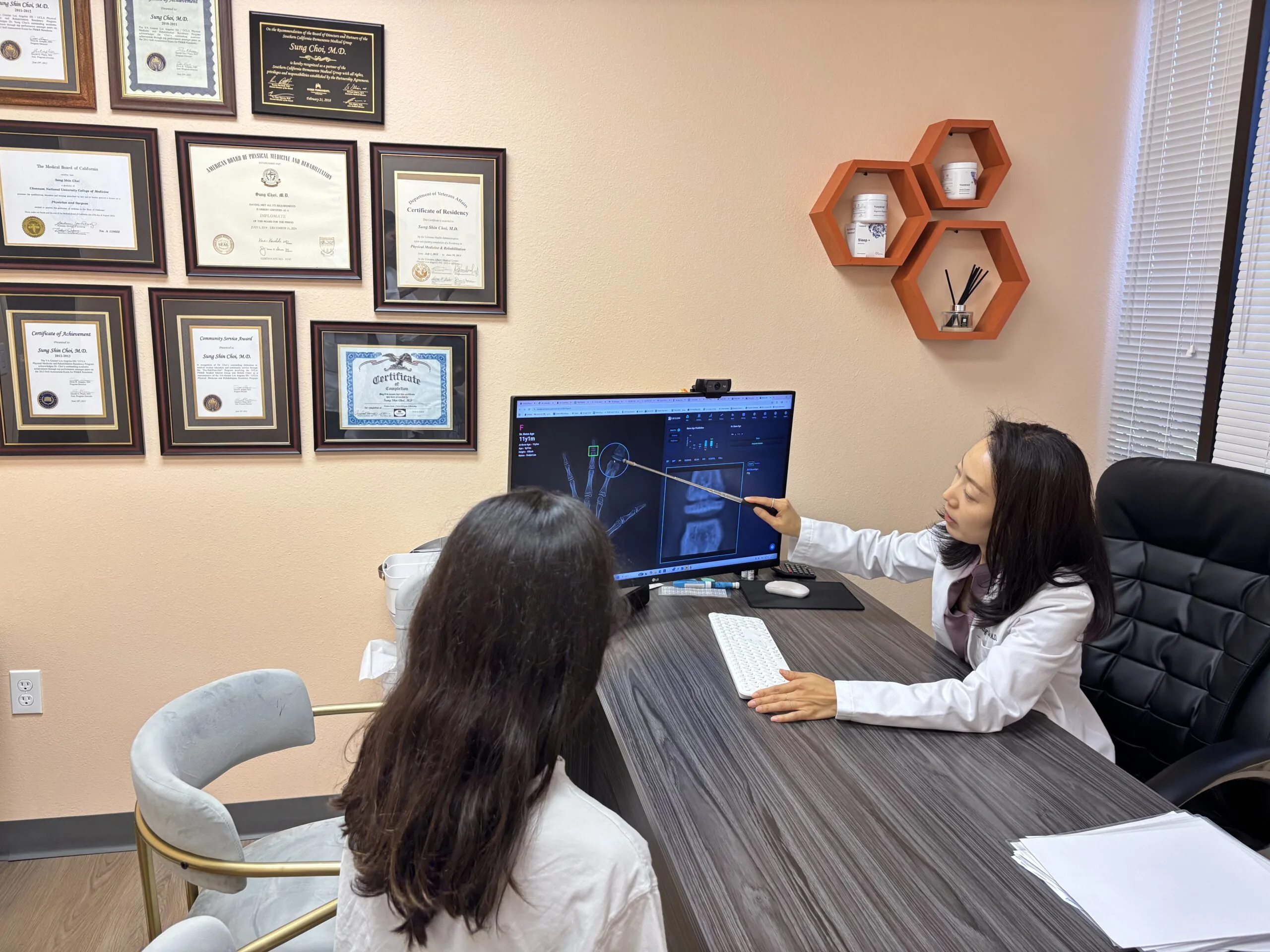
Throughout therapy, we closely monitor each child’s development using hand X-rays every 6 to 12 months to assess bone age and predict adult height.
This careful monitoring helps ensure that the treatment is safe, balanced, and truly supports each child’s long-term growth potential.
Will my child’s natural GH production decrease because of the injections?
This concern comes from something called “negative feedback” — a process where the body produces less of a hormone when too much is supplied from outside. It’s the body’s natural way of keeping hormones in balance.
If growth hormone was given in very high doses or for an excessively long period, that feedback response could become stronger. However, under proper medical supervision, this is extremely unlikely.
We monitor each child’s GH levels, growth rate, and other lab results regularly to make sure the dose stays within the safe, physiologic range.
When treatment is done thoughtfully and carefully, the body continues to make its own growth hormone while benefiting from the boost we provide through therapy. In other words, the goal is to support the body — not to replace it.
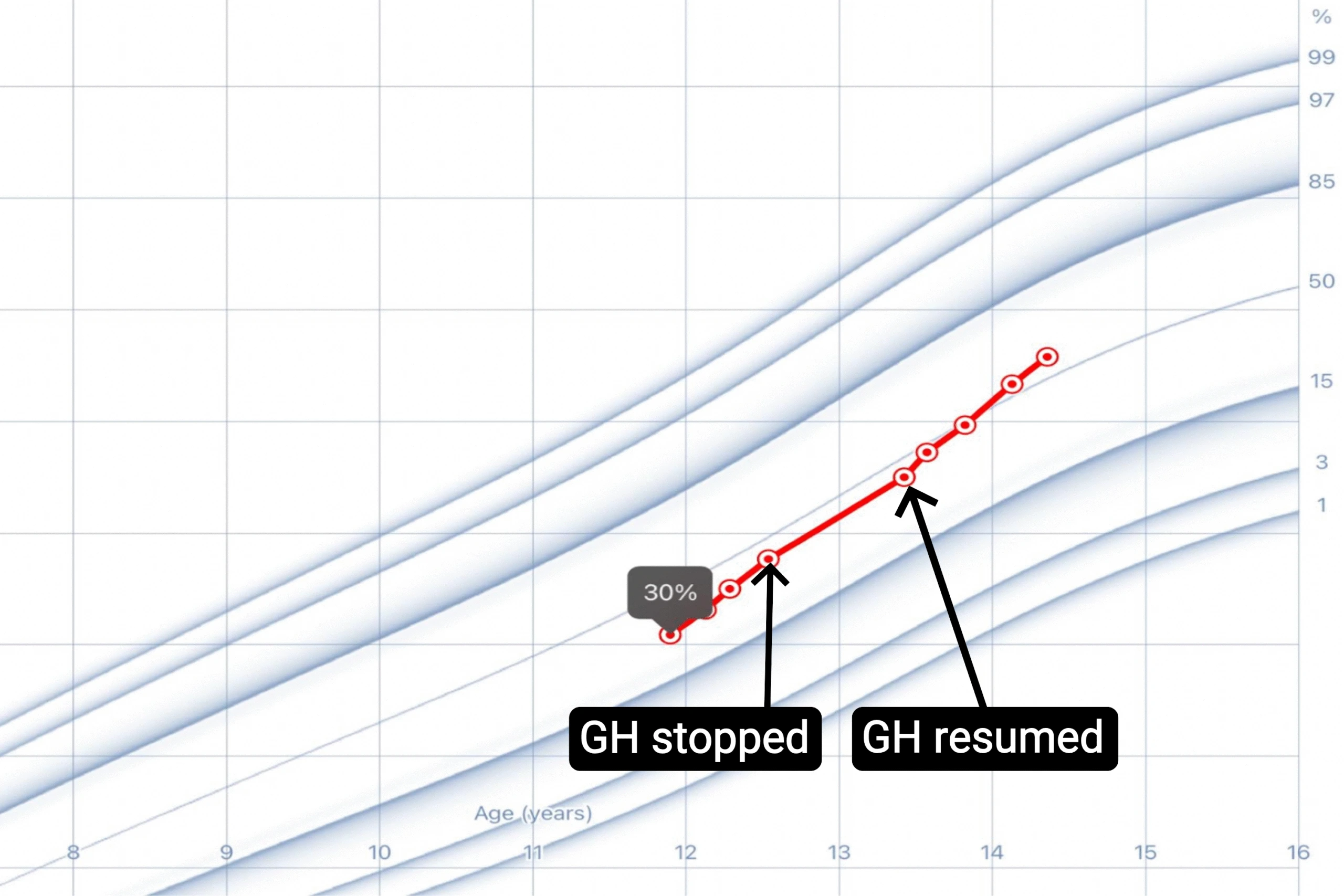
The chart below shows one of our patients who maintained his growth percentile during a one-year pause in GH therapy (from age 12.5 to 13.5) — clear evidence that his natural growth hormone production remained active and healthy. When GH therapy was resumed, his percentile began to rise again.
Can GH therapy cause diabetes?
Our own, natural growth hormone plays an important role in the body — not only in children, but in adults as well. It’s not just a “height hormone.”
It helps regulate how the body uses fat, protein, and sugar for energy, and one of its normal roles is to help keep blood sugar from dropping too low.
When we add growth hormone through treatment, that same effect can become a little stronger for a short time. However, when therapy is done within a safe, weight-based dose range and under regular lab monitoring, the risk of developing diabetes is extremely low — almost zero.
Does GH therapy increase the risk of cancer?
Growth hormone’s role is to promote growth — not just in height, but in many tissues throughout the body. So in theory, if someone already has cancer cells, growth hormone could potentially stimulate those existing cells to grow faster.
However growth hormone therapy does not create cancer in a healthy child. Our natural GH does this same growth-promoting work every single day — helping tissues renew, muscles repair, and bones stay strong.
The hormone itself isn’t harmful; the concern only applies if a tumor already exists. Children with a past or active cancer diagnosis are not candidates for GH treatment.
But for healthy children, under medical supervision, there is no evidence that GH therapy increases the risk of developing cancer.
“We never felt rushed or pressured. Just guided, step by step, with care.” — Parent of a 12-year-old boy

When Done Responsibly
Growth hormone therapy isn’t a magic fix — it’s a carefully guided medical process that works best when handled with precision, patience, and heart.
From the very first consultation, we help parents set realistic expectations — explaining how much growth may be possible based on each child’s bone age, stage of puberty, and remaining growth potential. The goal is never to change who a child is, but to support their natural growth within the time their body allows.
Every decision, from the starting dose to when treatment should stop, is made through evidence, conversation, and trust.
When done responsibly, GH therapy remains one of the safest and most rewarding tools we have for helping children with short stature reach their full potential.
And above all, it’s about giving children and their families the confidence that they are not alone — that their child’s growth journey is being guided thoughtfully, with honesty and expertise.
#GrowthHormoneTherapy #ChildGrowth #EvidenceBasedMedicine #GrowthJourney