
Switch Language:

Child sitting at a desk with slouched posture, showing rounded shoulders and forward head position.
Many children develop slouching from long hours at desks or screen time.

3 Exercises to Fix Slouching and Rounded Shoulders in Children

Gentle, Safe Posture Correction for Growing Bodies

“My child always slouches. Should I be worried?”

This is one of the most common concerns I hear from parents — often after noticing their child’s posture in photos or while sitting at a desk.

You’re not imagining it.Slouching, or what we call “postural kyphosis,” has become increasingly common in school-age children — largely due to long hours of sitting, phone and tablet use.

I’m Dr. Choi, a physician specializing in child growth and rehabilitation.In my clinic, I see hundreds of children each year with posture-related issues that subtly affect not just their appearance, but also their confidence and growth potential.

Pediatric physician explaining good posture to a child and parent in a bright clinic setting.
Early awareness helps children correct slouching before it becomes a habit.
The good news is that most cases of slouching and rounded shoulders can be corrected with simple, targeted exercises — when practiced regularly and properly supervised.

Understanding Slouching and Rounded Shoulders
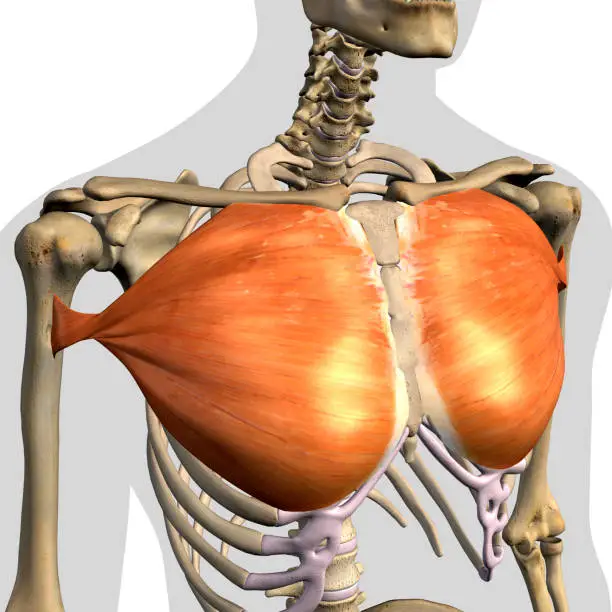
Illustration comparing correct posture and slouching posture, showing tight chest muscles and weak back muscles.
Slouching develops when front muscles tighten and back muscles weaken.
Illustration comparing correct posture and slouching posture, showing tight chest muscles and weak back muscles.

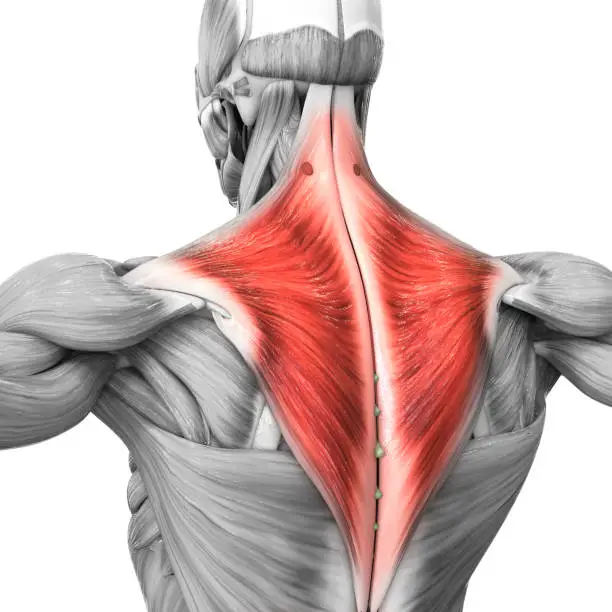
Slouching happens when the chest muscles (pectorals) tighten and the upper back and shoulder stabilizers weaken.
Over time, this imbalance pulls the shoulders forward, causing the neck to drift ahead and forcing the head to carry more weight than it should.
The chest collapses inward and the upper spine curves outward — a posture commonly linked to “text neck” and forward head alignment. 
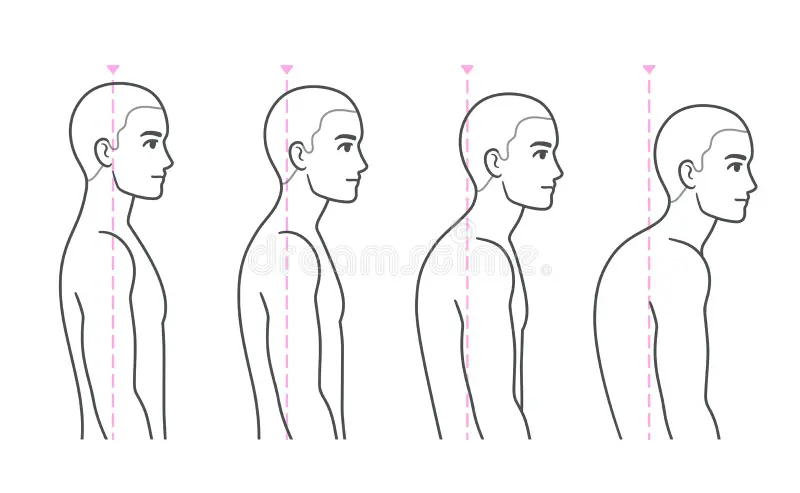
Diagram showing forward head posture caused by slouching, with neck carrying extra load.
As shoulders round forward, the head shifts ahead — increasing strain on the neck.
In growing children, this can lead to:

But here’s the hopeful part:
Children’s posture is highly adaptable.
With consistent stretching and strengthening, their shoulders can return to a healthy, upright position — and the habit of slouching can be reversed.

3 Doctor-Recommended
Exercises to Fix Slouching

These exercises are safe, simple, and effective for children and teens. They require no special equipment — just a wall, a resistance band, and a few minutes each day.

1️) Wall Angel Stretch — The Best Reset for Slouching

Purpose:

Opens the chest, activates the upper back, and retrains the shoulder blades to stay down and back — counteracting daily slouching.

How to do it:

  1. Stand with your back flat against a wall — head, upper back, and hips touching.
  2. Raise both arms up like a goalpost (“W” position).
  3. Slowly slide your arms upward toward a “Y,” keeping contact with the wall.
  4. Return to start. Repeat 10–15 times.

Tip: Move slowly and avoid arching your lower back. Feel your shoulder blades glide downward with control.

2) Resistance Band Pull-Aparts - Building The Anti-Slouch Muscles

Purpose:

Strengthens the rhomboids and mid-trapezius — the key muscles that counteract slouching and rounded shoulders.

How to do it:

  1. Sit or stand tall, holding a resistance band at shoulder height.
  2. Gently pull the band apart, squeezing your shoulder blades together.
  3. Return slowly to the center. Repeat 12–15 times for 2 sets.
Tip: Keep shoulders down and chest open. Imagine “pinching a pencil” between your shoulder blades each time you pull.

3) Overhead Band Stretch - Opening The Chest And Releasing Slouching Tension

Purpose:

Improves shoulder flexibility, strengthens stabilizers, and balances tension between the front and back of the body — key to fixing slouching.

How to do it:

  1. Hold the band slightly wider than shoulder-width.
  2. Raise your arms overhead, keeping elbows straight.
  3. Stretch gently and pause for 3–5 seconds, then return to start.
  4. Repeat 10–12 times.
Tip: Don’t force your range — steady, gentle motion builds flexibility safely.

How Often Should Kids Do These?

Children’s posture improves fastest when these moves are done consistently and comfortably.

Final Thoughts — Standing Taller, Growing Stronger

Correcting slouching isn’t just about appearance.
It’s about helping your child’s growing body move freely, stand tall, and build the confidence that comes from good posture.

Posture isn’t just alignment — it’s a reflection of strength, balance, and confidence.
When children learn to move with awareness, they don’t just stand taller — they grow stronger from within.

Smiling child standing tall with good posture after consistent exercises.
Healthy posture supports not just growth — but confidence and presence.

Frequently Asked Questions (FAQ)

1. At what age should I start posture exercises for my child?

Children as young as 6 or 7 years old can begin gentle posture exercises, as long as they can follow simple instructions. The key is supervision and keeping movements fun and brief — consistency matters far more than intensity.

2. Can slouching affect my child’s height or growth?

Mild slouching won’t stop growth plates from working, but it can reduce the appearance of height by rounding the shoulders and collapsing the chest. Over time, poor posture can also cause muscle imbalance and fatigue, making it harder for children to stay active — which indirectly affects healthy growth patterns.

3. How long does it take to see improvement?

With daily practice — just 5 to 10 minutes a day — most parents notice better posture within 3 to 4 weeks. Consistency is key: gentle, repeated correction helps retrain muscle memory far more effectively than occasional long sessions.

4. Is it safe for children to use resistance bands?

Yes — when used correctly and with light resistance. Choose a soft or medium band, and focus on slow, controlled movements rather than force. The goal is coordination and awareness, not strength training.

5. What if my child’s slouching seems severe or one-sided?

If your child’s shoulders or spine appear uneven, or if posture correction causes pain or stiffness, it’s best to get a professional evaluation. Pediatric rehabilitation specialists or physical medicine physicians can check for scoliosis or muscle imbalance and provide individualized exercises.

6. How can I help my child maintain good posture at school?

Encourage short standing breaks every 30–40 minutes, feet flat on the floor when sitting, and a screen positioned at eye level. Packing a light backpack and keeping both straps on the shoulders also prevents extra strain on the spine.

Founder and Lead Physician

Meet Dr. Sung S. Choi

Dr. Choi is a board-certified Physical Medicine and Rehabilitation specialist with 20 years of experience in growth, bone, muscle health. She founded I Grow Clinic to provide focused, compassionate treatment for children with growth concerns.

Join Our mailing list!
Stay informed of new blog posts and upcoming appearances!
Explore More Blogs
Discover other insightful and engaging content from our blog
2025-10-02
How Growth Hormone Can Support Short Children Even Without GH Deficiency
2025-10-08
Understanding Myths vs. Medical Facts about Growth Hormone Therapy for Children
2025-10-15
Gentle, Safe Posture Correction for Growing Bodies

Let’s Support Your
Child’s Growth Together

We’re here to support your child’s growth journey every step of the way.

Schedule Appointment

Fill out the form below, and we will be in touch shortly.