Questions That Keep You Up at Night
“My son just turned sixteen. Is there still time for one last surge?”
“His friends are all so much taller but surely boys grow late, right?”
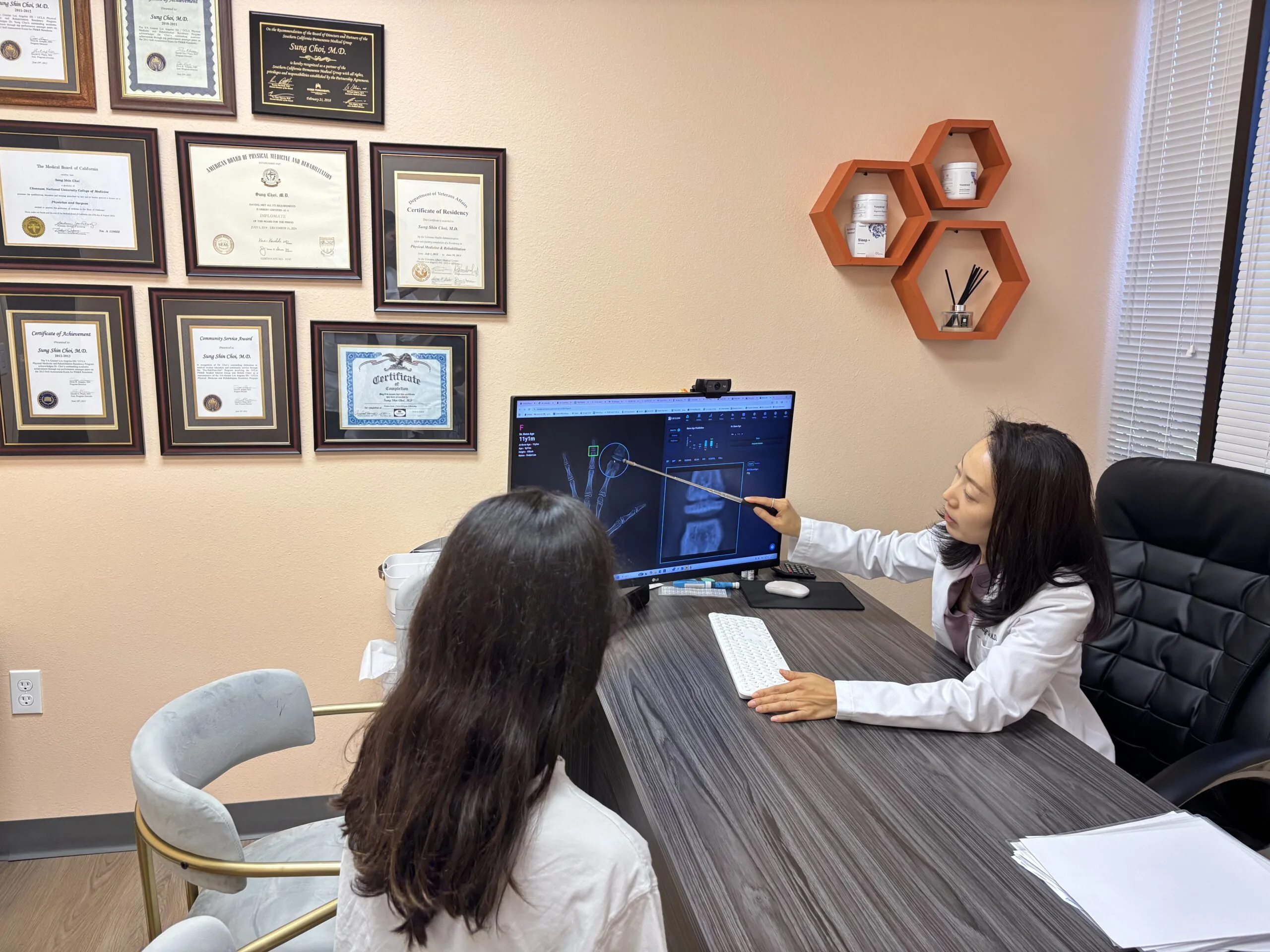
As a medical provider, these are the heartfelt questions parents ask me every day in my clinic. Families often wait for a growth spurt that feels like it has been delayed forever. However, I often find myself looking at a bone-age X-ray that reveals a different story: long-bone growth plates that are already narrowing or even closed.
I understand the deep disappointment this brings; it is why I am so passionate about moving past the “wait and see” approach to provide you with clear, honest answers while the window is still open.
Meet Sunjo Chung, FNP
Hello, I am Sunjo Chung, FNP at I Grow Clinic. Alongside Dr. Choi, a board-certified physician with over 20 years of experience, I have walked with over 2,500 children on their journey to reaching their full growth potential. To us, these aren’t just medical records; they are unique stories of building confidence. We provide elite pediatric growth care for families in Southern California and via telehealth in CA, NY, WA, FL, and TX.

How the "Bone Cell Factory" Works
In my exam room, I often call growth plates the “bone cell factory.” These soft cartilage zones at the ends of the bones are where all vertical growth happens. As a child matures, these plates gradually harden and fuse into solid bone, a process called calcification or closure. Once that fusion is complete, the “factory” shuts down, and the door to further height gain is permanently closed.

The Role of Estradiol: The Final Signal
The primary signal for this factory to close is a hormone called estradiol (a form of estrogen). While we often think of estrogen only in relation to girls, it is critical in boys too, triggering the plates to harden and fuse. Because girls naturally have higher levels of estrogen, their growth plates receive the signal to close much sooner.
Chronological Age vs. Bone Age
Your child’s actual age doesn’t tell the whole story. To understand remaining potential, we must look at Bone Age.
we must look at Bone Age.
Feature | Chronological Age | Bone Age (Skeletal Maturity) |
|---|---|---|
Definition | Years passed since birth. | Biological age of the “bone cell factory.” |
How it’s Measured | Your child’s birthday on the calendar. | A specialized hand and wrist X-ray evaluation. |
Significance | Used for school grades and social milestones. | Used to determine remaining height potential. |
The “Late Bloomer” | May be 16 but physically short. | May show a bone age of 14, meaning years of growth remain. |
Chronological Age vs. Bone Age
- For Boys: The fastest height-gaining phase usually occurs between ages 13 and 15. Long bone growth plates typically begin to close around age 16.
- For Girls: Growth usually slows significantly 1–1.5 years after their first period (menarche). Long bone growth plates generally fuse between ages 13.5 and 14.5.

Real Results: Visualizing the Potential
When families understand these signs early, they can make wiser and more timely decisions to support their child’s development. When treatment is started while the growth plates are active, meaningful transformations are possible.


Home Monitoring: Signs the Window is Closing
While a bone-age X-ray is the most accurate tool, you can track physical markers at home:
- Puberty Milestones: Pubic hair often marks the start of the spurt; voice changes signal the peak; and prominent facial hair usually signals the end of the spurt is nearing.
- Height Velocity: If annual growth slows to less than 2 inches (5 cm) before age 16, it is a strong signal the window may be closing.
- The “Pants and Shoes” Test: During peak spurt, they outgrow sizes every few months. When this suddenly plateaus, the factory is likely preparing to shut down.
Why We Don't "Wait and See"
I often see parents who were encouraged to “just wait,” only to find out at age 16-17 that the long-bone growth plates have already fused. At that point, the “bone cell factory” has officially closed its doors, and the opportunity for major height gain has passed. Identifying these signs early – while the factory is still active – is the only way to make informed decisions about your child’s remaining potential.
Nourishing the Factory: Healthy Habits While the Window is Still Open
- Prioritize Sleep Before 10 P.M.: Growth hormone is primarily released during deep sleep.
- Fuel with Protein and Calcium: Focus on balanced meals with dairy or lean meats to provide the “building blocks” for skeletal growth.
- Encourage Daily Physical Activity: Movement supports bone strength, posture, and overall development.
- Minimize Sugar and Stress: Helping kids manage screen time and stress is vital for hormonal balance.
A Partnership for Growth: How We Support Growth
While healthy habits provide the foundation, some children require more direct clinical support if their growth velocity is not meeting its potential. In our clinic, we monitor these biological rhythms carefully to determine if medical intervention is appropriate while the window is still open.
- Growth Hormone Therapy: This is a safe, time-tested tool used for over 40 years for children whose “factory” is active but moving slower than expected.
- Enhancing Velocity: Typically, pre-puberty children grow 1.6–2.4 inches per year; with therapy, that rate often increases to 3 to 4 inches per year.
- No “Borrowed” Growth: Growth hormone does not “use up” the spurt; it simply enhances the factory’s current output while the growth plates are still open.
Our Promise: A Journey Built on Informed Decisions
Your child’s growth is a mission we share. Don’t wait until the sharp dive in growth velocity happens. By understanding the science and utilizing a growth plate exam, we can stop the guesswork. My goal is to give your child the confidence that comes with reaching their full potential. If you’re worried about the clock, let’s look at the science together before the window closes.
Why We Don't "Wait and See"
- Can growth hormone work if plates are almost closed? It depends on the degree of closure. If they are still partially open, meaningful gains can often be achieved.
- Does lifting weights close growth plates? This is a myth. Closure is driven by hormones (estrogen and testosterone), not external pressure.
- My child hit puberty early. Does that mean their plates will close early? Puberty hormones speed up bone maturation, often making the growth window shorter.
- Is growth hormone therapy safe? Yes, when prescribed and monitored by an experienced physician. It has been used on millions of children for over 40 years.
- How much do children actually grow with therapy? Pre-puberty children often increase from 1.6–2.4 inches per year to 3 to 4 inches per year with treatment.
- ChildGrowth, EvidenceBasedMedicine, Featured, GrowthHormoneTherapy, GrowthJourney, PediatricWellness

Founder and Lead Physician
Meet Dr. Sung S. Choi
Join Our mailing list!
Stay informed of new blog posts and upcoming appearances!