When Puberty Arrives Before the Peers
“My daughter is nine, but she’s already the tallest in her class. Does that mean she’ll be a tall adult, or is she just growing too fast?”
“I noticed my son needs deodorant and his voice is changing, but he’s only in the 4th grade. Are we running out of time for him to grow?”
As a Nurse Practitioner at I Grow Clinic, I encounter these specific, heart-tugging worries every day. There is a unique kind of stress that comes when your child’s physical development seems to be on a different timeline than their peers. While other parents might celebrate a sudden growth spurt, you might be looking at your child and feeling a quiet, nagging intuition that the “adult” version of them is arriving much sooner than the calendar says it should.
If you’ve noticed your child hitting puberty milestones while their friends still look like “little kids,” you aren’t being over-anxious. You are noticing a mismatch between their age and their internal biological clock and specifically, how early puberty acts as a fast-forward button that can shorten their growth journey.
Meet Sunjo Chung, FNP
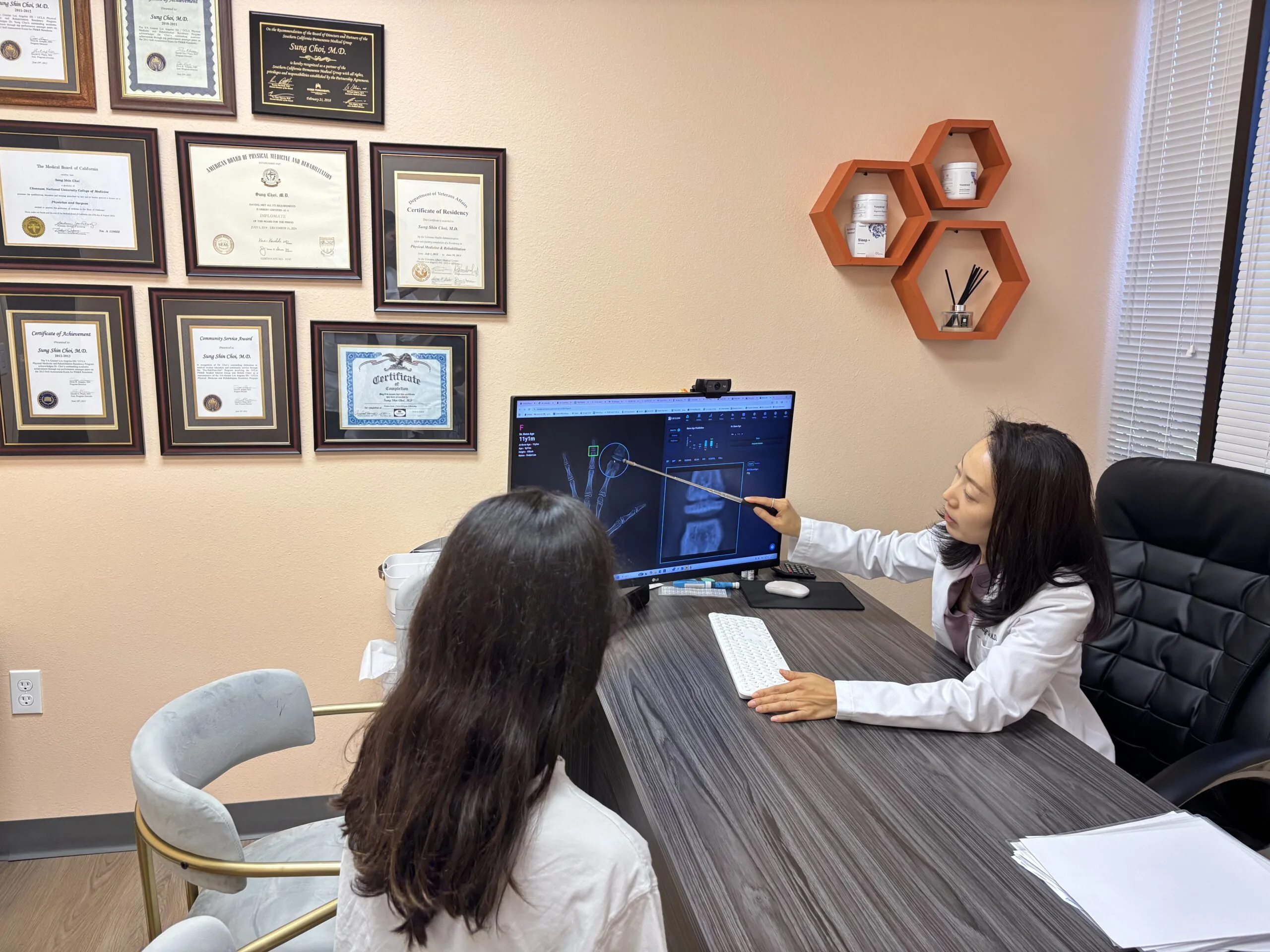
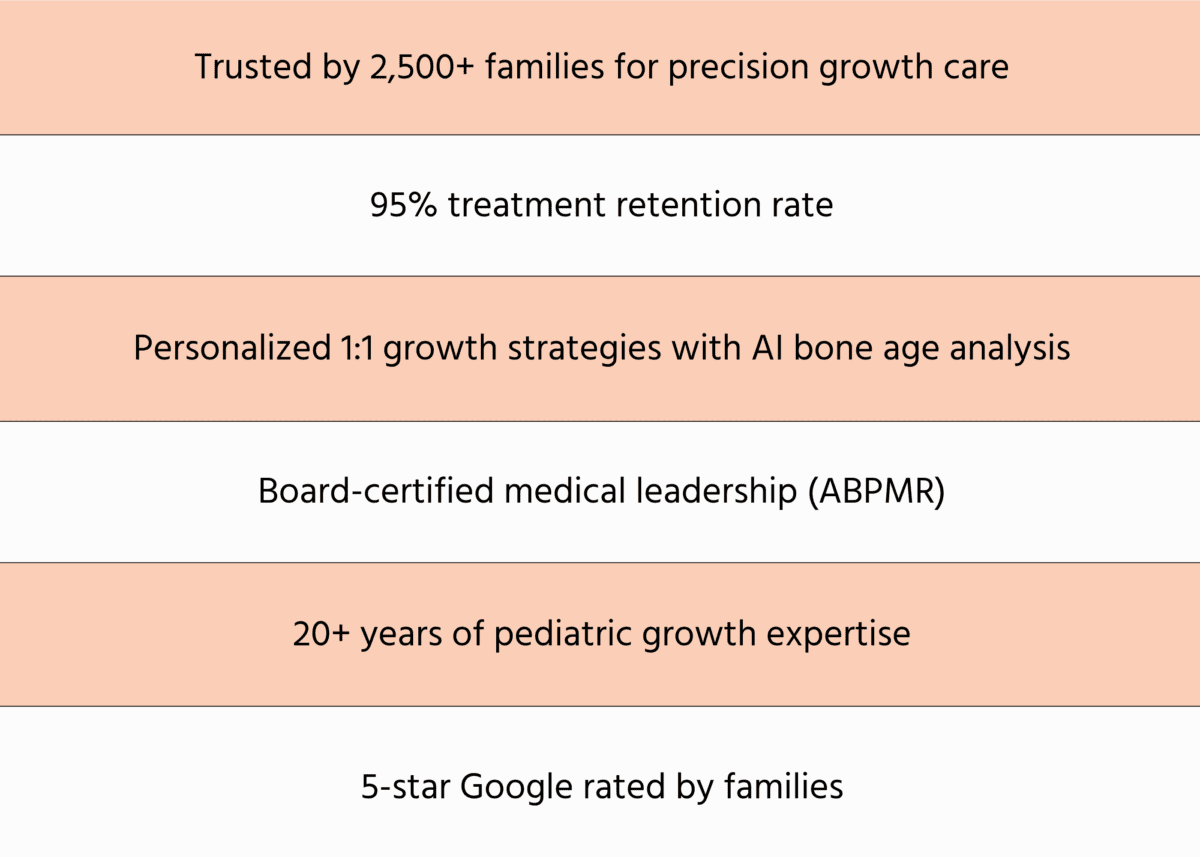
Hello, I am Sunjo Chung, FNP at I Grow Clinic. Alongside Dr. Choi, a board-certified physician with over 20 years of clinical experience, I have helped nearly 4,000 children navigate the complexities of growth.
To us, these aren’t numbers on a chart; they are unique stories of building confidence. From our Southern California clinic and through specialized telehealth services in CA, NY, WA, FL, and TX, we use advanced, AI-driven analysis to understand each child’s individual story. We believe in moving past the “wait and see” approach to provide you with clear, honest answers while your child’s growth window is still open.
Why Families Trust I Grow Clinic
The Biological Clock: Bone Age vs. Chronological Age
To accurately understand your child’s height potential, we must look at two distinct “ages” that are often out of sync:
- Chronological Age: This is the number of birthdays they’ve celebrated.
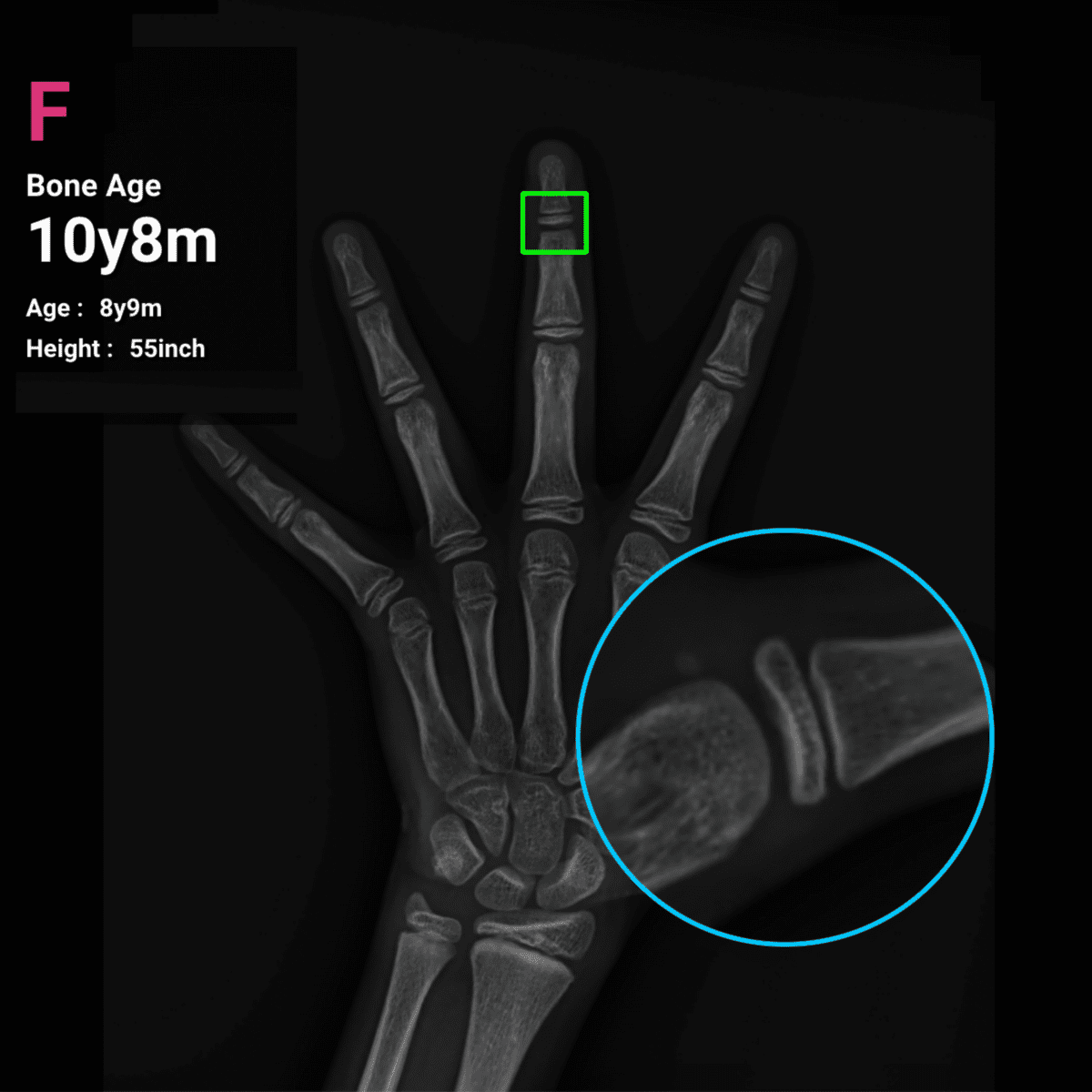
- Bone Age (Skeletal Age): This is the true biological age of the “bone cell factory”. It measures how mature your child’s bones are and reveals exactly how much of the growth window remains open. A growth plate evaluation is how we measure it.

The Puberty Connection: The “Fast-Forward” Button
Puberty is the most powerful engine driving skeletal maturity. During this phase, sex hormones send a critical signal to the growth plates to initiate the final “spurt” before beginning the process of hardening into solid bone
- The Risk of Early Puberty: If a child enters puberty earlier than their peers (sometimes called Precocious Puberty) their bones begin maturing at an accelerated rate. This means their bone age starts climbing much faster than the calendar years.
- The “Tall Child” Paradox: It is a common misconception that being the tallest in the class at age 10 or 11 guarantees a tall adult height. If that child’s Bone Age is significantly advanced, their growth plates may fuse as early as age 13 or 14, while their peers continue growing until 16 or 18.
🔍 Learn more about how growth plates work and when they close
When the Clocks Don’t Match
It is very common for these two ages to be out of sync, which can lead to very different growth outcomes:
- The “Late Bloomer”: Imagine a 14-year-old boy with a bone age of only 12. While he may feel he is “missing out” as his friends shoot up, he actually has a “gift” of two extra years of growth potential compared to his peers.
- The “Early Mature”: Conversely, a 10-year-old girl with a bone age of 12 has a “factory” running on an accelerated schedule. Even if she is currently one of the tallest in her class, her growth window may close much sooner than expected.
Warning Signs: How do I know if my child’s growth window is closing?
Advanced bone age isn’t always obvious to the naked eye, but there are specific “red flags” parents can monitor closely at home. If you notice these indicators, it may be time for a professional bone age study to accurately measure your child’s skeletal maturity.
1. The Early Growth Spurt
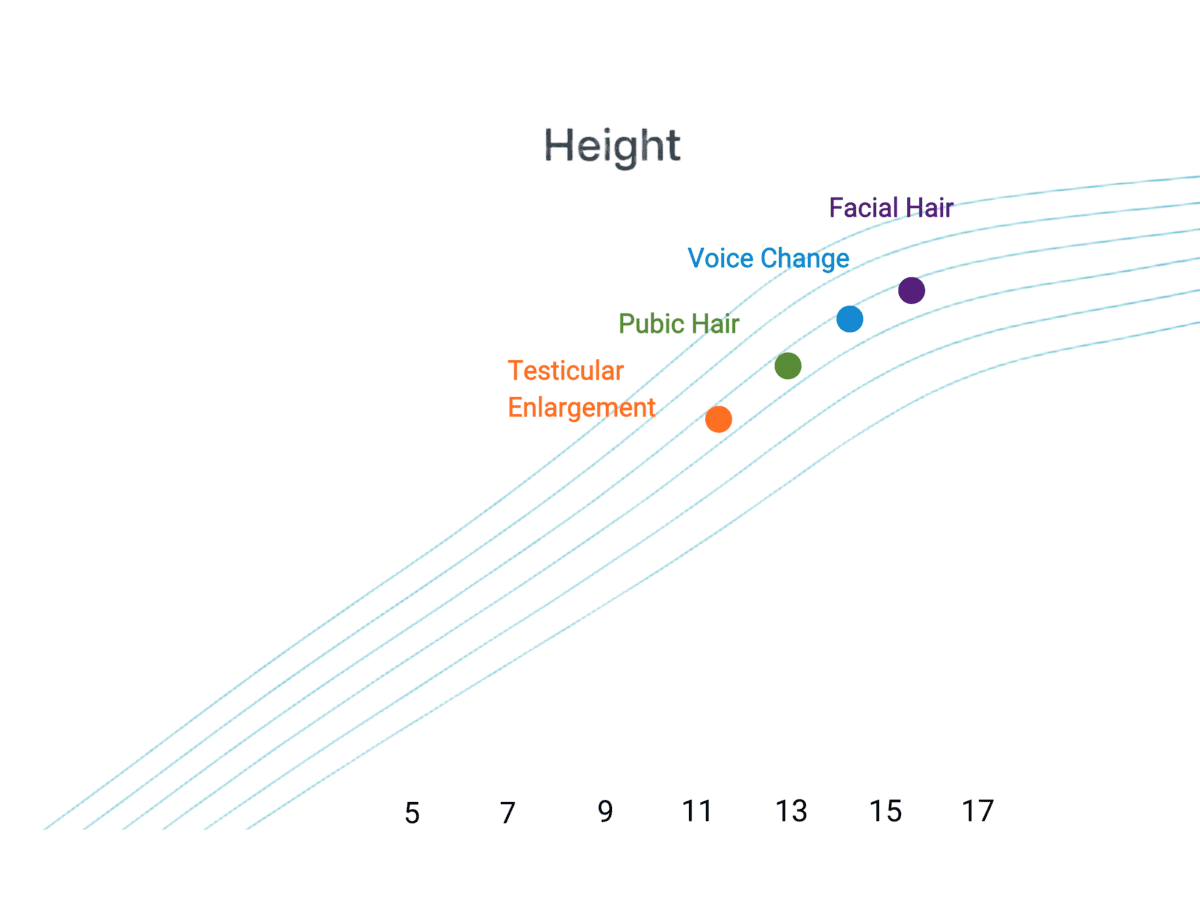
If your child suddenly shoots up in height significantly earlier than their peers, it might not just be “good genetics”. This sudden surge is often the first visible sign of early hormonal activation. While it looks like “great growth” in the moment, it is often a biological signal that the growth plates are maturing rapidly and the window for height gain is closing early.
2. Early Signs of Puberty
Puberty and bone age are inextricably linked. When sex hormones rise, they act as a “fast-forward” button on bone maturation.
- For Boys: Look for noticeable testicular enlargement or early pubic hair.
- For Girls: Watch for early breast development before age 8–9 or starting a period before age 10.
3. Physical Maturity vs. Peer Group
Observe your child’s physical structure compared to their chronological age group. Does your 11-year-old already have the muscle definition, deeper voice, or facial structure of a 14-year-old? If the “outside” looks significantly older than the “calendar” age, it is highly likely that the “inside” (the skeletal system) is advanced as well.
If any of these three signs match what you are seeing at home, a bone age study will tell you how much time is actually left.
How We Exactly Measure the Window: Growth Plate Exam (Bone Age Study)
Our growth plate evaluation uses a simple, 2-minute, low-dose X-ray of the left hand and wrist to conduct a bone age study.
Why the hand? The hand and wrist contain many small bones and growth plates that mature in a very predictable pattern. With this single hand X-ray, we can determine the bone age of the entire body, not just the hand.
At I Grow Clinic, we take this a step further with AI-Enhanced Analysis. This technology allows us to compare your child’s bones against thousands of data points with microscopic precision.
With this AI technology, we can:
- Calculate your child’s remaining height potential.
- Provide a reliable final estimated adult height.
- Determine if medical intervention is needed to “buy more time” for growth by slowing down the maturation process while growth plates are still active.
This study serves as a data-driven roadmap, moving families past the “wait and see” cycle to make informed decisions while the growth window is still open.
Why Accuracy Matters
It is heartbreaking to see a family walk into our clinic when a child is 13, only for us to discover their growth plates are already near fusion because puberty started early and went unmonitored. In those moments, we truly wish we had met just a few years earlier. I want to speak to you not just as a provider, but as someone who understands the emotional weight and desperation that comes with these results.
Here is the truth: Knowledge is the only way to protect what is left.
If we catch an advanced bone age early, we can often take action through lifestyle optimizations or growth hormone treatment for children to slow down the fusion of the growth plates and maximize every remaining centimeter before the factory shuts down. The “wait and see” approach is often the enemy of potential. If your child is developing faster than their peers, trust your gut. Clarity is the greatest gift you can give your child.
A Promise from I Grow Clinic

Your child’s growth is a mission we share. We believe medicine should empower, not intimidate. We are here to give you the clarity you deserve and the science-backed plan your child needs to rise into their full potential.
Don’t let the clock run out on guesswork. Don’t wait until the sharp dive in growth velocity happens. Whether you are in Southern California or across the country in New York, Texas, Washington, or Florida, let’s look at the science together before the window closes.
FAQ: What Most Parents Ask About Bone Age
Can bone age be “reversed” or slowed down?
While we cannot reverse maturation that has already happened, we can sometimes slow the rate of future maturation by addressing underlying hormonal imbalances or using medically supervised growth hormone treatment to preserve the growth window.
My child’s bone age is 14. Can they still grow?
It depends on their gender and the degree of growth plate closure. For a boy, a bone age of 14 usually means the peak growth spurt is occurring, with meaningful time left. For a girl, a bone age of 14 often signals the window is nearing its end.
Does a “tall” child always have an advanced bone age?
Not necessarily. A child can be tall because of strong genetics (tall parents) while having a bone age that perfectly matches their chronological age. The concern arises when a child is tall because their bones are maturing too fast.
What causes bone age to advance?
The most common drivers are early puberty, childhood obesity (which can increase estrogen levels), and certain endocrine disorders. Identifying the “why” is the first step in our clinic.
What if the bone age is “younger” than my child’s age?
This is usually good news! It suggests your child might become a “late bloomer” and has more time to grow than the average child. We monitor these children to ensure they eventually hit their spurt and reach their full genetic potential.
While we cannot reverse maturation that has already happened, we can sometimes slow the rate of future maturation by addressing underlying hormonal imbalances or using specific treatments to preserve the growth window.
It depends on their gender and the degree of growth plate closure. For a boy, a bone age of 14 usually means the peak growth spurt is occurring, with meaningful time left. For a girl, a bone age of 14 often signals the window is nearing its end.
Not necessarily. A child can be tall because of strong genetics (tall parents) while having a bone age that perfectly matches their chronological age. The concern arises when a child is tall because their bones are maturing too fast.
The most common drivers are early puberty, childhood obesity (which can increase estrogen levels), and certain endocrine disorders. Identifying the “why” is the first step in our clinic.
This is usually good news! It suggests your child might become a “late bloomer” and has more time to grow than the average child. We monitor these children to ensure they eventually hit their spurt and reach their full genetic potential.