“I Want to Help My Child Grow — But What If It Hurts Them?”
“We’ve been researching growth hormone for months. The results sound incredible. But then I read about side effects, and now I don’t know what to do.”
“Our pediatrician said our son is a candidate for growth hormone support. But when I searched online, I found so many scary articles. Are those risks real?”
If you’ve had a moment like these, you are not alone. And the fact that you are pausing to ask these questions before making any decision means you are doing exactly what a responsible, informed parent should do.
Growth hormone therapy for healthy children with short stature is one of the most searched, most debated, and most misunderstood topics in pediatric medicine. When parents search online, they often find information written for adults, for patients with diagnosed hormone deficiencies, for people misusing the hormone at doses far beyond what any physician would prescribe, or even for patients with pituitary tumors that produce uncontrolled amounts of growth hormone on their own. A significant portion of what you find simply does not apply to a healthy but shorter-than-average child.
If you have felt confused or overwhelmed by what you have read, this post is for you.
About I Grow Clinic
I am Dr. Choi, founder and Medical Director of I Grow Clinic. I am board-certified by the American Board of Physical Medicine and Rehabilitation with over 20 years of clinical experience. Since opening our clinic in 2021, our team has guided nearly 3000 children across the United States through their individual growth journeys.
Our approach has always been the same: we take the time to understand each child’s unique growth story, answer every question honestly, and give you the clearest picture possible of where your child stands and what their options are.

Why Families Across the U.S. Trust I Grow Clinic
| Credential | Detail |
|---|---|
| Children guided | Nearly 3,000 with precision growth strategies |
| Treatment retention | 95% rate, reflecting exceptional outcomes and family trust |
| Approach | Meticulous 1:1 personalized management using AI-driven bone age analysis |
| Medical Director | Board Certified by the American Board of Physical Medicine and Rehabilitation (ABPMR) |
| Experience | 20+ years specializing in Pediatric Growth and Developmental PM&R |
| Reputation | 5-Star Google Rating with numerous testimonials |
| Telehealth | Available in CA, NY, WA, FL, and TX |
Why the Internet Gets This Wrong
When you search “growth hormone side effects,” most of what you find describes one of three very different situations:
- Situation 1: Adults with a pituitary tumor producing massive, uncontrolled amounts of growth hormone (acromegaly). This causes enlarged hands, feet, and facial features, and is a serious medical condition entirely unrelated to pediatric growth therapy.
- Situation 2: Athletes and bodybuilders using high, unsupervised doses of growth hormone to build muscle. The doses used in performance enhancement are far beyond what any physician would prescribe for a child, and the risks are proportional to that abuse.
- Situation 3: Children with a diagnosed growth hormone deficiency receiving replacement doses to bring their levels to normal range.
Your child, if shorter than peers but otherwise healthy, fits into none of these categories. What you are considering is a carefully calibrated, weight-based, physician-monitored protocol designed to bring growth support within a safe and physiologic range. The context matters enormously, and most online articles never make this distinction.
The Side Effects: A Complete Guide for Parents
Growth hormone therapy, like any medical treatment, comes with a range of possible side effects. Here is what the research shows, and what our clinical experience tells us about each one.
1. Fatigue and Increased Sleep in Younger Children
In our clinical experience, the most commonly observed response in younger, pre-pubertal children during the first week of treatment is increased fatigue. Children may seem more tired than usual and want to sleep more. This is the body responding to a new growth signal, and it is generally a sign that the treatment is working.
The important thing to monitor during this period is sleep quality. If a child is feeling the urge to sleep more but is not actually getting that rest, mild headaches can follow from the sleep deficit. This is why from the very first appointment, we counsel every family on sleep habits alongside the treatment itself. How much your child sleeps matters, and so does when. Early nighttime sleep is especially important, as growth hormone is released most strongly in the early hours of the night.
In our experience, this initial fatigue occurs in roughly 20 percent of younger children and typically resolves within the first week as the body adjusts. In older children, this response is significantly less common.
2. Swelling (Edema)
Growth hormone influences how the body retains fluid, particularly during the initial phase of treatment. Mild swelling in the hands or feet can appear early on. We always begin treatment at the lowest effective dose based on the child’s current weight. In some children whose bodies respond more sensitively to growth hormone, mild swelling in the hands or feet can appear in the early weeks. In rare cases, this swelling can temporarily press on nearby nerves, causing a tingling sensation in the hands, similar to the temporary carpal tunnel symptoms some women experience during pregnancy from fluid retention. When this happens, it is temporary, and a small dose adjustment is usually all that is needed to resolve it.
3. Thyroid function and Blood Sugar
Kids’ natural growth hormone does more than just drive height. It also plays a role in thyroid regulation and helps keep blood sugar from dropping too low. The growth hormone used in treatment is the exact same molecule the body naturally makes, which means it carries all of those same functions.
When we add a growth hormone boost, we want to make sure those other functions are not being pushed too far. That is why we require a full screening blood panel before starting treatment to confirm everything is normal at baseline. If anything comes back abnormal, we do not proceed. Throughout the course of treatment, we monitor bloodwork on a regular basis.
There is also a safe dosage range based on body weight. We are essentially giving the body the amount it can handle comfortably, and we never exceed that range. Our goal is always the lowest effective dose, enough to produce a meaningful response without placing unnecessary stress on the body’s other systems. When therapy is managed this way, the risk of developing diabetes later in life remains extremely low.
4. Joint and Muscle Discomfort
Some children experience mild aching in their joints, muscles, or limbs during the early weeks of treatment. Think of it as a form of growing pain. The body is responding to an accelerated growth signal, and the bones and soft tissue are adapting. It is almost always manageable and temporary. In most cases, a warm compress and gentle massage are enough to provide relief.
5. Headaches and Increased Intracranial Pressure
Benign intracranial hypertension, a temporary increase in pressure within the skull, is something that can occur when growth hormone is given at high doses over a prolonged period. When dosing stays within a safe, weight-based range, this is not something we typically see. It is one of many reasons why exceeding the recommended dose range is never justified, regardless of how much more growth a family might want.
6. Slipped Capital Femoral Epiphysis (SCFE)
The hip joint contains one of the thickest, most active growth plates in the body. In rare cases, boys going through a rapid growth phase can develop SCFE when obesity is placing excessive load on that growth plate at the same time. The combination of a heavy body weight and a growth plate working at full capacity is what creates the risk. When growth hormone treatment is added and the hip growth plate is pushed to work even harder, that risk can increase further. This is why we do not recommend starting treatment in children with a BMI above 27. Weight management comes first, and we revisit treatment once a healthier BMI is reached.
7. Cancer Risk
This is the question almost every parent is afraid to ask out loud. I want to answer it directly.
Growth hormone does not create cancer. For a normal cell to become cancerous, the DNA must first be damaged or mutated. Growth hormone does not damage DNA, does not cause mutations, and does not turn a healthy cell into a cancer cell. What growth hormone does is support the growth of cells that already exist.
This distinction matters enormously. For a healthy child who has been screened and has no active or prior cancer history, long-term research consistently shows no increased cancer risk from growth hormone therapy at therapeutic doses.
The concern applies only if cancer cells already exist, because growth hormone could potentially support their growth as well. This is precisely why children with a current or past cancer diagnosis are never candidates for growth hormone therapy, and why our screening process is thorough before we ever begin.
🔍 For more detail on this specific topic, you can read our dedicated post: Does Growth Hormone Therapy Cause Cancer?
8. Will Natural GH Production Be Suppressed?
This is one of the most common questions parents ask. The concern is understandable: if the body is receiving growth hormone from outside, will it start producing less of its own?
At therapeutic doses, this does not happen in any meaningful way. The body continues its own natural production throughout treatment. In our clinic, we have had quite a few children who took a break from treatment for six months to a year before resuming. During that pause, their growth continued at a normal, healthy rate, which tells us that the body’s own growth hormone production remained fully intact throughout.
9. Does Growth Hormone Therapy Cause Early Puberty?
No. Puberty begins when the body’s sex hormones naturally rise, and those hormones then stimulate the body’s own growth hormone to create the pubertal growth spurt. The reverse is not true. Growth hormone does not trigger or accelerate the release of sex hormones. In our clinic, we have treated many children who began therapy years before puberty and have continued for years without entering puberty. Growth hormone stimulates the growth plates. It does not initiate puberty.
10. Does Growth Hormone Therapy Just Speed Up Growth That Would Have Happened Anyway?
Growth hormone does not borrow height from the future. It enhances the body’s ability to grow now by stimulating the growth plates more effectively, without taking away from what comes later. We have seen many children gain 7 to 8 inches during treatment, stop as planned, and then go on to experience a full natural puberty growth spurt of another 7 to 8 inches entirely on their own. The two phases of growth are independent of each other.
What “Safe” Actually Looks Like in Practice
Reading a list of potential side effects without context can make anything sound dangerous. What makes growth hormone therapy safe for healthy children is not the absence of risk. It is the presence of a system designed to catch and manage those risks before they become problems.
At I Grow Clinic, that system includes:
- Before treatment begins: A thorough medical history review, screening bloodwork plus a bone age study to map the remaining growth window.
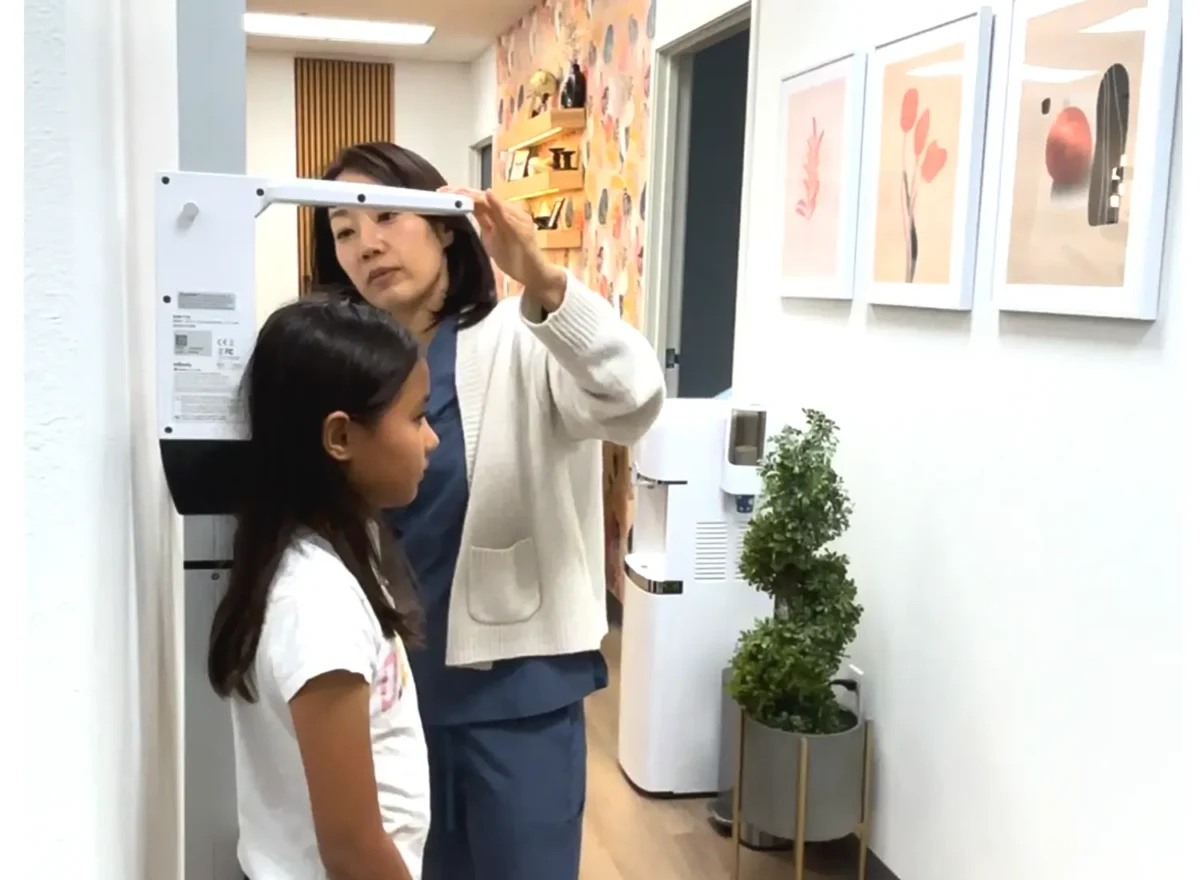
- During treatment: Follow-up appointments at regular intervals, with height measurements, weight checks, and updated lab work. Dose adjustments are made based on growth response, always with the goal of maintaining the lowest effective dose.
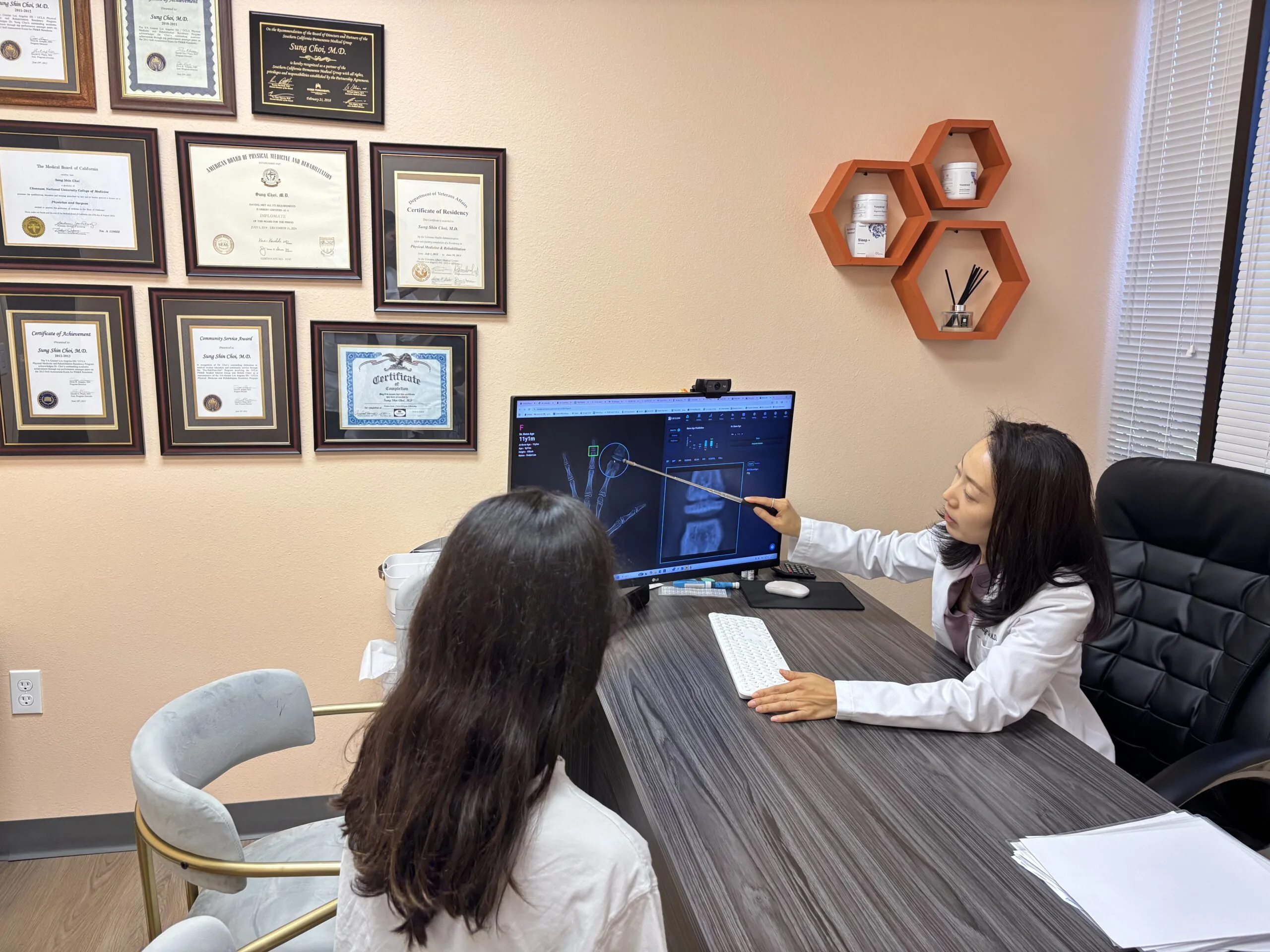
- Ongoing monitoring: Bone age X-rays every 6 to 12 months to track skeletal maturity, ensure the treatment is working as intended, and confirm that bone age is not advancing faster than expected.
- Open communication: Every family in our care has direct access to our clinical team via patient portal. If a parent notices something, we want to hear it the same day, not at the next appointment.
This is what medically guided care means. It is not a prescription written once and filled indefinitely. It is an ongoing, data-driven relationship between your family and our clinical team.
A Note to Parents Who Have Been Waiting
Many parents come to us after months of watching their child sit at the bottom of the class photo, after hearing their child say something painful about their own height, or after being told to “just wait and see.” By the time they reach our clinic, they are not asking out of vanity. They are asking out of love, and out of a quiet fear that the window is closing.
That fear is not irrational. Growth plates do close. The window does narrow with time. For some children, waiting means fewer options later.
At the same time, no parent should ever feel pressured into a decision they don’t fully understand. Our job is to give you the clearest possible picture of both the benefits and the risks, lay out the data honestly, and then support whatever decision you make.
If your child is shorter than their peers, and especially if you have noticed early signs of puberty or a sudden growth spurt at a young age, the most important first step is a precise evaluation of where they actually are in their growth journey.
Related Reading:
- Bone Age vs. Chronological Age: Is Your Child’s Biological Clock Ticking Too Fast?
- How Do You Know If Growth Plates Are Closed?
Don’t let the clock run out on guesswork.
Schedule your precision growth consultation today.
FAQ: What Parents Ask Most About Growth Hormone Safety
1. Are growth hormone side effects in children different from those in adults?
Yes, significantly. Most of the alarming information online describes side effects in adults using high doses, often without medical supervision, for performance or anti-aging purposes. Children receiving weight-based therapeutic doses under physician monitoring experience a much narrower and more manageable range of effects. The dosing, the purpose, and the oversight are entirely different.
2. My child is a sport player. How do I know if my child is having sports related pain vs. growing pain?
Growing pains are typically bilateral, diffuse, and occur at rest, often in the evening. There is no focal tenderness or swelling, and the pain tends to improve with activity. Sports-related pain usually follows overuse or a specific injury, is one-sided and localized, and comes with signs of inflammation such as swelling, tenderness to the touch, and sometimes warmth or redness. It is worse with activity and better with rest.
3. Does my child need blood tests before starting?
Yes, always. Baseline bloodwork is non-negotiable before beginning any growth hormone protocol. This establishes a safety baseline and allows us to dose accurately and monitor changes over time.
4. Can side effects be reversed if we stop treatment?
Most side effects at therapeutic doses, including joint discomfort, mild swelling, and headaches, resolve quickly when the dose is reduced or treatment is paused. Serious irreversible effects, such as those seen with long-term abuse or uncontrolled acromegaly, are not associated with properly supervised pediatric growth hormone therapy.
5. At what point should we stop treatment?
Throughout treatment, we monitor growth response while also tracking bone age with regular X-rays to see how the predicted final adult height is improving over time. Every child responds differently, and that data becomes the foundation for conversations with parents about how long to continue. Rather than applying a fixed timeline, we let each child’s own results guide the decision together with the family.