
The Quiet Shift Most Parents Miss in Their Son’s Growth
“We’ve been waiting for that last big surge, but his height hasn’t budged in months. Is it too late?”
Many parents live in a state of “vague worry,” hoping that a late growth spurt is just around the corner. However, in our clinic, I frequently have to share the heartbreaking news that a child’s long-bone growth plates are already closing or fully fused, meaning the window for significant height gain has ended.
I’m Jenny Diep, nurse practitioner at I Grow Clinic. Our growth plate evaluation precisely analyzes how much growth potential your child has left, so we can provide premium, personalized care to maximize their final height. Our goal is simple: make sure no family finds out too late.
How Do I Know If My Child’s Growth Plates Are Closing? 3 Signs to Watch
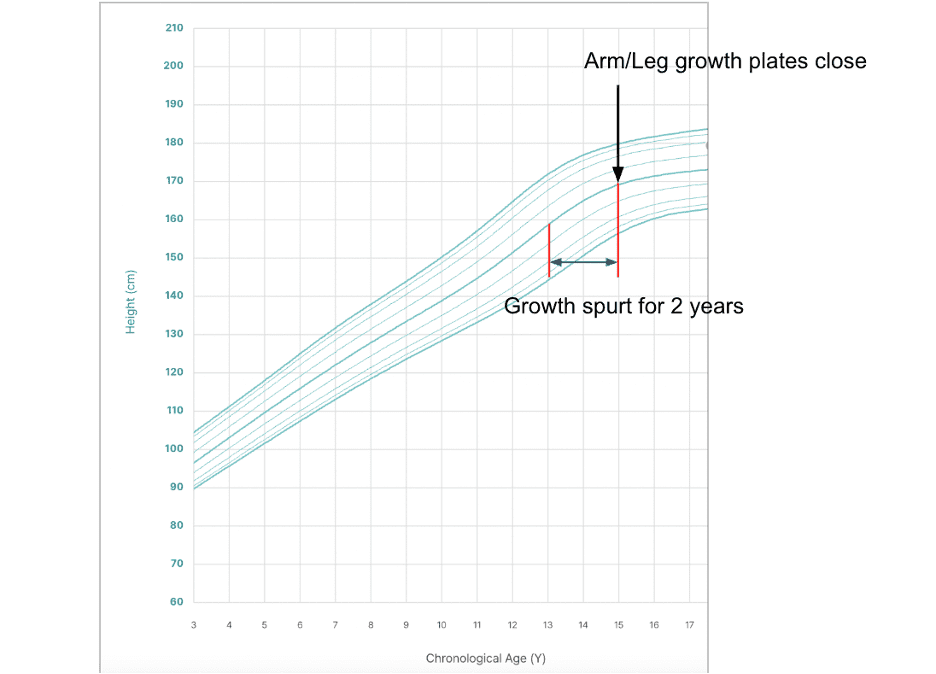
The growth spurt during puberty typically lasts about two years. The most dramatic height gain occurs during the first year of this spurt. In the second year, they begin to “turn the corner,” and growth velocity starts to decelerate. As growth spurt nears its end, there are three key signs that the growth window is beginning to close.
🔍 Want to understand exactly when boys and girls typically hit their peak and how the biology works? Read: What Age Do Growth Plates Close?
1. The “Static” Height Velocity
The most reliable way to estimate remaining time at home is by tracking height velocity.
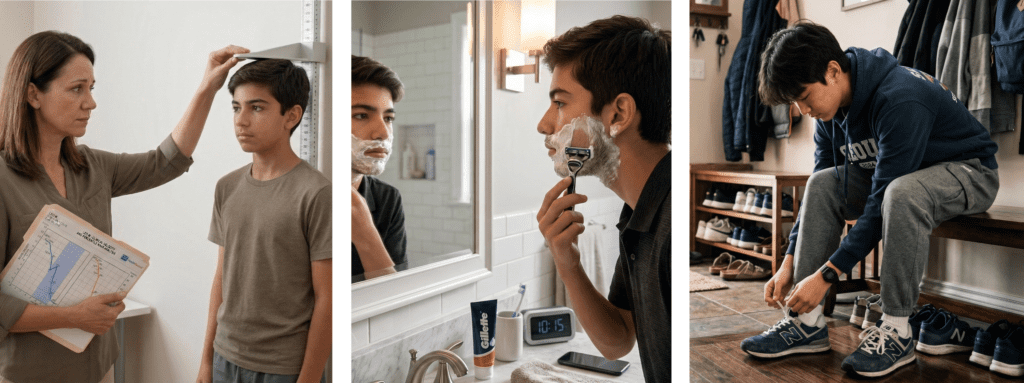
If your child is in the second half of their growth spurt and height gain has slowed to approximately 1 inch in a six-month period, the “construction zones” in the bones are narrowing. This signifies that the most aggressive phase of growth has passed, and the growth window is gradually closing.
2. Late-Stage Puberty Markers (Terminal Hair)
Parents often watch for the start of puberty to predict growth, but to see how much height potential remains, you must watch the finish line.
Signs like voice changes and the appearance of pubic hair typically occur during the first year of the growth spurt, the peak period. Once that peak has passed, facial hair and underarm (axillary) hair become the primary indicators. When a boy begins to develop consistent hair on his chin or cheeks that requires regular shaving, it is a signal that the body is moving past the lengthening phase and into final maturation.
🔍 If you’re unsure whether your son is still in his peak or has already passed it, this breakdown can help. Read: Think Your Son Will Keep Growing After 16? Here’s What Most Parents Miss
3. The “Shoe size” Plateau
Pay attention to how quickly shoe size is changing. The growth plates in the hands and feet close before the long bone (arms/legs) growth plates. As the growth spurt nears its end, the speed at which your child outgrows their shoes will noticeably slow down. If they have stayed in the same shoe size for a significant period, it is a strong indicator that rapid growth is tapering.
Why Precision Beats “Wait and See”
I often meet parents who were told to “just wait,” only to discover too late that the growth plates have already fused. By the time a child is 16 or 17, the biological window is often shut.
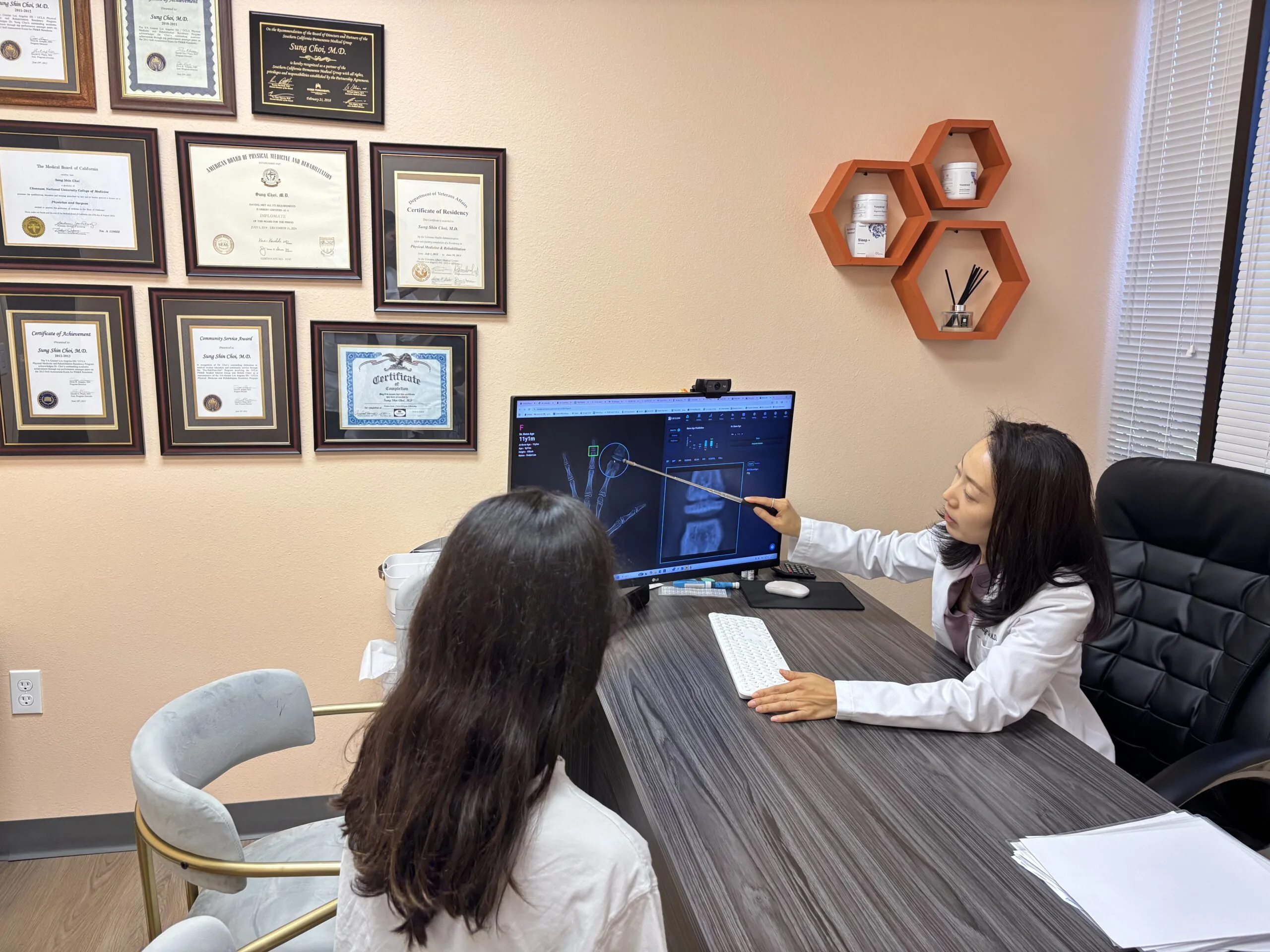
Our growth plate evaluation uses AI-driven bone age analysis to determine your child’s “Skeletal Age.” If a 15-year-old has a bone age of 13, there is still a massive opportunity. But if the bone age is 17, the door is closed.
Knowing this allows us to decide if medical intervention is appropriate to maximize the output of the “factory” while it is still active.
🔍 To understand why bone age tells a more accurate story than your child’s birthday, this breakdown can help. Read: Bone Age vs. Chronological Age: Is Your Child’s Biological Clock Ticking Too Fast?
Here is what acting while the window was still open looked like for one of our patients.

Maximizing Growth Potential
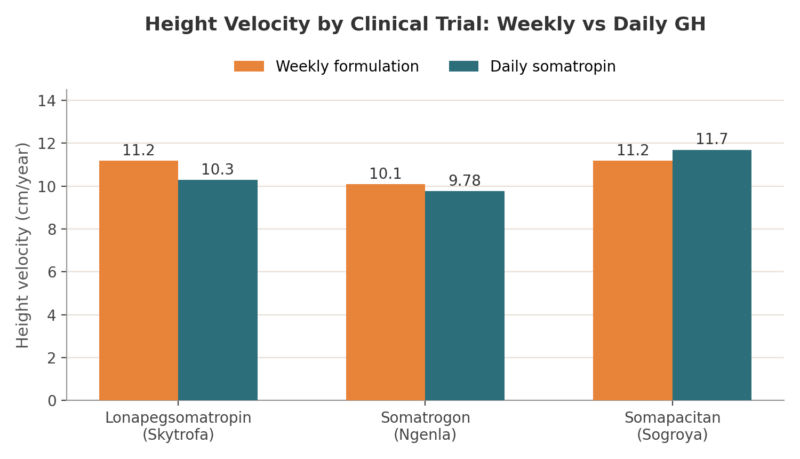
Even when a child is nearing the end of their growth period, growth hormone treatment can help maximize every inch by encouraging the growth plates to work more effectively. We also offer treatments designed to delay the fusion of the growth plates, which extends the overall time available for growth. We have seen many children who started this process late but were still very happy with their results, often gaining an additional 1 to 1.5 inches over their original height estimate.
As a parent, I know this is not about vanity. It is about confidence. You want to know you did everything possible to help your child reach their full, healthy potential. We share that mission completely. Every milestone matters, and we are here to give your family the clarity it deserves.
FAQ: Common Questions About Growth Plates
Can I “reopen” a growth plate?
No. Once the cartilage has calcified into solid bone, it is physically impossible to lengthen that bone further. This is why timing is everything.
Does a “late bloomer” parent mean a late bloomer child?
Often, yes. Genetics play a significant role in development. If your child seems to be following the same growth and development pattern as a parent who was a late bloomer, there is a reasonable likelihood they will follow a similar path. That said, nutrition, environment, and unique genetic combinations can shift the timeline. This is why we rely on clinical data and objective measurements, not family history alone, to map your child’s specific growth path.
Does sleep really affect the plates?
Yes. Growth hormone is released in pulses primarily during deep nighttime sleep. Poor sleep habits can effectively deprive the growth plates of the signal they need to expand
Is 16 too late for a boy to start treatment?
It depends entirely on his bone age. If his skeletal maturity is behind his chronological age, there may still be a window. In those cases, growth hormone treatment for children can still make a measurable difference.
What is the first sign the plates are closing?
Usually, a significant drop in height velocity is the earliest indicator, typically less than 2 inches of growth per year.
No. Once the cartilage has calcified into solid bone, it is physically impossible to lengthen that bone further. This is why timing is everything.
Often, yes. Genetics play a significant role in development. If your child seems to be following the same growth and development pattern as a parent who was a late bloomer, there is a reasonable likelihood they will follow a similar path. That said, nutrition, environment, and unique genetic combinations can shift the timeline. This is why we rely on clinical data and objective measurements, not family history alone, to map your child’s specific growth path.
Yes. Growth hormone is released in pulses primarily during deep nighttime sleep. Poor sleep habits can effectively deprive the growth plates of the signal they need to expand.
It depends entirely on his bone age. If his skeletal maturity is behind his chronological age, there may still be a window.
Usually, a significant drop in height velocity is the earliest indicator, typically less than 2 inches of growth per year.
Your Next Step: Get the Data
Don’t let the clock run out on “what if.” Whether you visit our concierge clinic in Fullerton or connect via telehealth, we can provide the definitive answers your family deserves. The window may still be open. Let’s find out together.