“My son is fifteen and hasn’t grown since Christmas. Is it already too late?”
“He started puberty over a year ago. Everyone keeps telling us boys grow late, but what if that’s not true for him?”
“His shoe size hasn’t changed since last winter. I have been asking my son if his shoes feel tight every month.”
That feeling has a name. It’s not panic. It’s the specific worry that the window may have already closed while you were busy with school pickups, work deadlines, and everything else that comes with raising a family. You deserve a real answer, not a reassurance that skips the question.
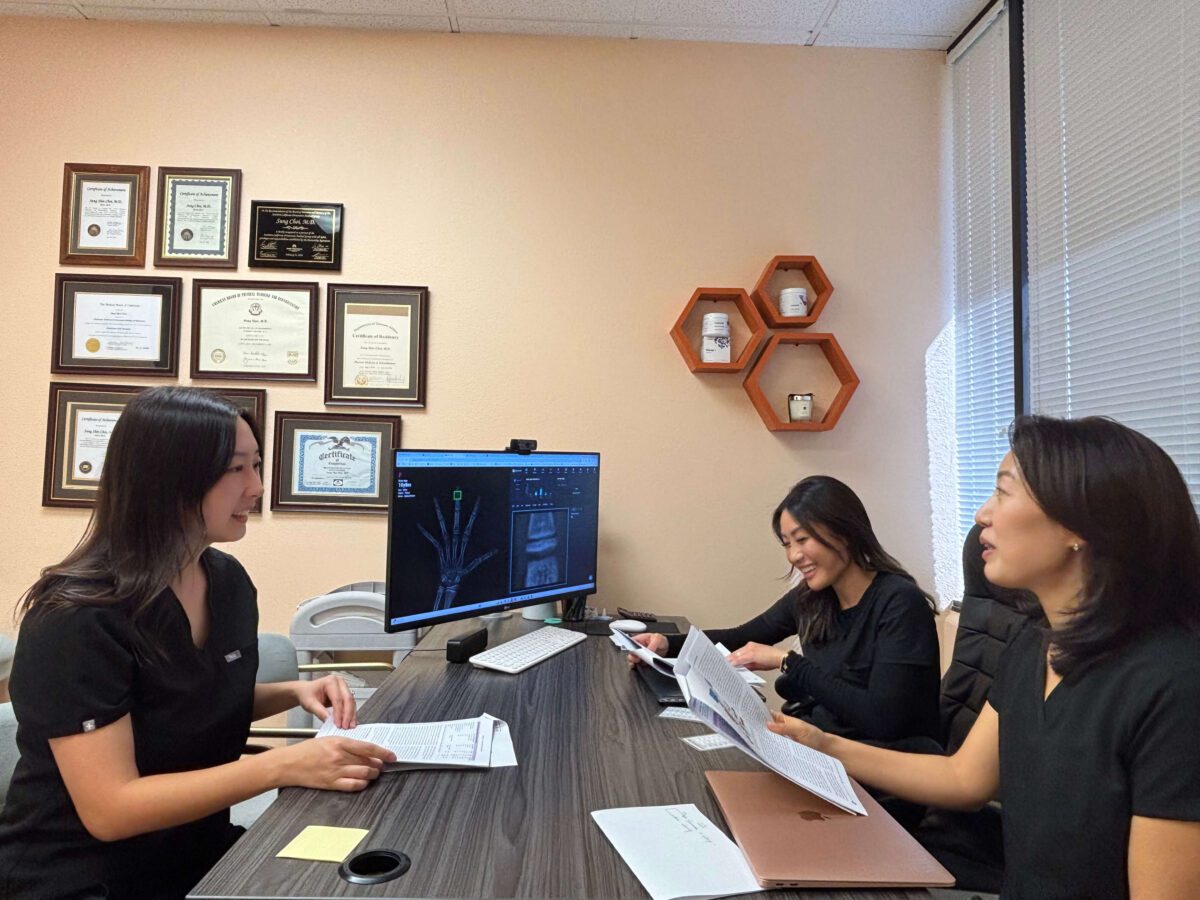
I’m Jenny Diep, a board-certified family nurse practitioner at I Grow Clinic. I sit across from parents asking this exact question several times a week. The honest answer is that some of them are indeed too late. And those are the conversations I dread the most, because there is nothing harder than telling a parent that the window has already closed. I have sat across from mothers who came in expecting a growth hormone conversation, only to hear that the plates had already fused. What I have learned after years of these conversations is that every single parent, whether the news was good or not, wished they had come in sooner.
| What Families Trust Us With | The Detail |
|---|---|
| Children guided through growth evaluations | Over 3,000 |
| Families who stay in ongoing care with us | 95% treatment retention |
| Board certification | ABPMR board-certified physician oversight |
| Bone age reading method | AI-enhanced analysis against thousands of reference data points |
| Google reputation | 5-star average across verified reviews |
| Clinical experience | Over 20 years in pediatric growth medicine |
By the end of this article, you’ll know the actual number that determines whether your son’s growth window is still open, and what to do next depending on what that number turns out to be.
Is My Son Already Too Old to Still Grow Taller?
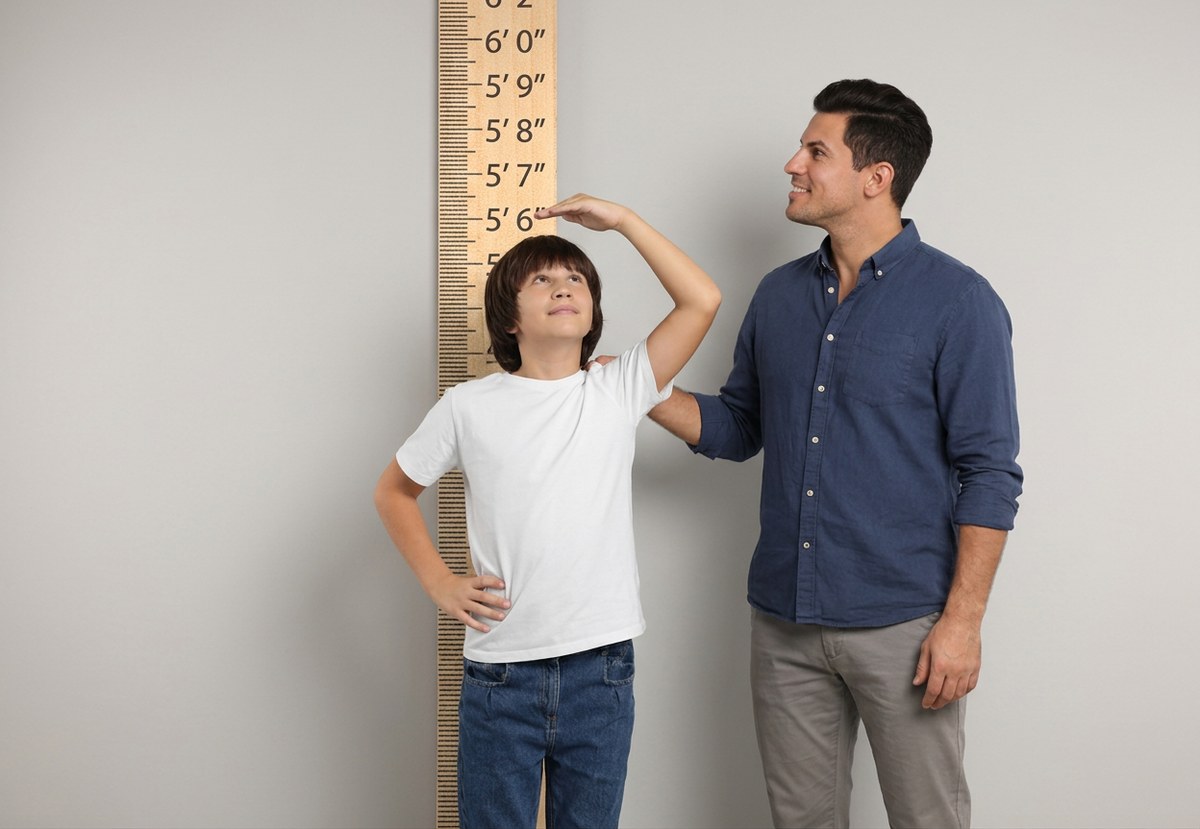
Most parents who come in with a teenage son assume there is still plenty of time. Sometimes that’s true. But a bone age X-ray tells a more specific story, and it doesn’t always match what the calendar suggests.
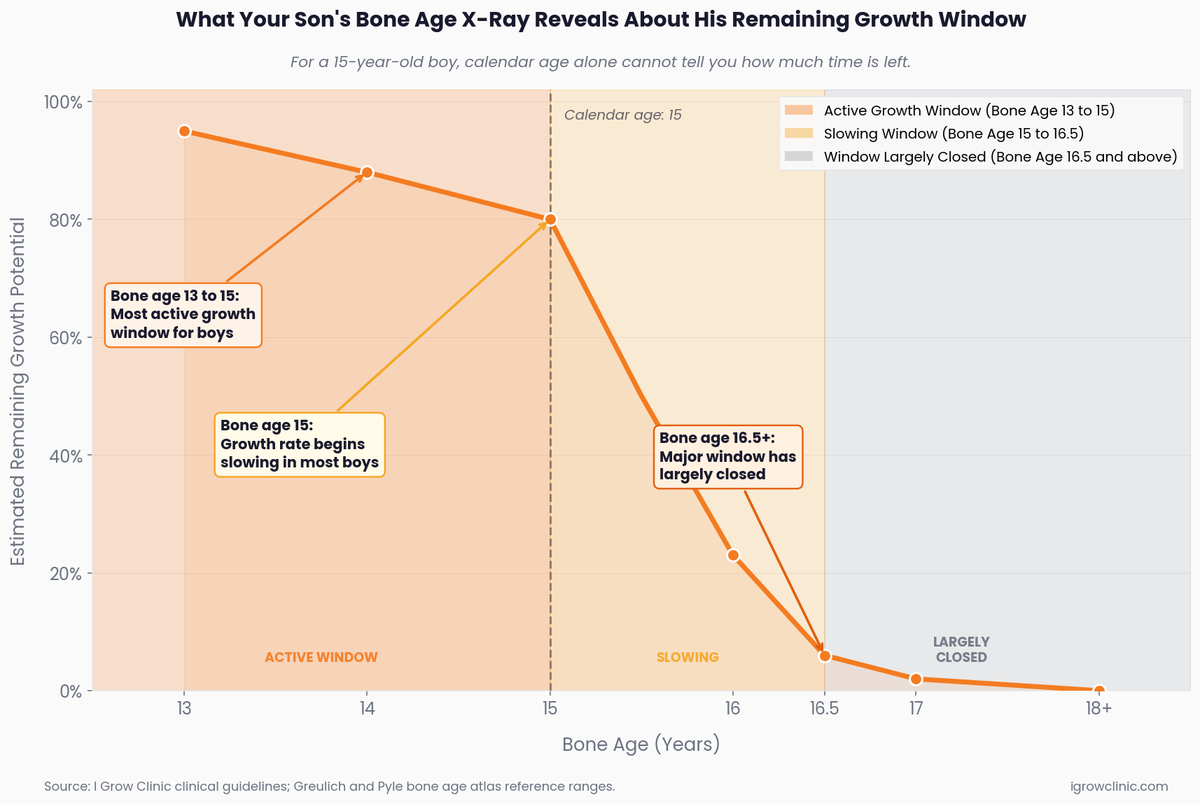
What actually determines whether your son can still gain height is his bone age, a measure of skeletal maturity that can run months or even years ahead of his chronological age. A boy who is 15 on paper may have the bone age of a 17-year-old. A boy who looks like he should be done may still have a meaningful window open. The only way to know which one your son is, is to get a bone age X-ray.
🔍 To understand how bone age compares to chronological age and what that gap means for your son, Read: Bone Age vs. Chronological Age: Is Your Child’s Biological Clock Ticking Too Fast? Bone Age vs. Chronological Age: Is Your Child’s Biological Clock Ticking Too Fast?
Does Starting Puberty Mean His Window Is Already Closing?
Not necessarily. But puberty in boys begins earlier than most parents realize. Testicular enlargement, not voice change or facial hair, is actually the first sign, and it typically happens a full year or more before the visible changes parents notice. By the time voice deepens or facial hair appears, the fastest phase of the growth spurt has often already passed.
Puberty starting is not the same as the window ending. What matters is not whether puberty has begun, but how far along it is. A boy who started puberty early may have less time remaining than his age suggests. A boy who started late may have more. That distinction is exactly what a bone age X-ray is designed to answer.
🔍 For a closer look at how puberty timing and bone age interact to determine how much growth remains, Read: Does Early Puberty Affect Height? Does Early Puberty Affect Height?
What Does a Bone Age X-Ray Actually Show About His Remaining Growth?
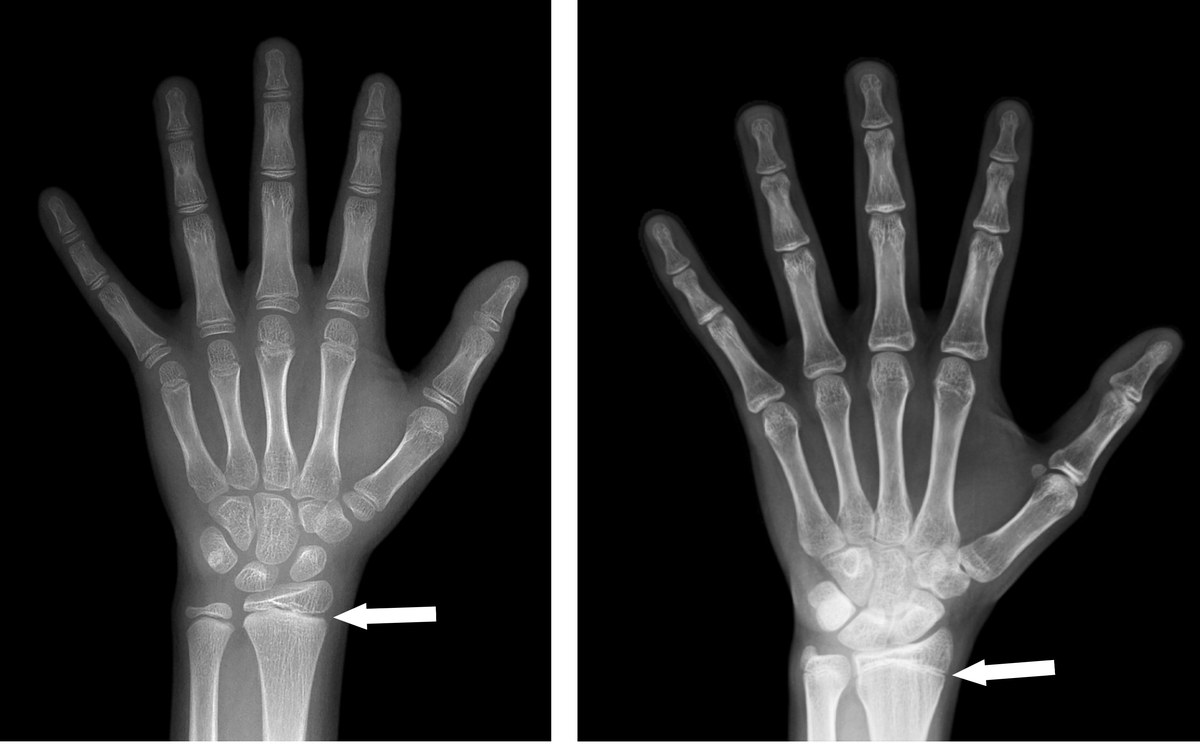
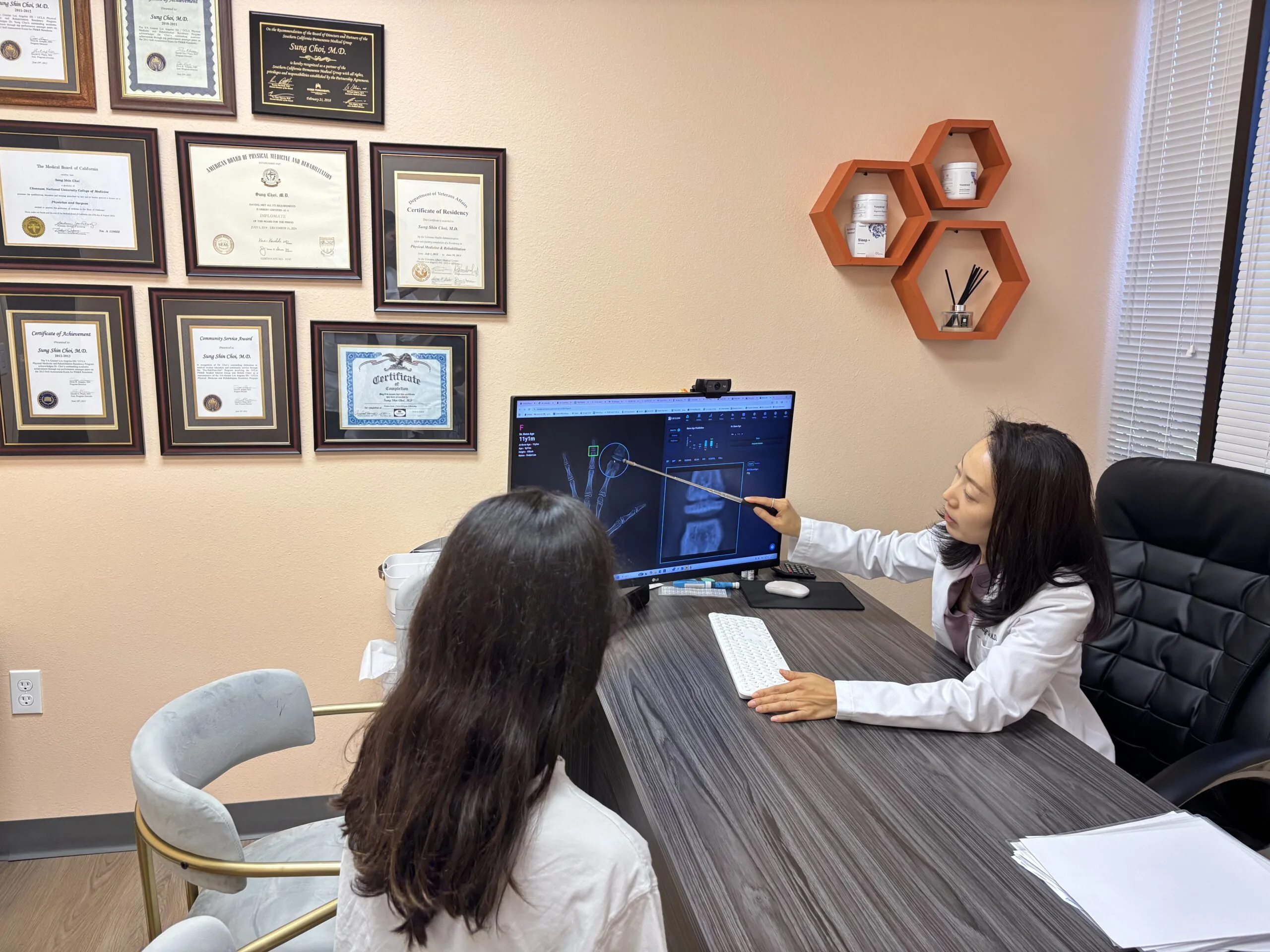
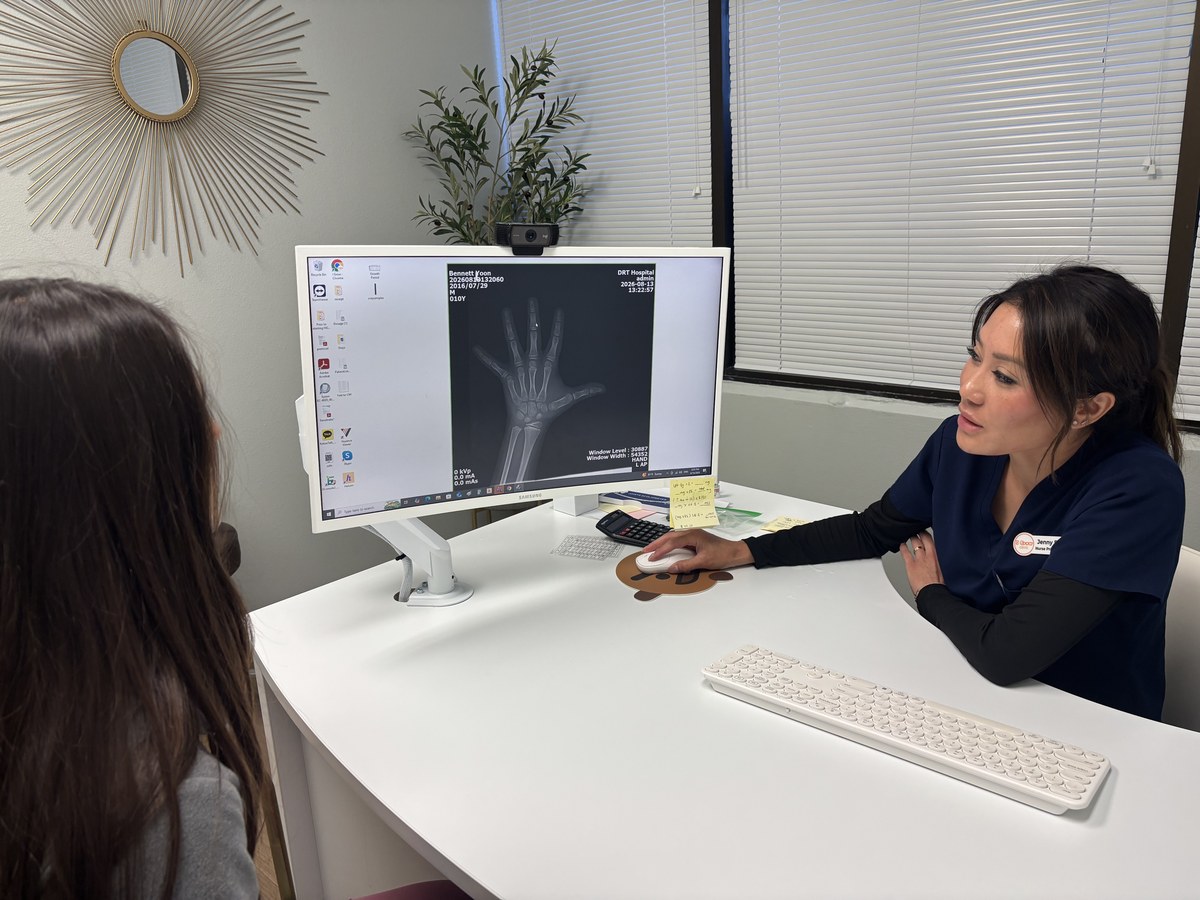
A bone age X-ray is a single, low-dose image of the left hand and wrist. It takes about two to three minutes to capture, and it tells you something a birthday cannot: how mature your son’s growth plates actually are. At I Grow Clinic, that reading is supported by AI-enhanced analysis compared against thousands of reference data points.
The result is not a single number but a comparison. If his bone age is running ahead of his chronological age, his biological clock is moving faster than the calendar suggests, and his remaining window is shorter than it appears. If it is running behind, there may be more time than his height alone would suggest.
The result looks different depending on where your son sits. A bone age in the early 14s means the fastest growth is likely still ahead. A bone age of 16 or higher means the major window has largely closed. Everything in between is where the nuance lives, and where the decision of what to do next gets made.
🔍 If you want to understand exactly how a growth plate X-ray is read and what each stage of closure actually means, Read: Growth Plate X-Ray Interpretation: What Your Child’s Bone Age Results Actually Mean Growth Plate X-Ray Interpretation: What Your Child’s Bone Age Results Actually Mean
What Can Still Be Done If His Bone Age Comes Back Advanced?

If your son’s bone age evaluation comes back advanced, that is not automatically the end of the conversation. A 2025 clinical study followed 60 children whose bone age was tracking well ahead of schedule. Treated with an aromatase inhibitor, a medication that slows the rate at which growth plates mature, their predicted adult height improved significantly over six years, and their bone age deceleration was clear and statistically significant.
At I Grow Clinic, the standard of care for boys in this situation pairs our growth hormone treatment program with an aromatase inhibitor when appropriate, making active use of whatever window remains rather than treating an advanced bone age as a closed door. Candidacy depends on the specific bone age result, current height, and overall health, which is why this decision is made case by case.
What Parents Can Check Right Now
There are physical signs that suggest the window may be narrowing faster than expected. If any of them sound familiar, that is a reason to get a bone age X-ray now rather than wait another season.
🔍 For the specific signs to watch for at home, read: How Do You Know If Growth Plates Are Closed? 3 Key Signs Parents Often Miss How Do You Know If Growth Plates Are Closed? 3 Key Signs Parents Often Miss
What Happened When a Family Thought They Had Come Too Late
A father brought in his 15-year-old son, certain they had already missed the window. The boy had started puberty about a year and a half earlier, his voice had already deepened, and his height gain over the previous six months had slowed noticeably. The father’s exact words were, “I think we’re too late.”
The bone age evaluation told a more specific story. His skeletal maturity was advanced, running close to a year ahead of his chronological age, but his long bone growth plates were not yet fused. There was a real, measurable window remaining, just a narrower one than his father had hoped for.
Treatment paired growth hormone with an aromatase inhibitor to slow further acceleration of his bone age while supporting active growth. A year and a half later, he reached a final height 3.5 cm taller than his original predicted adult height. What made the difference wasn’t catching it early. It was refusing to assume the window was already shut before anyone had actually looked.
How Fast Can Families Get Answers?
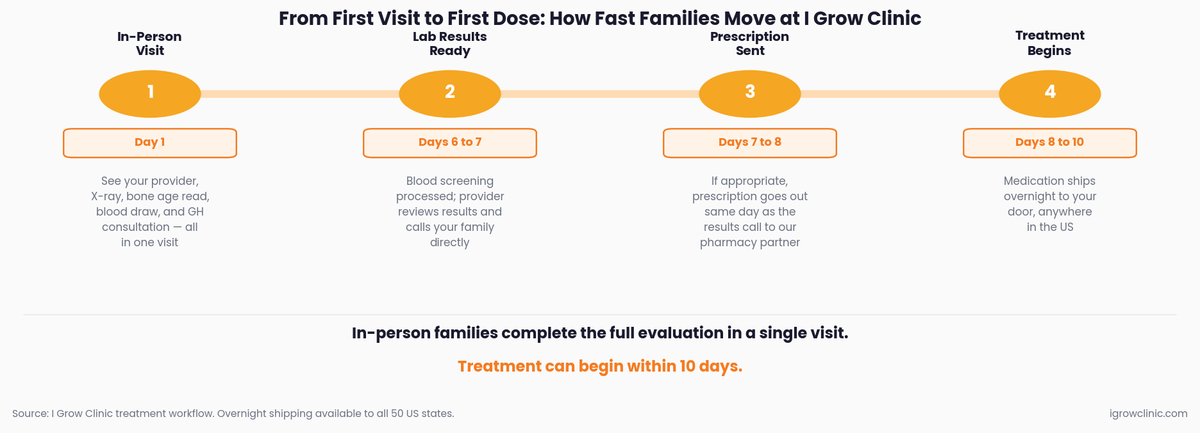
You don’t need to live near Fullerton to get a real answer. Families in California, New York, Washington, Florida, and Texas work with us through a virtual growth assessment, which begins with the same bone age X-ray at a local imaging center near you, read by the same AI-supported process our in-person patients receive. Once the result is in, a provider reviews it with you directly, walks through what it means for your son specifically, and outlines next steps. If treatment is appropriate, families can begin as soon as the screening blood test is complete, which typically takes seven to ten days.
Why Families Trust I Grow Clinic With This Decision
At I Grow Clinic, every case is supervised by Dr. Choi using AI-driven bone age analysis through a 1:1 concierge model. That means your son’s bone age findings and treatment plan are reviewed by a board-certified physician with over 20 years of clinical experience. Our clinical team has guided over 3,000 children through this exact decision, and our 95% treatment retention rate reflects what that care actually looks like in practice.
Because we see a limited number of families at a time, evaluation slots do fill up. If you have been sitting with this question, now is the right time to ask it.
🔍 To understand why this clinic was built specifically for families asking this question, Read: Why I Started a Growth Hormone Clinic Why I Started a Growth Hormone Clinic
FAQ: What Parents Ask When They’re Worried They Waited Too Long
1. Is it really too late if my son already has facial hair or a deeper voice?
Not necessarily. Facial hair and a permanently deeper voice are late puberty signs, meaning his fastest growth phase has likely already passed, but a bone age X-ray is the only way to know whether his growth plates are still partially open or already fused. Some boys in this stage still have real height left to gain.
2. My son is 16 and hasn’t grown much this year. Should we still get him evaluated?
Yes. A slowdown at 16 is common, but it doesn’t tell you whether his plates are fully closed or partially open, and that difference matters for what, if anything, can still be done. A bone age evaluation gives you a clear, individual answer instead of a guess based on his age alone.
3. If his bone age comes back advanced, is there any point in treatment?
Often, yes. Published clinical data on children with significantly advanced bone age show meaningful improvement in predicted adult height with the right combination of treatment, even when the starting point looked discouraging. Advanced bone age narrows the window, but it does not automatically close it.
4. Can growth hormone therapy still help if my son is already in puberty?
It can, particularly when paired with an aromatase inhibitor (Anastrozole, Letrozole) to slow further bone age acceleration while supporting active growth. Clinical trial data on boys already in puberty at evaluation showed significant additional height gain compared with no treatment at all.
5. Are there side effects from an aromatase inhibitor (Anastrozole, Letrozole) in teenage boys?
The most common side effect we see in our practice is acne. We see this in roughly 5% of patients. Because an aromatase inhibitor works by reducing the conversion of testosterone to estrogen, testosterone levels rise, and that can contribute to breakouts in some boys. The side effects you may read about online, such as bone density loss and joint pain, are primarily concerns in postmenopausal women being treated for breast cancer, which is another context where this medication is used. In adolescent boys, those risks are not considered clinically meaningful. As with any treatment, our team monitors each case individually and adjusts as needed.