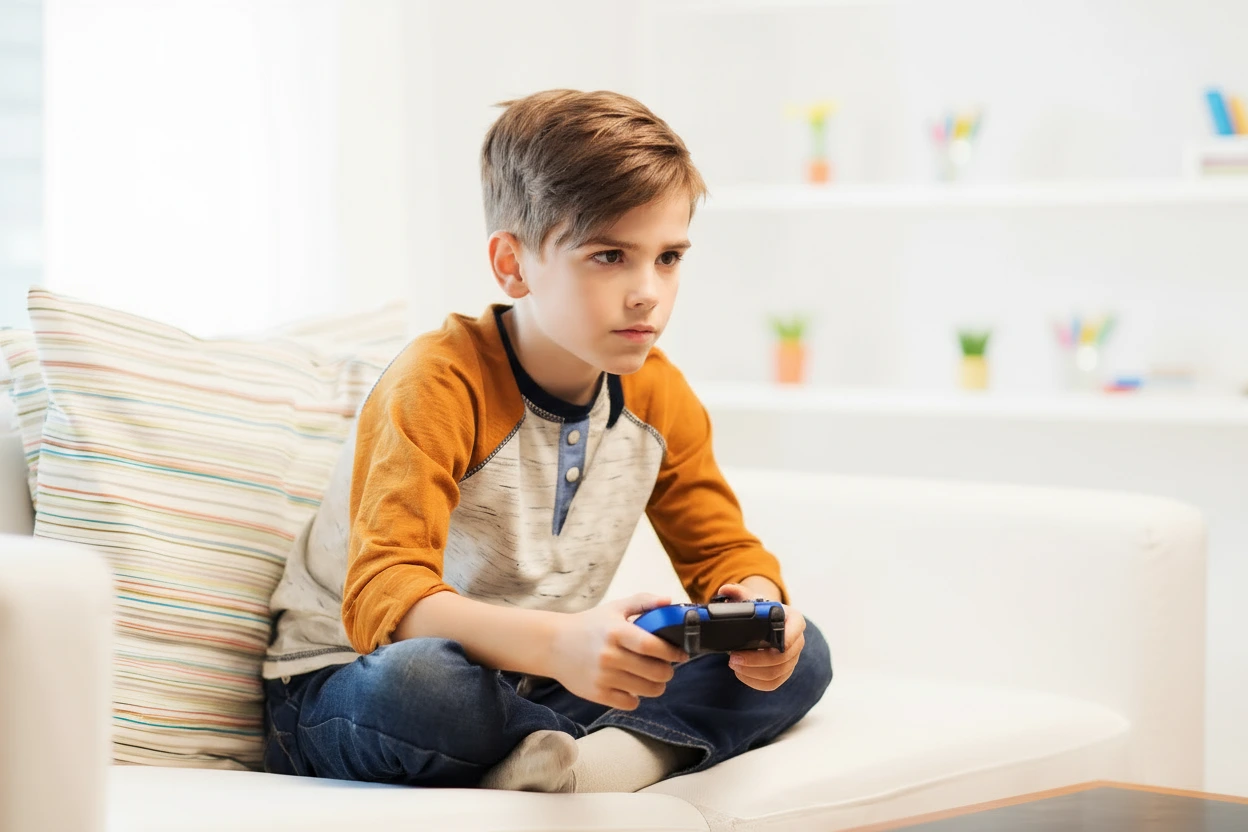
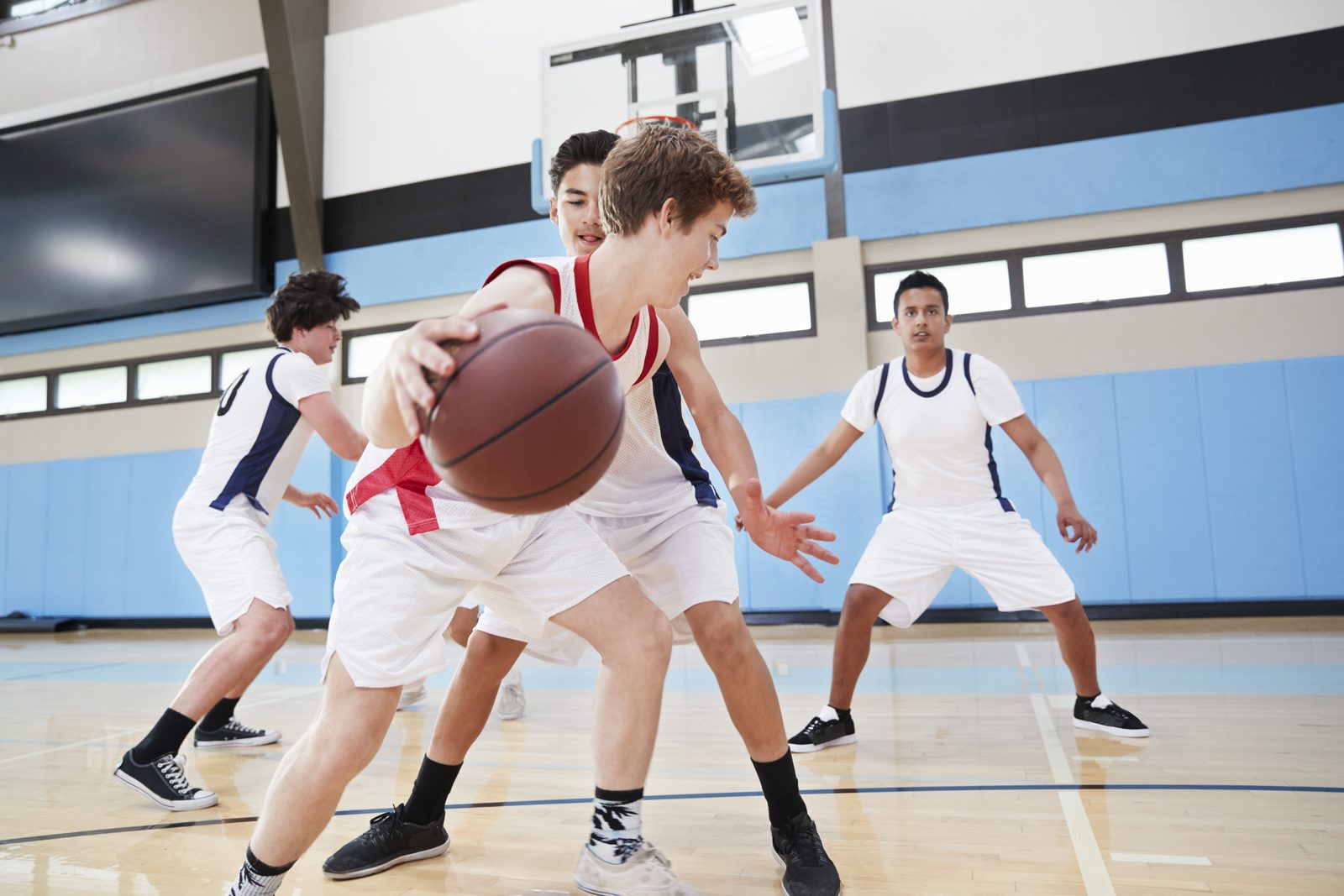
“There’s a hard bump right under his kneecap now. It wasn’t there last season.”
“He limps off the court after every practice, but by morning he says his knee feels fine.”
Most parents who ask about this want to know what is causing the knee pain. Some wonder if it is just growing pains. Many also ask whether it will affect how tall their child grows.
I’m Yuri Kim, a nurse practitioner at I Grow Clinic. I see knee pain most often in active kids who play basketball, volleyball, or soccer. In many of them, the cause is Osgood-Schlatter disease. It is tied to growth spurts, which is why it often gets mistaken for growing pains.
Why Parents Trust Our Team With These Questions
| What Families Trust Us With | The Detail |
|---|---|
| Children guided | 4,000 with precision growth strategies |
| Treatment retention | 95% rate, reflecting strong family trust |
| Medical Director | Board certified by the American Board of Physical Medicine and Rehabilitation (ABPMR) |
| Experience | Over 20 years of clinical experience |
| Approach | Bone age analysis powered by AI, compared against thousands of reference data points |
| Reputation | 5 star Google rating with many family testimonials |
By the end of this article, you will know what causes Osgood-Schlatter disease, whether it affects your child’s height, and what helps.
Will Osgood-Schlatter Disease Affect My Child’s Final Height?
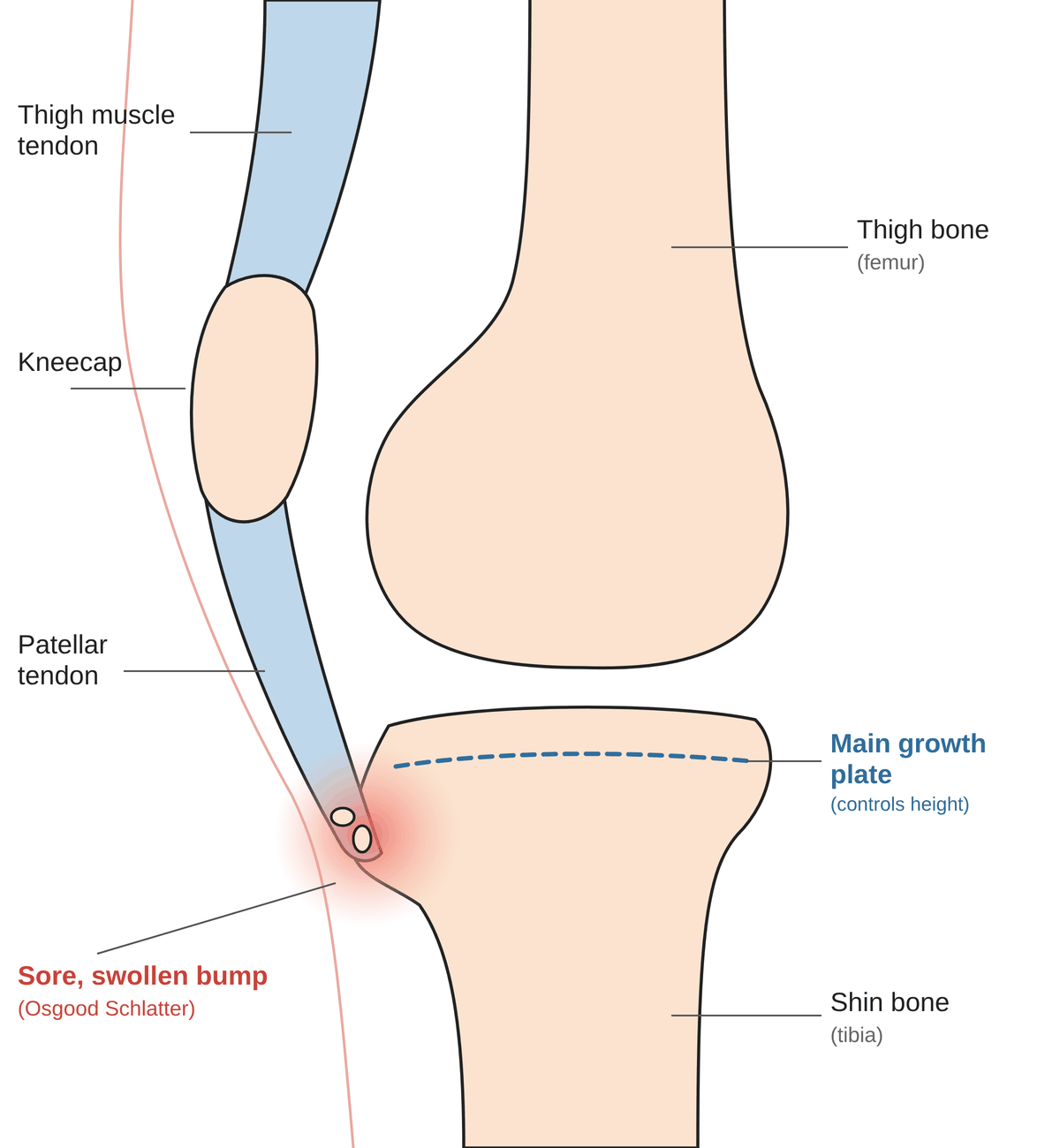
Does Osgood-Schlatter affect height? The short answer is no. The condition affects a small growth area at the top of the shin bone. It does not touch the long growth plate that decides how long your child’s leg eventually becomes.
The picture below shows a side view of the knee. The tendon from the thigh muscle attaches to a small bump at the top of the shin bone. During a growth spurt, that tendon pulls hard on the bump, and the area becomes sore and swollen.
The main growth plate, which controls how long the bone grows, sits higher up and is not affected. Osgood-Schlatter disease does not shorten the leg or close the growth plate early. It does not affect your child’s height.
🔍 If you want to understand how a true growth plate problem differs from this one, this post walks through what controls a child’s final height. Bone Age vs. Chronological Age: Is Your Child’s Biological Clock Ticking Too Fast?
Some kids keep a hard bump below the knee even after the pain is gone. It is healed bone tissue and can stay for life. It does not affect how the knee works.
What Causes Osgood-Schlatter Disease in My Child’s Knee?
Osgood-Schlatter disease causes come down to one simple mismatch during a growth spurt. The shin bone lengthens quickly. The quadriceps muscle and patellar tendon do not stretch as fast. That tendon pulls on the tibial tuberosity with every step, jump, and squat. Over months, that repeated pulling causes swelling. In some kids, it leads to a permanent bony bump.
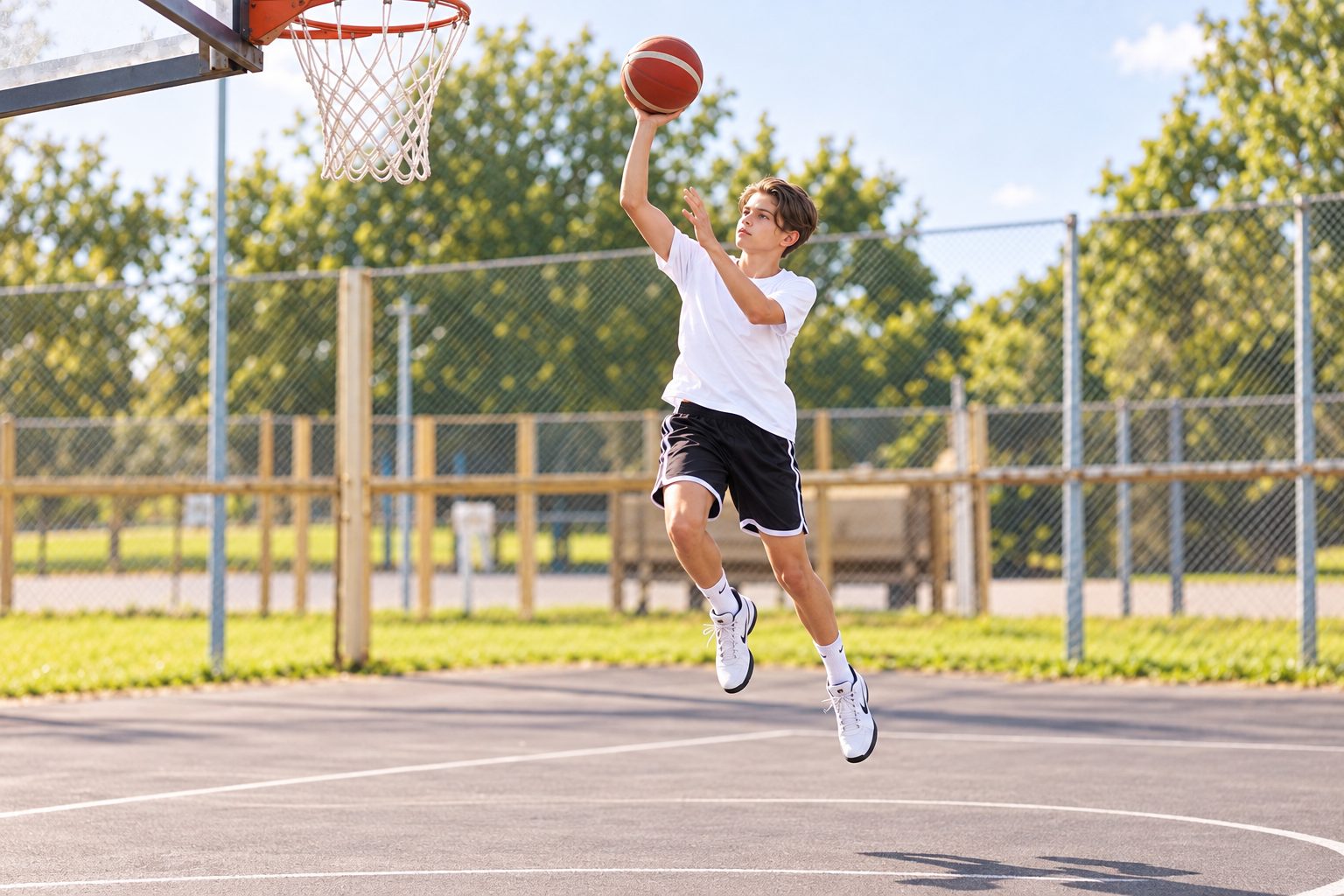
This is why Osgood-Schlatter disease shows up so often in young athletes. Knee pain in teenager basketball and volleyball players is especially common. Jumping over and over loads that same tendon attachment point hundreds of times a practice. Soccer, track, and gymnastics carry a similar risk.
Osgood-Schlatter disease symptoms usually include a tender, sometimes swollen spot just below the kneecap. Pain gets worse with running, jumping, or kneeling. Many kids describe a knot on the knee that feels firm to the touch. Most feel it in one knee, though it shows up in both knees in some cases.
A smaller number of kids feel pain right at the bottom tip of the kneecap itself, instead of further down on the shin bone. That is a related condition called Sinding-Larsen-Johansson syndrome. It follows the same basic pattern of bone outpacing tendon flexibility.
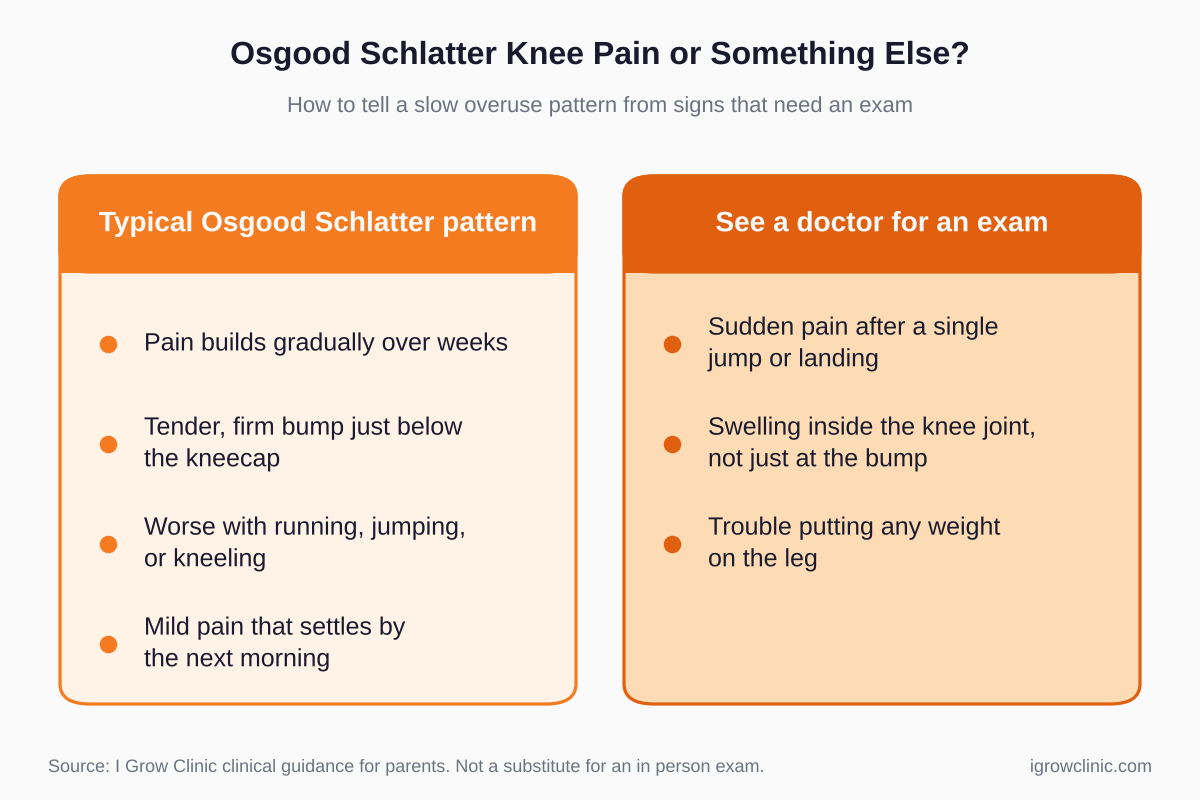
Most knee pain in active kids follows this slow, predictable pattern. Even severe Osgood-Schlatters disease pain usually builds gradually over weeks.
See a doctor instead of managing it at home if your child has:
- Sudden pain after a single jump or landing
- Swelling inside the knee joint, not just at the bump
- Trouble putting any weight on the leg
These signs can point to a different injury, such as a tibial tubercle fracture, and they need an exam.
🔍 If you are already tracking your child’s growth chart closely and noticed a shift this year, this one may be worth a look too. Your Child’s Height Percentile Dropped This Year: Should You Worry?
How Long Does Osgood-Schlatter Disease Last?
Parents also ask how long does Osgood-Schlatters last. That depends on a few things. How old your child is. How far into puberty they are. How much jumping or running their sport demands.
A 10 year old who just started having symptoms may deal with this on and off for a year or more. The growth spurt itself has not finished yet. A teenager near the end of puberty is usually close to the finish line already. The pain resolves once the tibial tuberosity growth area finishes closing, around age 14 for girls and age 16 for boys.
In our clinic, we see this most often in basketball and volleyball players, where repeated jumping loads that same tendon attachment point again and again. Overuse like this can, in a smaller number of kids, progress to a visible bump that stays even after the pain settles down.
Osgood-Schlatter Treatment: What Helps Your Child’s Knee Pain?
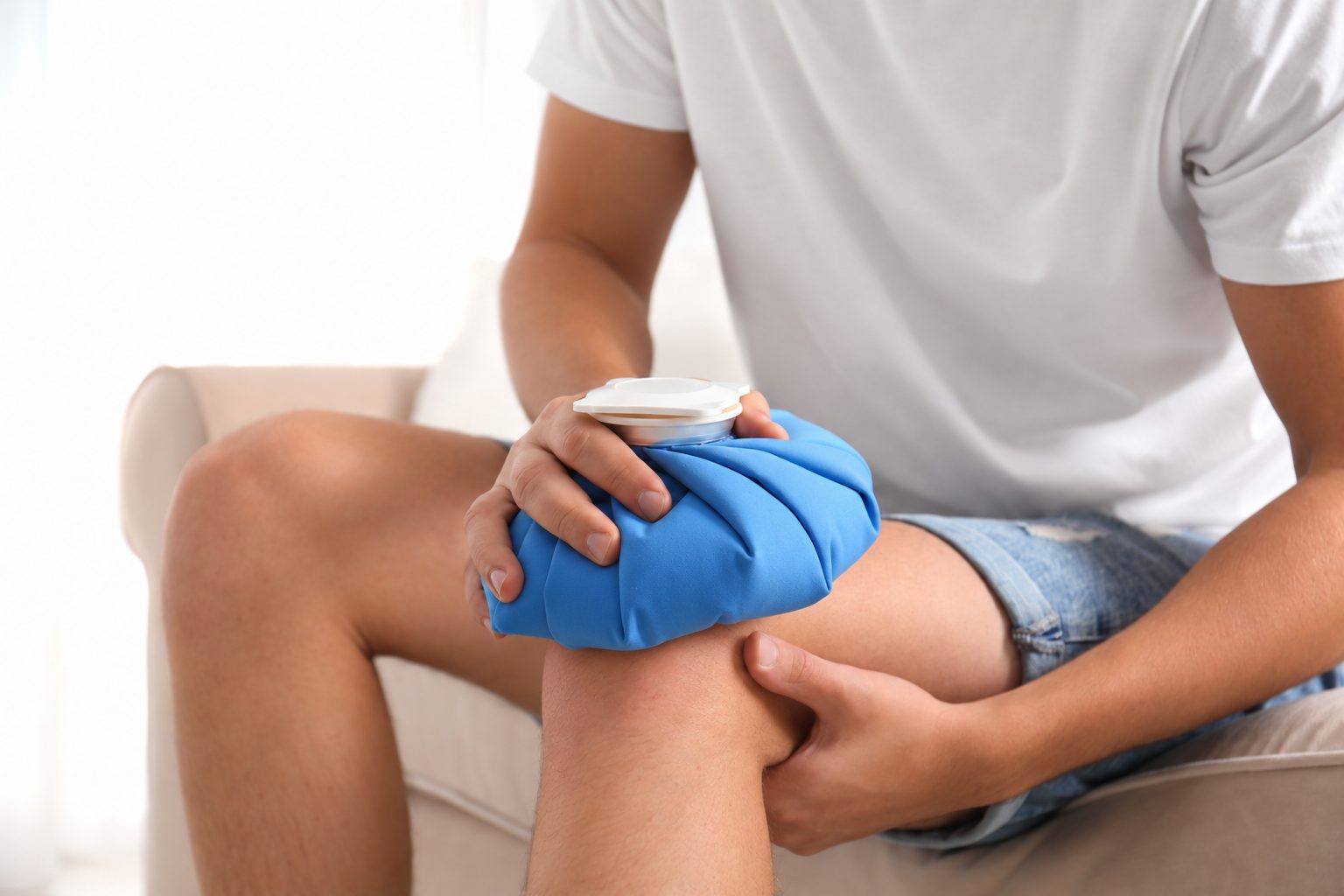
Ice after practice is one of the simplest things that helps. We also recommend a patellar strap, sometimes called an Osgood-Schlatter brace, worn during practice and games. It should not be worn for more than about two hours a day. Wearing it all day does not add benefit. It can leave the muscles around the knee a little weaker over time.
Beyond the brace, treatment of Osgood-Schlatter disease is mostly about activity modification rather than a full stop. Most kids can keep playing through mild pain that settles down by the next morning. A physical therapist can set up a routine of Osgood-Schlatter stretches for the quadriceps and hamstrings. Strengthening work for the hips and core comes next. Osgood-Schlatter taping is another option some therapists use, similar in idea to the brace but applied directly to the skin.
Osgood-Schlatter surgery is rarely needed. It is reserved for the rare case that still causes pain well after the growth plate has closed. Some sports medicine clinics now offer a newer injection based option for stubborn cases that do not settle with rest and stretching. This falls outside what we treat directly at our clinic. It is still worth asking your child’s sports medicine doctor about, if months of conservative care have not helped.
🔍 If you are also wondering how much longer your child’s growth window is open in general, not just at the knee, this is the most requested post on our site for exactly that question. How Do You Know If Growth Plates Are Closed? 3 Key Signs Parents Often Miss
When Does a Knee Problem Need a Growth Check?
Osgood-Schlatter disease itself does not need a growth evaluation. But it often shows up in the middle of a growth spurt, and that is when some parents notice their child is not growing as fast as expected. Their shoe size has not changed in over a year. Or they are falling further behind their classmates in height.
A few signs are worth a closer look, separate from the knee itself:
- growing less than about 2 inches a year during a stretch where puberty has clearly started
- a height that has dropped across more than one percentile line on the growth chart
- a child who is noticeably shorter than the family’s own height pattern would predict
- puberty signs that started very early, or have not started at all by the expected age
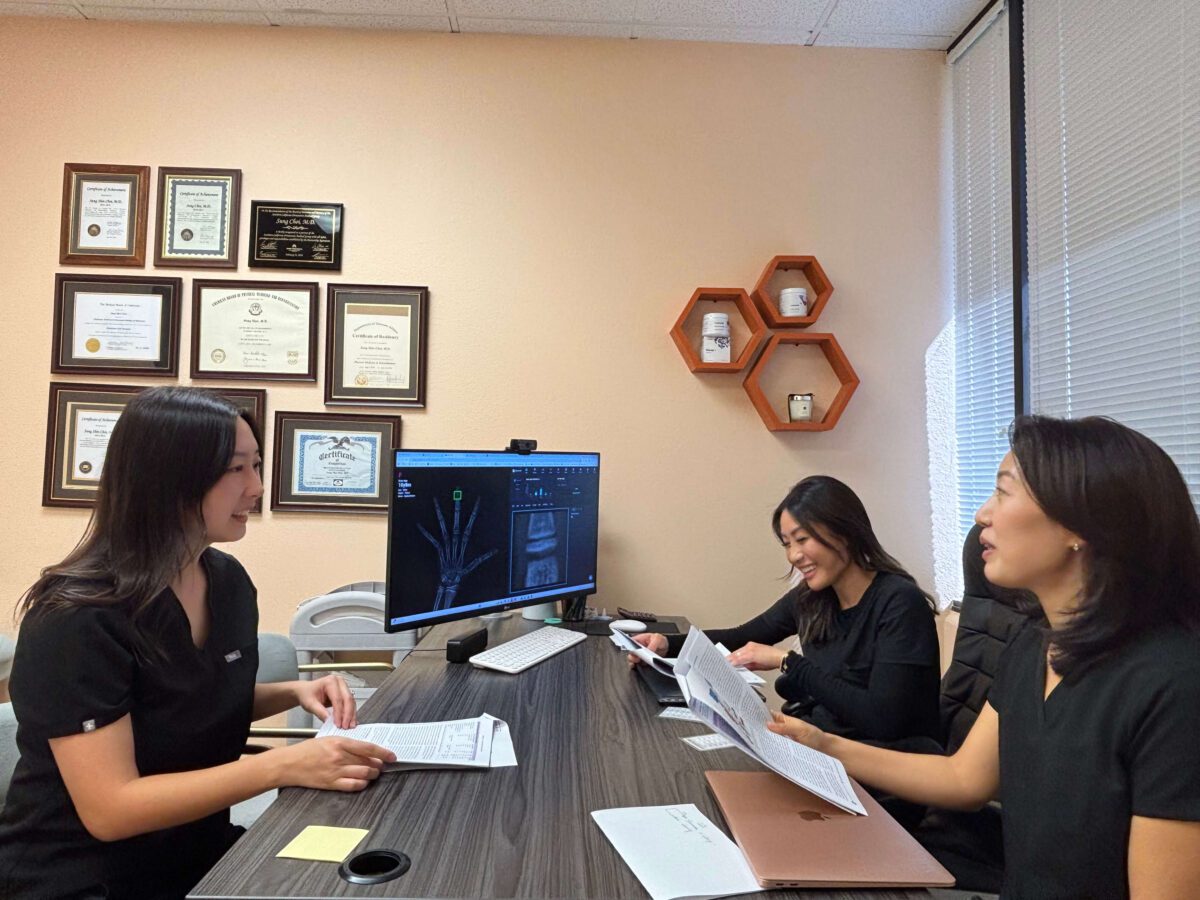
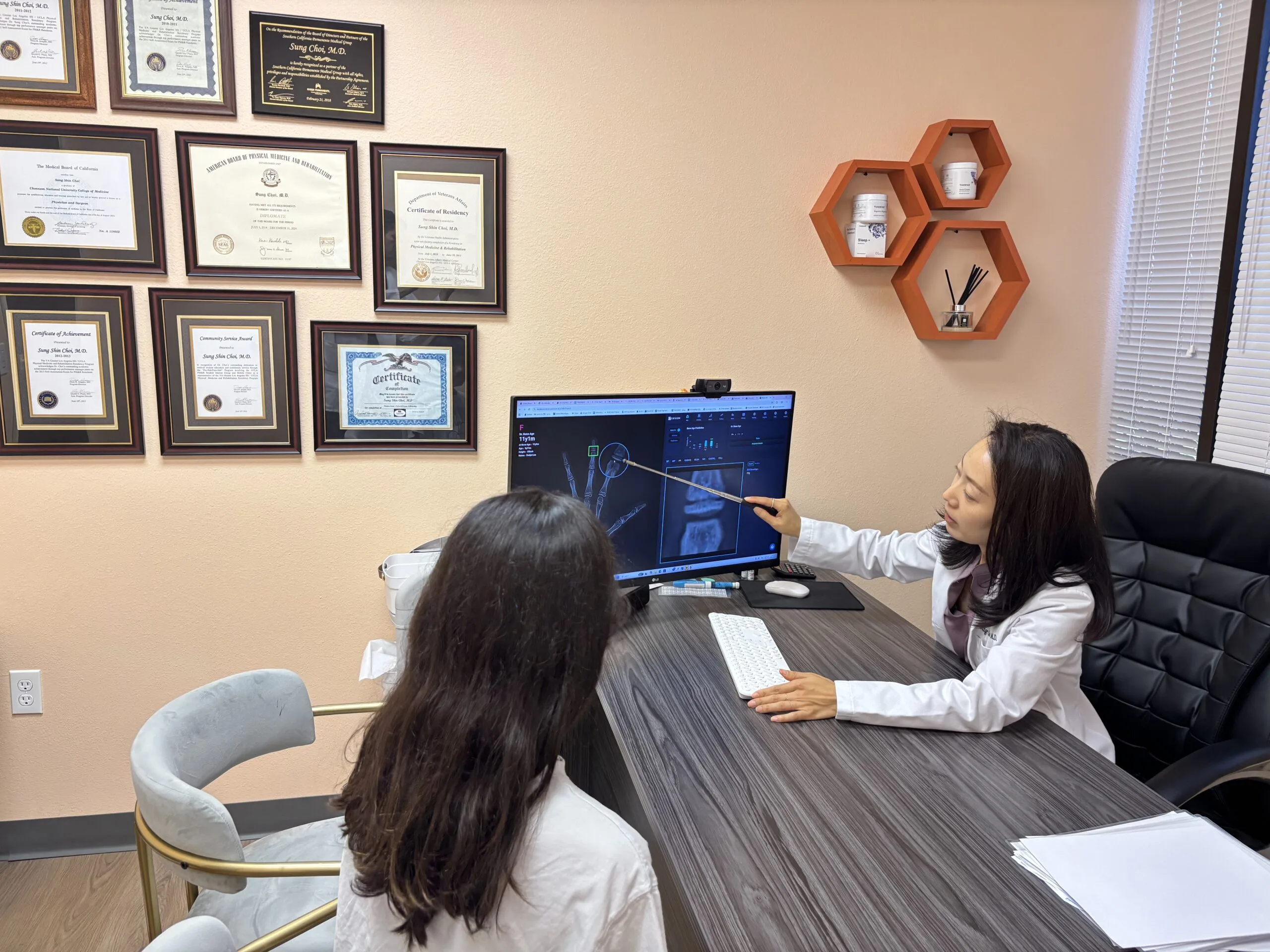
None of these are caused by Osgood-Schlatter disease. They are simply common questions that come up around the same age. A growth plate evaluation, which includes a simple hand X-ray, can show how much growing time a child has left and help parents see the big picture. If the evaluation shows your child has less growing time left than expected, our team can explain whether growth hormone treatment may help.
Osgood-Schlatter disease is, in almost every case, a temporary and uncomfortable part of growing up in an active kid’s life. It resolves on its own. It does not shorten a leg, and it does not change your child’s final height. If you are noticing other growth questions alongside it, a straightforward evaluation can give you real answers instead of more guessing.
🔍 To understand why our team built a clinic around exactly these kinds of growth questions, read: Why I Started a Growth Hormone Clinic
FAQ: What Parents Ask About Osgood-Schlatter Disease
1. What Is Osgood-Schlatter Disease?
Osgood-Schlatter disease is a common overuse injury in growing kids. It happens where the patellar tendon attaches to the top of the shin bone, at a spot called the tibial tuberosity. Repeated pulling from running, jumping, and squatting causes pain, swelling, and sometimes a bony bump. It almost always resolves on its own once the growth spurt finishes.
2. Does a Growth Plate Injury Affect My Child’s Final Height?
It depends on which growth plate is involved. Osgood-Schlatter disease affects a small secondary growth center, not the main growth plate that controls bone length. It does not affect final height. An injury to the main growth plate itself is a different situation, and it is worth discussing with a doctor directly.
3. Is It Normal for My 14 Year Old to Have Knee Pain?
Yes. Mild knee pain during the early teen years is common, especially in kids playing jumping or running sports. Most of it traces back to Osgood-Schlatter disease or a similar overuse pattern tied to growth. Pain that comes on suddenly is less typical. The same goes for real swelling, or trouble bearing weight. Either one deserves a same week visit instead of home care.
4. When Does Osgood-Schlatter Go Away?
Most cases improve within a few months to about two years. Symptoms generally resolve once the tibial tuberosity growth area finishes closing. That tends to happen around age 14 for girls and age 16 for boys. A firm bump at the site can remain permanently, even after the pain is gone. That bump on its own is not a problem.
5. Can My Child Keep Playing Sports With Osgood-Schlatter Disease?
In most cases, yes. Kids can usually keep playing through mild pain that settles down by the next morning. A few things help: cutting back on jump heavy drills, icing after practice, and using a brace during games. A short set of Osgood-Schlatter exercises for stretching and strengthening helps too. A real break is only needed if pain changes how your child walks or runs.