
“Our son has always been the shortest in his class. His pediatrician says he is healthy and to just wait. But he is already ten and I keep wondering, is there something we could actually do?”
“I heard about growth hormone but assumed it was only for kids with a deficiency. My daughter does not have that diagnosis. Does that mean she is just out of options?”

Most parents who find their way to our clinic have already spent months, sometimes years, in a cycle of reassurance that never quite settled the worry. They were told their child is normal and healthy and they just need to be patient. What they were rarely told is what is actually possible, and for whom.
I am Sunjo Chung, FNP at I Grow Clinic. Our team has guided nearly 4,000 children through their growth journeys. Today I want to answer the question about “growth hormone for height”: whether it could help your specific child, and how much.
Why Families Trust I Grow Clinic
| Credential | Detail |
| Children Guided | Nearly 4,000 with precision growth strategies |
| Treatment Retention | 95% rate, reflecting exceptional outcomes and family trust |
| Approach | Meticulous 1:1 personalized management using AI-driven bone age analysis |
| Medical Director | Board Certified by the American Board of Physical Medicine and Rehabilitation (ABPMR) |
| Experience | 20+ years specializing in Pediatric Growth and Developmental PM&R |
| Reputation | 5-Star Google Rating with numerous testimonials |
| Telehealth | Available in CA, NY, WA, FL, and TX |
By the end of this article, you will understand who actually qualifies for growth hormone therapy, what real outcome data looks like in parent-friendly terms, and why the age at which you act matters more than anything else.
Why a Healthy Short Child May Still Qualify for Growth Hormone Therapy

The most common misconception I hear is this: “My child does not have a growth hormone deficiency, so they probably won’t quality.” This assumption stops many families from ever making that first call.
The truth is that growth hormone deficiency is only one of several FDA-approved pathways for treatment. There is a separate, distinct diagnosis called Idiopathic Short Stature, or ISS. ISS applies to children who are significantly shorter than their peers, without a diagnosable hormonal cause. In other words, the child is healthy, but short. And the FDA approved growth hormone therapy for ISS in 2003.
This matters enormously for families like yours. A child does not need to fail a stimulation test or carry a hormone deficiency diagnosis to be considered for treatment. They need to meet the height criteria, show limited remaining growth potential, and have open growth plates that can still respond to therapy.
Other qualifying conditions beyond ISS and GH deficiency include Turner Syndrome, Noonan Syndrome, Prader-Willi Syndrome, being born small for gestational age without adequate catch-up growth, and chronic kidney disease. But for the majority of parents reading this, ISS is the relevant pathway.
Once a child is identified as a potential candidate, the next question is how much growth potential remains. This is where a bone age study becomes the most important tool in the evaluation. A simple, 2-minute, low-dose X-ray of the left hand and wrist reveals the biological age of your child’s skeletal system, how close the growth plates are to fusion, and how much time is realistically left to act.
🔍 To understand how bone age differs from your child’s calendar age, read: Bone Age vs. Chronological Age: Is Your Child’s Biological Clock Ticking Too Fast?
🔍 For a deeper look at eligibility for healthy short children, read: Can Growth Hormone Therapy Help If My Child Does Not Have a Hormone Deficiency?
What the Research Actually Shows About Height Gains
Parents deserve real numbers, not vague reassurance. Here is what the science says, in plain language.
A 2020 systematic review and meta-analysis by Paltoglou and colleagues examined 21 studies on growth hormone therapy in children with idiopathic short stature. The pooled results showed a mean adult height gain of 5.3 cm in males and 4.7 cm in females compared to untreated children. That is approximately 2 inches of additional height that would not have been reached without treatment.
A landmark randomized controlled trial by Albertsson-Wikland and colleagues followed 177 children with ISS to their final adult height. Treated children reached a mean height significantly above the untreated control group, with an average gain of approximately 8 cm, or just over 3 inches. The untreated group gained only 0.2 standard deviations over the same period.
A clinical review published in JAMA estimated the mean adult height gain attributable to growth hormone therapy at 5.2 cm, or approximately 2 inches. The review noted that response is variable, meaning some children gain more and some gain less, and that the decision to treat should always be made on an individual basis after careful evaluation.
Two things stand out across all of these studies. First, the benefit is real and measurable. Second, the response varies significantly from child to child, which is exactly why personalized evaluation matters so much. A general statistic cannot tell you what your child’s body will do. Only a complete assessment of their bone age, height velocity, and remaining growth window can do that.
At I Grow Clinic, we use AI-enhanced bone age analysis to calculate your child’s predicted adult height with precision. This gives families a data-driven starting point, not a guess.
Why Starting Age and Bone Age Matter More Than Most Parents Realize
Here is something the general articles do not tell you clearly enough: growth hormone therapy works by stimulating the growth plates in your child’s long bones to produce more height. Once those plates fuse, that window closes permanently. There is no way to reverse what the body has already completed.
This is why bone age, not chronological age, is the most important number in this entire conversation. A 13-year-old with a bone age of 11 has a meaningful window ahead. A 13-year-old with a bone age of 15 may have very little time left, regardless of what the calendar says.
The research consistently shows that children who begin treatment earlier in their growth window see the greatest long-term benefit. This is partly because the growth plates are more responsive to GH stimulation when they are still fully active, and partly because earlier treatment means more years of therapy before fusion occurs.
There is also a practical financial dimension. Growth hormone dosing is weight-based. A younger, lighter child requires a smaller dose, which means a lower monthly cost. Waiting does not just risk missing the biological window. It also means a higher dose requirement and a shorter window to see results when treatment does begin.
The most heartbreaking conversations I have are with parents who come to us when their child is 14 or 15, and we discover on the bone age study that the growth plates have already started closing significantly. In those moments, I always find myself wishing we had met just a year or two earlier, when the window was still wide open and every option was still on the table.
That is why we believe a parent’s intuition deserves a scientific answer, not a reassurance to wait and see.
To estimate your child’s genetic height range first, see How Tall Will My Child Be?
🔍 For a detailed look at how to recognize when a growth window is closing, read: How Do You Know If Growth Plates Are Closed?
See real results from children we treat on our Before and After page.
Growth Hormone for Height at 14 or 15: Is It Too Late?
Age alone does not answer this question.
A 14-year-old with a younger bone age may still have real growing time left. A 12-year-old with an advanced bone age may have less. The growth plates decide, not the calendar.
A bone age X-ray shows where your child stands. To see how the result is read, see Growth Plate X-Ray Interpretation.
What a Growth Hormone Evaluation Looks Like at I Grow Clinic
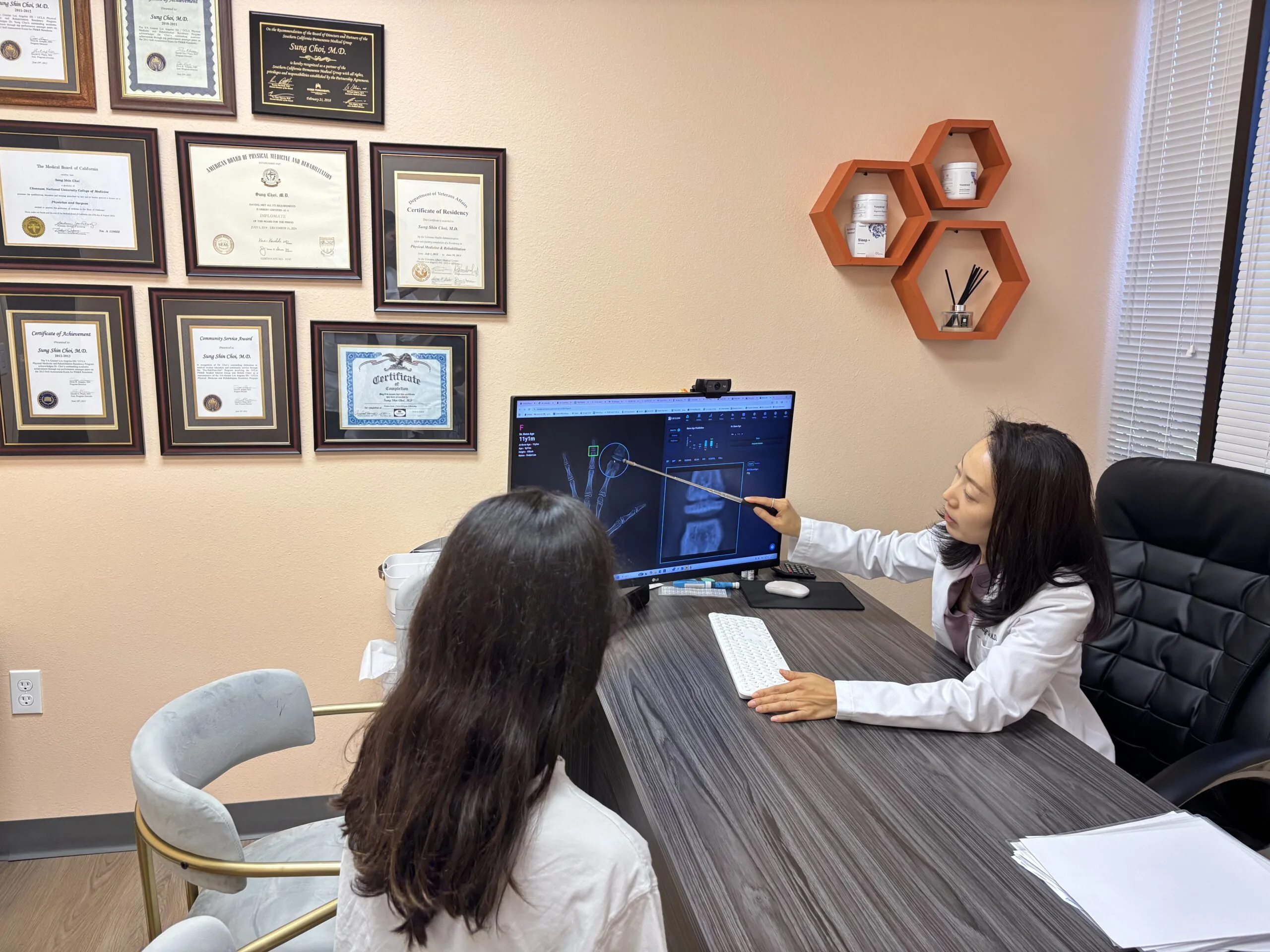
Our evaluation begins with a bone age study, a quick, low-dose X-ray of the left hand and wrist. We then run this X-ray through AI-enhanced analysis that compares your child’s skeletal maturity against thousands of reference data points. This gives us their true biological age, their predicted adult height, and a clear picture of how much growth potential remains.
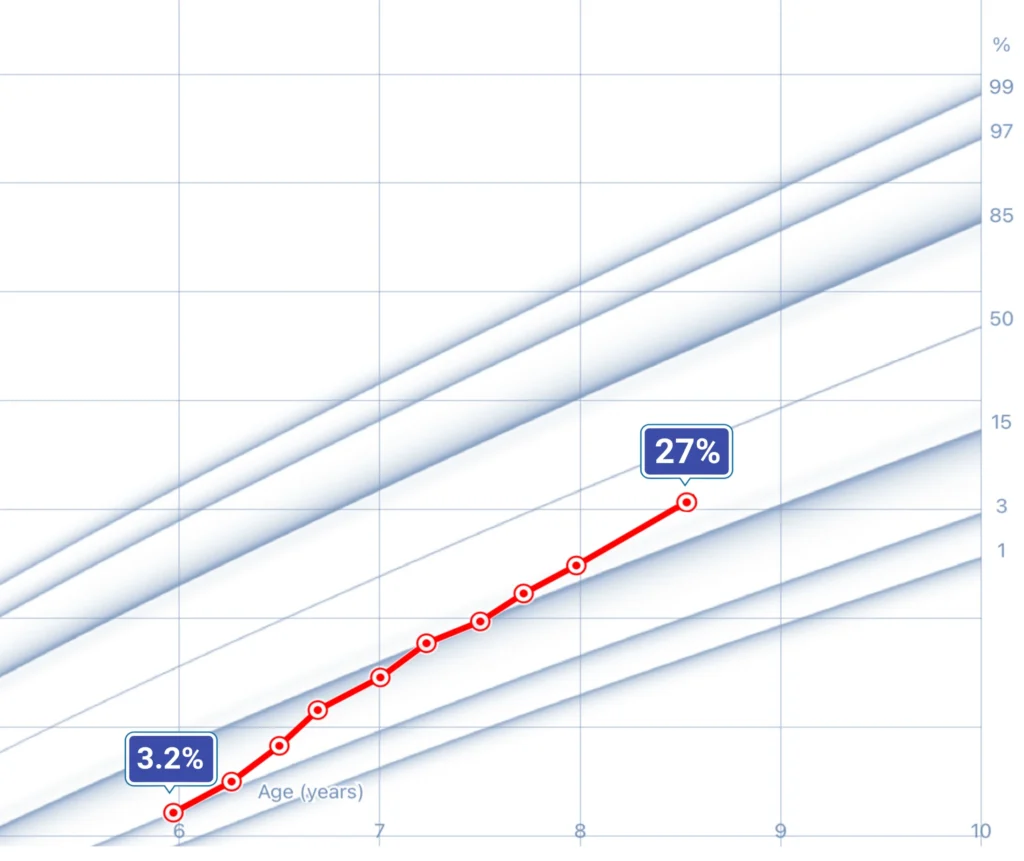
We also review height velocity, the rate at which your child has been growing over the past several months, and combine this with a full clinical picture to determine whether treatment is appropriate and, if so, what a realistic outcome looks like for your child specifically.
We do not offer one-size-fits-all programs. Every protocol at I Grow Clinic is built on the individual data from your child’s evaluation.
Whether you are in Southern California or connecting with us via telehealth from New York, Texas, Washington, or Florida, we are here to give you answers while the window is still open.
Learn how our growth hormone treatment program works.
🔍 For a full breakdown of what growth hormone therapy actually costs and what financial options exist, read: Growth Hormone Cost and Insurance Coverage
🔍 To understand why we built this clinic and what we believe about growth and confidence, read: Why I Started a Growth Hormone Clinic
Frequently Asked Questions
1. Does my child need a growth hormone deficiency diagnosis to qualify?
No. Children with idiopathic short stature, meaning they are significantly shorter than peers without a diagnosed hormonal cause, may qualify under a separate FDA-approved pathway. A bone age evaluation and height velocity review are the starting points for determining eligibility.
2. How much height can growth hormone therapy realistically add?
Research shows a mean adult height gain of approximately 5 to 8 cm, or 2 to 3 inches, in children with idiopathic short stature. Response varies by individual. The best predictor of outcome is a child’s remaining growth potential at the time treatment begins, which is why early evaluation matters.
3. Can growth hormone help with height at 14, or is it already too late?
There is no universal cutoff by calendar age. A 14 year-old with a younger bone age may still have a meaningful window of growth remaining. A 12-year-old with an advanced bone age may have less time than expected. What matters is not the calendar, but the biological age of the growth plates. A bone age study is the only way to know for certain where your child stands.
4. Can growth hormone therapy help my child grow taller if their growth plates are still open?
Yes, this is precisely when growth hormone therapy is most effective. Open growth plates mean the bone cell factories are still active and responsive to stimulation. The more open the plates, the greater the potential response. This is why early evaluation matters so much. Once the plates fuse, that window closes and cannot be reopened.
5. How long does growth hormone treatment for height typically last?
Treatment continues until the growth plates are fully fused or growth velocity drops below 2 cm per year. For most children, this means treatment spans several years. Progress is monitored every month with growth tracking and periodic bone age X-rays. See How long does growth hormone treatment last?
6. Is growth hormone therapy safe for a healthy short child?
When prescribed and monitored by an experienced physician, growth hormone therapy has a well-established safety record spanning over 40 years of use. Dosing is carefully calibrated to each child’s weight and monitored through regular lab work and clinical check-ins. Children with active or prior cancer diagnoses are not candidates for treatment. See Growth Hormone Side Effects in Children.